


Parity and gastric cancer risk: a systematic review and dose-response meta-analysis of prospective cohort studies
- PMID: 26727146
- PMCID: PMC4698715
- DOI: 10.1038/srep18766
Parity and gastric cancer risk: a systematic review and dose-response meta-analysis of prospective cohort studies
Abstract
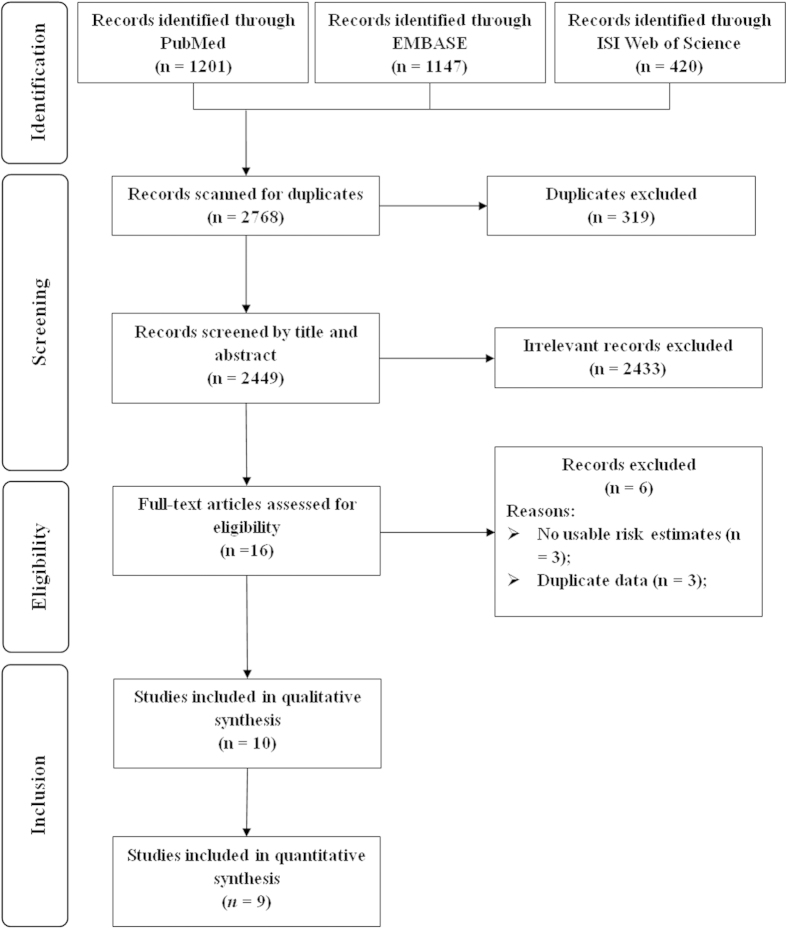
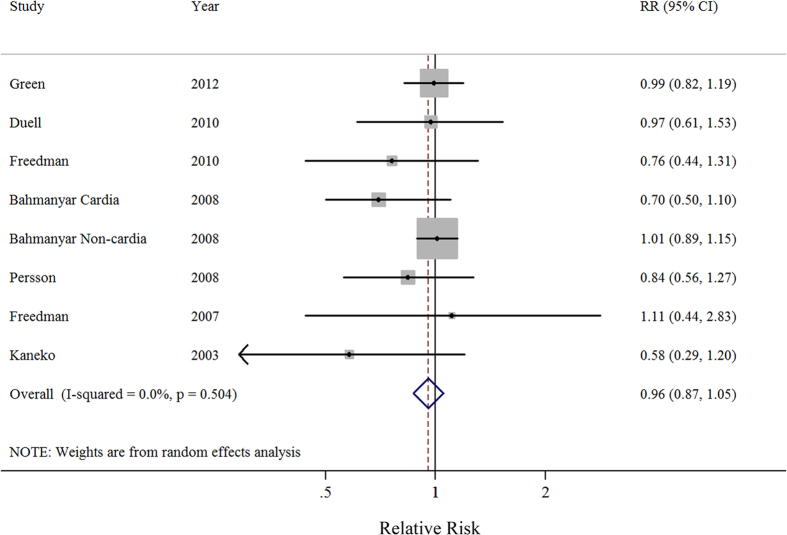
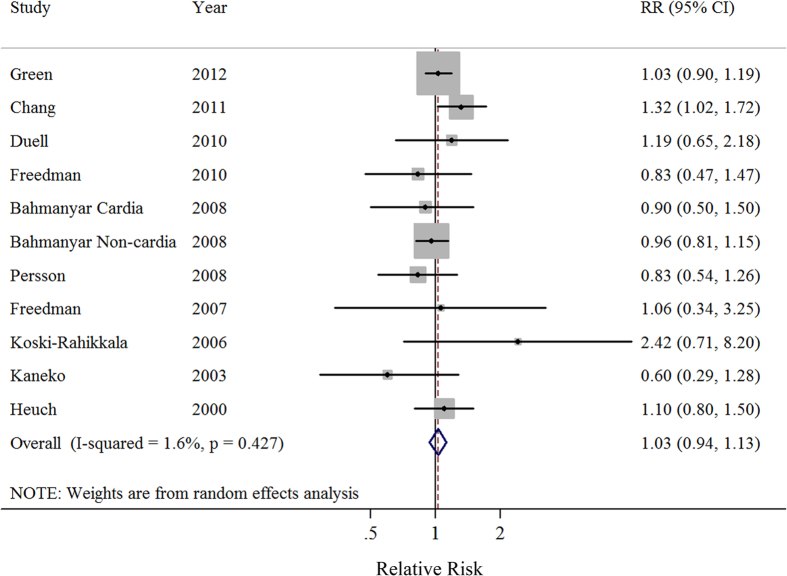
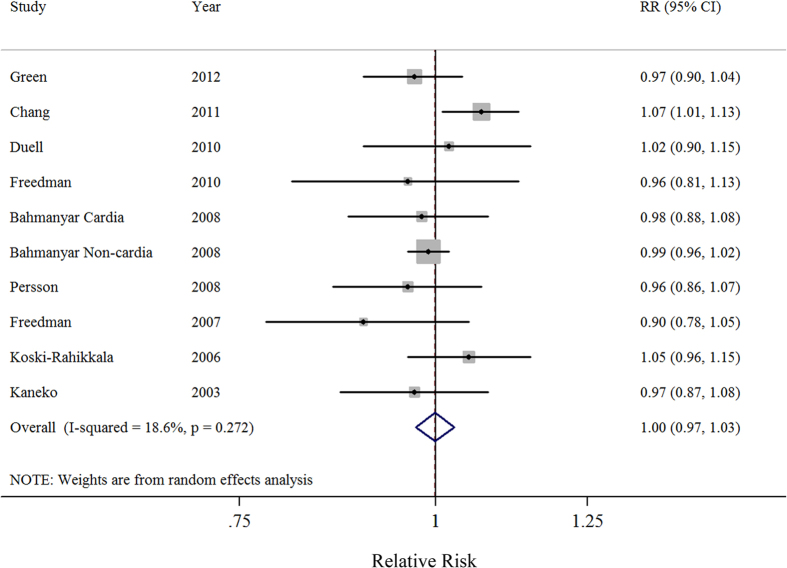
We performed this meta-analysis of epidemiological studies to comprehensively assess the association between parity and gastric cancer risk, because previous studies have shown conflicting results regarding this topic. Relevant prospective studies were identified by searching the following databases: PubMed, EMBASE, and Web of Science, and random-effects models were used to estimate summary relative risks (SRRs) and 95% confidence intervals (CIs). Our search yielded 10 prospective cohort studies involving a total of 6624 gastric cancer cases and 5,559,695 non-cases. The SRRs for ever parity vs. nulliparous and highest vs. lowest parity number were 0.96 (95%CI = 0.87-1.05, I(2) = 0%) and 1.03 (95%CI = 0.94-1.13, I(2) = 0%), respectively. Additionally, the SRR for an increment of one live birth was 1.00 (95%CI = 0.97-1.03, I(2) = 18.6%). These non-significant associations were observed in all subgroups as stratified by the number of gastric cases, follow-up years, geographic location, menopausal status, anatomic subsite of gastric cancer, and adjustment for potential confounders, as well as in sensitivity analyses. Our meta-analysis found no significant association between parity and gastric cancer risk. However, further studies should be conducted to validate our findings and could provide more detailed results by stratifying their findings by Lauren's subtype, histology, and anatomic site, as well as fully adjusting for potential confounding factors.
Figures
References
-
- Torre L. A. et al. Global cancer statistics, 2012. CA Cancer J Clin 65, 87–108 (2015). - PubMed
-
- Ferlay J. et al. GLOBOCAN 2012 v1.0, Cancer Incidence and Mortality Worldwide: IARC Cancer Base No. 11 [Internet]. Lyon, France: International Agency for Research on Cancer; 2013. Available from: http://globocan.iarc.fr. (Date of access: 17/November/2015).
-
- Chandanos E. & Lagergren J. Oestrogen and the enigmatic male predominance of gastric cancer. Eur J Cancer 44, 2397–403 (2008). - PubMed
-
- Sipponen P. & Correa P. Delayed rise in incidence of gastric cancer in females results in unique sex ratio (M/F) pattern: etiologic hypothesis. Gastric Cancer 5, 213–9 (2002). - PubMed
Publication types
MeSH terms
Grants and funding
LinkOut - more resources
Full Text Sources
Other Literature Sources
Medical
