


Neurosensory Symptom Complexes after Acute Mild Traumatic Brain Injury
- PMID: 26727256
- PMCID: PMC4699767
- DOI: 10.1371/journal.pone.0146039
Neurosensory Symptom Complexes after Acute Mild Traumatic Brain Injury
Abstract
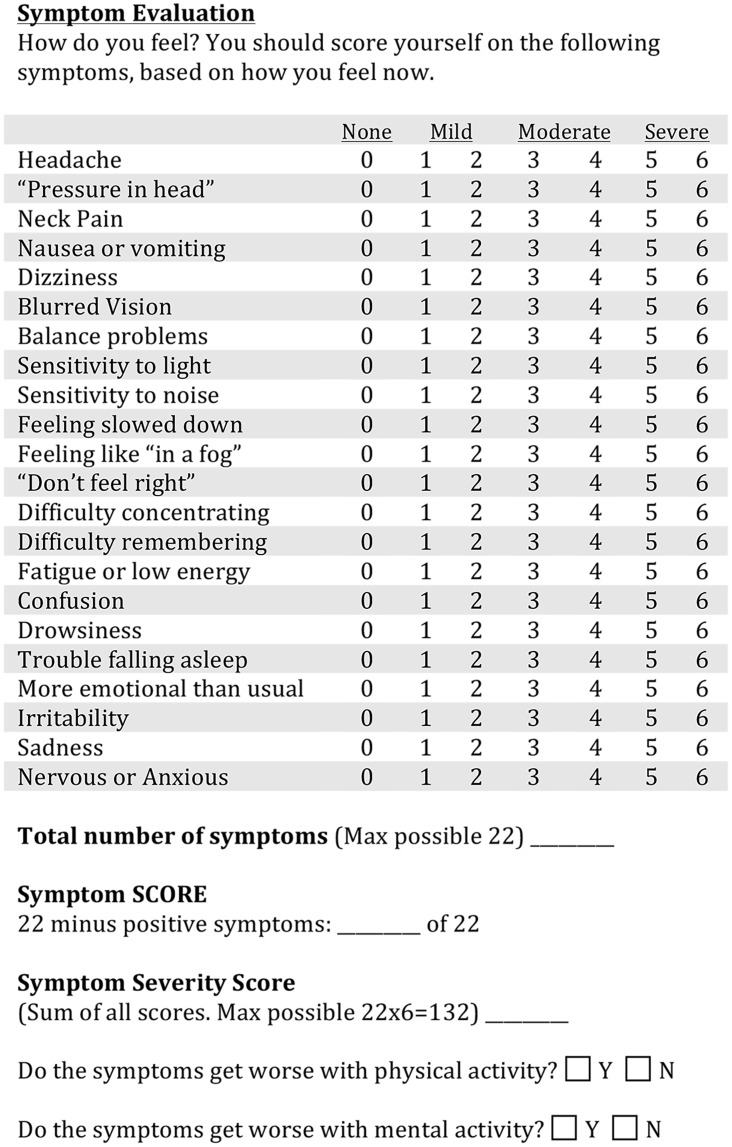
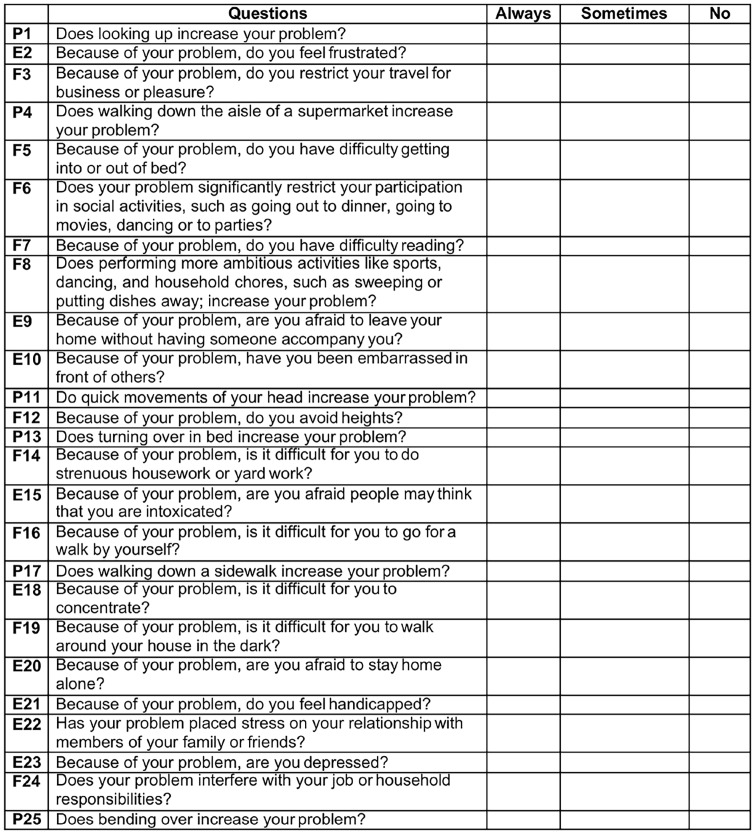
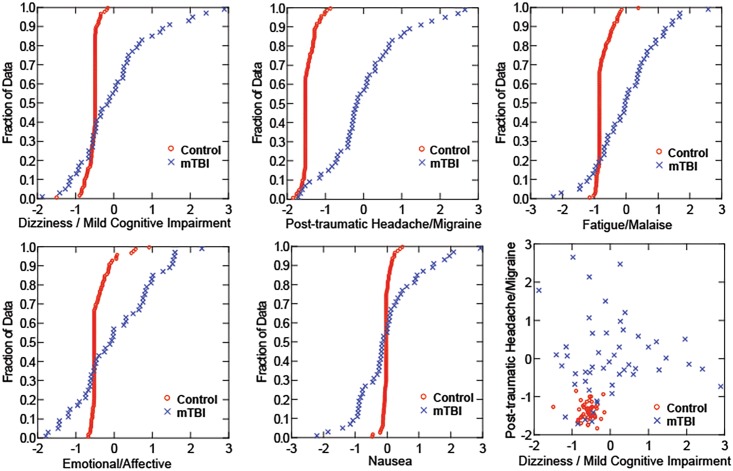
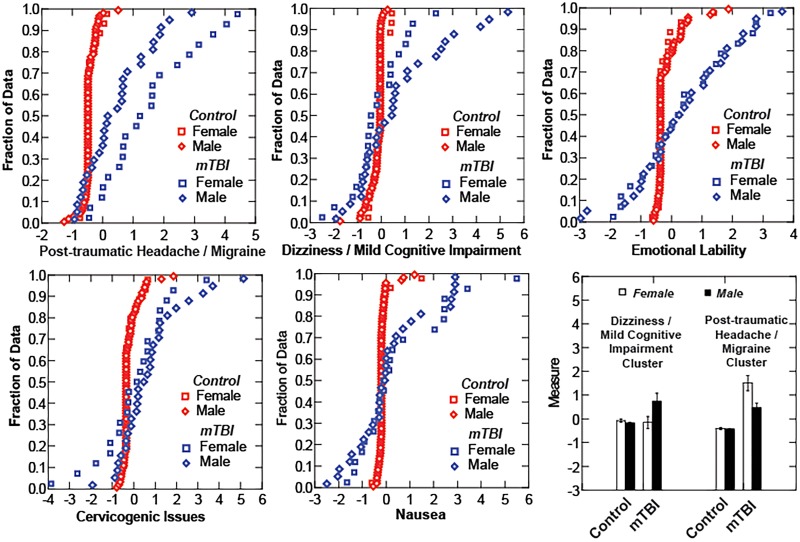
Mild Traumatic Brain Injury (mTBI) is a prominent public health issue. To date, subjective symptom complaints primarily dictate diagnostic and treatment approaches. As such, the description and qualification of these symptoms in the mTBI patient population is of great value. This manuscript describes the symptoms of mTBI patients as compared to controls in a larger study designed to examine the use of vestibular testing to diagnose mTBI. Five symptom clusters were identified: Post-Traumatic Headache/Migraine, Nausea, Emotional/Affective, Fatigue/Malaise, and Dizziness/Mild Cognitive Impairment. Our analysis indicates that individuals with mTBI have headache, dizziness, and cognitive dysfunction far out of proportion to those without mTBI. In addition, sleep disorders and emotional issues were significantly more common amongst mTBI patients than non-injured individuals. A simple set of questions inquiring about dizziness, headache, and cognitive issues may provide diagnostic accuracy. The consideration of other symptoms may be critical for providing prognostic value and treatment for best short-term outcomes or prevention of long-term complications.
Conflict of interest statement
Figures
References
-
- McCrory P, Meeuwisse W, Johnston K, Dvorak J, Aubry M, Molloy M, et al. Consensus statement on concussion in sport: the 3rd International Conference on Concussion in Sport held in Zurich, November 2008. J Athl Train. 2009. Jul-Aug;44(4):434–48. Pubmed Central PMCID: 2707064. 10.4085/1062-6050-44.4.434 - DOI - PMC - PubMed
-
- Jacobson GP, Newman CW. The development of the Dizziness Handicap Inventory. Archives of otolaryngology—head & neck surgery. 1990. April;116(4):424–7. . - PubMed
-
- Wrisley DM, Marchetti GF, Kuharsky DK, Whitney SL. Reliability, internal consistency, and validity of data obtained with the functional gait assessment. Physical therapy. 2004. October;84(10):906–18. . - PubMed
-
- Hoffer ME, Kiderman A, Braverman A, Crawford J, Murphy S, Marshall K,et al. Assessment of oculomotor, vestibular and reaction time response following a concussive event. 2015 Midwinter Meeting of the Association for Research in Otolaryngology; February 21–25, 2015; Baltimore, MD2015.
-
- Balaban CD, Kiderman A, Braverman A, Crawford J, Murphy S, Marshall K, et al. Optokinetic fast phase and saccade motor performance are depressed in acute concussion/mild traumatic brain injury. 2015 Midwinter Meeting of the Association for Research in Otolaryngology; February 21–25, 2015; Baltimore, MD2015.
Publication types
MeSH terms
LinkOut - more resources
Full Text Sources
Other Literature Sources
Research Materials
