


Placental Metal Concentrations in Relation to Maternal and Infant Toenails in a U.S. Cohort
- PMID: 26727403
- PMCID: PMC4873612
- DOI: 10.1021/acs.est.5b05316
Placental Metal Concentrations in Relation to Maternal and Infant Toenails in a U.S. Cohort
Abstract
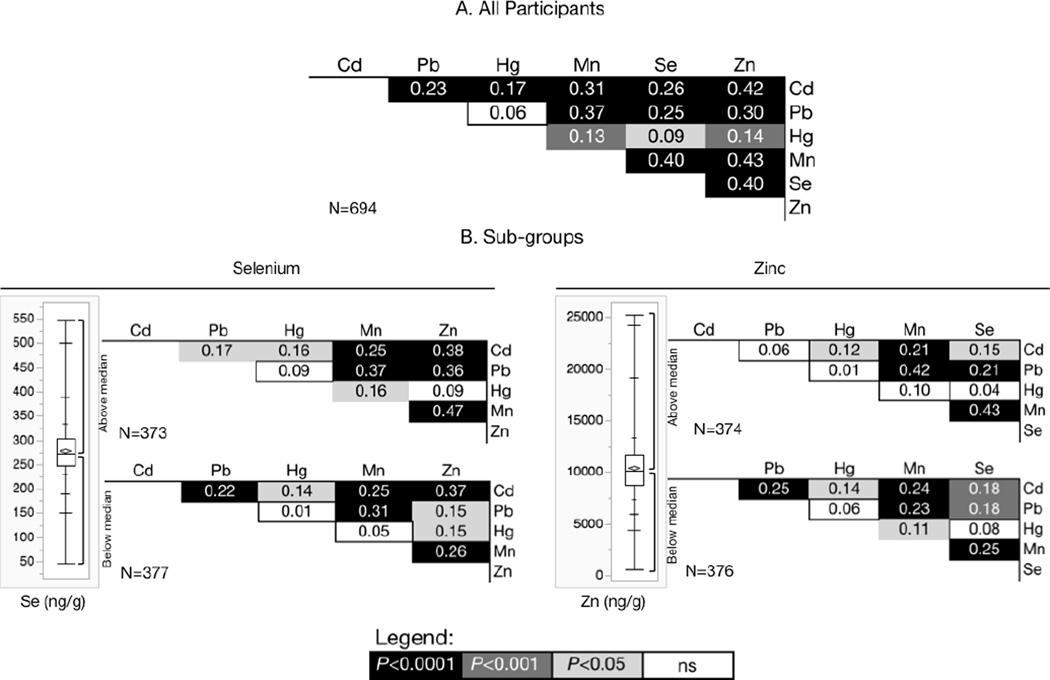
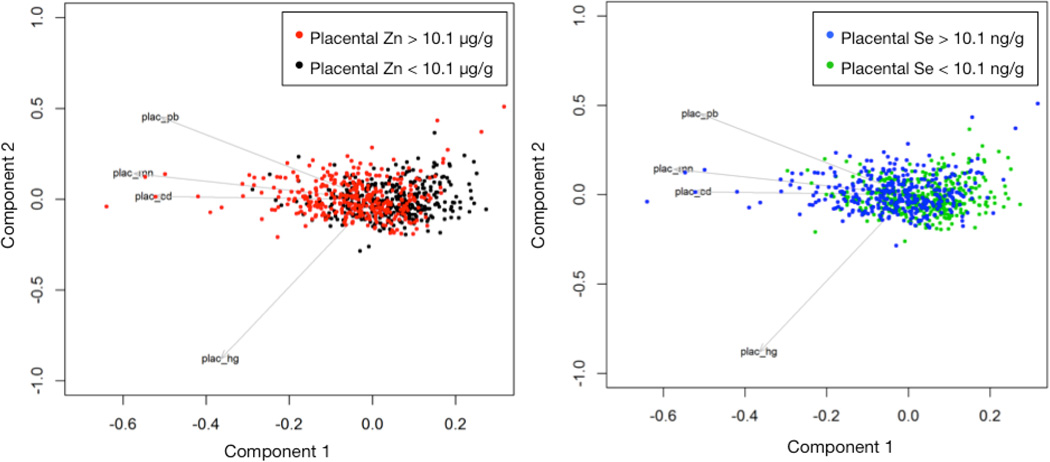
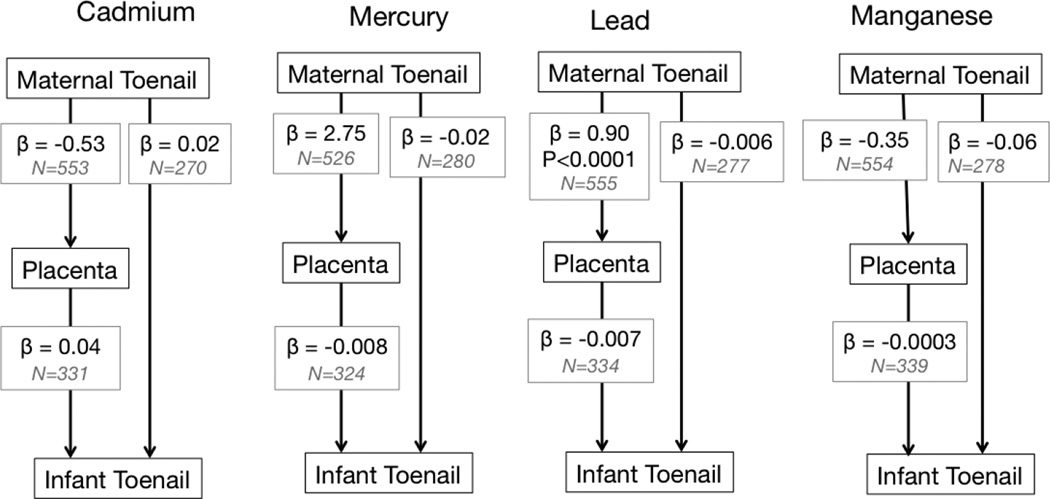
Metal contaminants cross the placenta, presenting a heightened risk of perturbing fetal development. Information about placental concentrations and transfer of multiple potentially toxic metals from low to moderate exposure is lacking. We measured concentrations of Cd, Pb, Hg, Mn, Se, and Zn in 750 placentas collected from women enrolled in the New Hampshire Birth Cohort Study and examined the correlation between elements, and profiles of potentially toxic metals (Cd, Pb, Hg, and Mn) stratified by nutrient concentrations (Zn and Se) using principal components analyses. We further examined the indirect effects of maternal metal concentrations on infant metal concentrations through placental metal concentrations using structural equation models. Placental metal concentrations were all correlated, particularly Zn and Mn, and Zn and Cd, and the principal component of metals differed by stratum of high versus low Zn and Se. Associations were observed between placenta and maternal toenail Se (β = 63.49; P < 0.0001) and Pb (β = 0.90; P < 0.0001) but not other metals. Structural equation models did not indicate any statistically significant indirect effects through placental metal concentrations. Placental metal concentrations may represent a distinct biomarker of metal exposure and adverse health impacts to the fetus, particularly those stemming from the placenta.
Figures
References
-
- Chen Z, Myers R, Wei T, Bind E, Kassim P, Wang G, Ji Y, Hong X, Caruso D, Bartell T, Gong Y, Strickland P, Navas-Acien A, Guallar E, Wang X. Placental transfer and concentrations of cadmium, mercury, lead, and selenium in mothers, newborns, and young children. J. Exp. Sci. Environ. Epi. 2014;24(5):537–544. - PMC - PubMed
-
- ATSDR. US Department of Health and Human Services; 1999. Toxicological Profile for Mercury. http://www.atsdr.cdc.gov/toxprofiles/tp.asp?id=115&tid=24.
Publication types
MeSH terms
Substances
Grants and funding
LinkOut - more resources
Full Text Sources
Other Literature Sources
Medical
