A test of core psychopathic traits as a moderator of the efficacy of a brief motivational intervention for substance-using offenders
- PMID: 26727409
- PMCID: PMC4760863
- DOI: 10.1037/ccp0000065
A test of core psychopathic traits as a moderator of the efficacy of a brief motivational intervention for substance-using offenders
Erratum in
-
"A test of core psychopathic traits as a moderator of the efficacy of a brief motivational intervention for substance-using offenders": Correction to Swogger et al. (2016).J Consult Clin Psychol. 2016 Mar;84(3):210. doi: 10.1037/ccp0000090. J Consult Clin Psychol. 2016. PMID: 26890639
Abstract
Objective: In a randomized controlled trial we studied a brief motivational intervention (BMI) for substance use, examining core psychopathic traits as a moderator of treatment efficacy.
Method: Participants were 105 males and females who were 18 years of age and older and in a pretrial jail diversion program. The sample was approximately 52% Black and other minorities and 48% White. Outcome variables at a 6-month follow-up were frequency of substance use (assessed with the Timeline Follow-back Interview and objective toxicology screens), substance use consequences (Short Inventory of Problems-Alcohol and Drug version), and self-reported participation in nonstudy mental health and/or substance use treatment. Psychopathy was assessed using the Psychopathy Checklist-Revised (PCL-R).
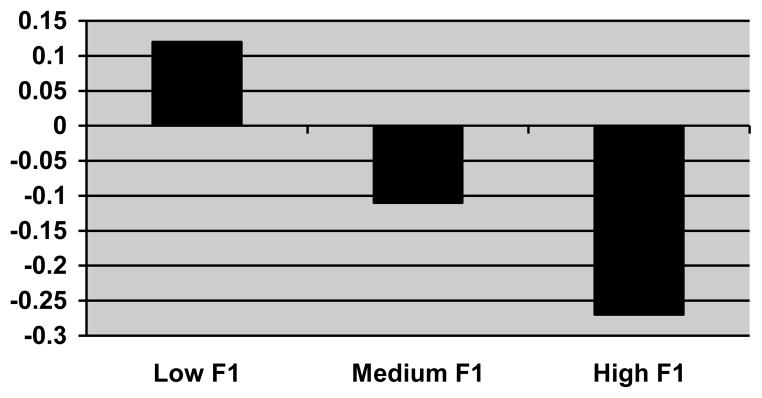
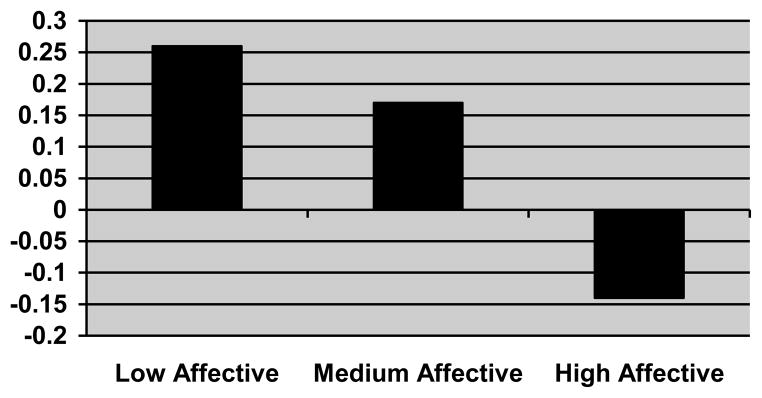
Results: BMI interacted with core psychopathic traits to account for 7% of the variance in substance use at follow-up. Treatment was associated with greater use among individuals with high levels of core psychopathic traits. Toxicology screening results were consistent with self-report data. The treatment and standard care groups did not differ on substance use consequences or nonstudy treatment participation at follow-up, and no moderation was found with these outcomes. An exploratory analysis indicated that low levels of affective traits of psychopathy were associated with benefit from the BMI in terms of decreased substance use.
Discussion: Findings suggest that caution is warranted when applying BMIs among offenders; individuals with high levels of core psychopathic traits may not benefit and may be hindered in recovery. Conversely, they indicate that a low-psychopathy subgroup of offenders benefits from these brief and efficient treatments for substance use.
(c) 2016 APA, all rights reserved).
Figures

References
-
- Aiken LS, West SG. Multiple regression: Testing and interpreting interactions. Sage; 1991.
-
- Andrews DA, Bonta J, Hoge RD. Classification for effective rehabilitation: Rediscovering psychology. Criminal Justice and Behavior. 1990;17:19–52.
-
- Babor TF, De la Fuente JR, Saunders J, Grant M. The Alcohol Use Disorders Identification Test: Guidelines for Use in Primary Health Care (WHO Publication No. 92.4) World Health Organization; Geneva, Switzerland: 1992.
-
- Bureau of Justice Statistics. Mental Health Problems of Prison and Jail Inmates. Washington, DC: U.S. Department of Justice, Bureau of Justice Statistics; 2006. Retrieved December 19, 2007, from the World Wide Web: http://www.ojp.usdoj.gov/bjs/pub/ascii/mhppji.txt.
Publication types
MeSH terms
Grants and funding
LinkOut - more resources
Full Text Sources
Other Literature Sources
Medical