


Auditory evoked potentials in a newborn Wistar rat model of hyperbilirubinemia
- PMID: 26727606
- PMCID: PMC9449037
- DOI: 10.1016/j.bjorl.2015.10.008
Auditory evoked potentials in a newborn Wistar rat model of hyperbilirubinemia
Abstract
Introduction: Hyperbilirubinemia is a common health problem in newborns. Its effects can be different according to the level and duration of the hyperbilirubinemia. The toxic effect of bilirubin on the auditory system can be seen as a sensory neural hearing loss or auditory neuropathy spectrum disorder (ANSD).
Objective: The purpose of our study was to determine the effects of toxic bilirubin level on the auditory system by using Auditory Brainstem Response audiometry.
Methods: Rats are used as animal models due to their low cost and easy attainability. Auditory Brainstem Response was used for auditory assessment. In this study, three groups were established: experimental, control and placebo groups.
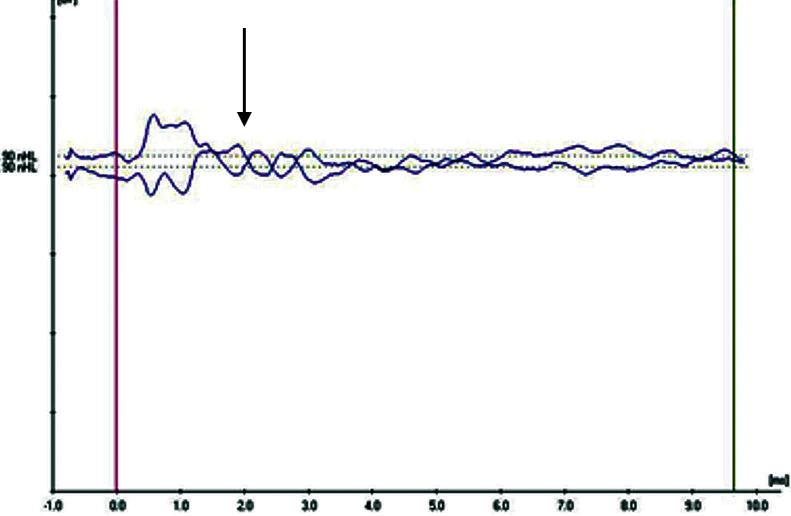
Results: In the experimental group, which consists of rats with hyperbilirubinemia, sensory neural hearing loss was found bilaterally in 4 rats (66.67%) and unilaterally in 2 rats (16.67%) and auditory neuropathy spectrum disorder was found unilaterally in 1 rat (8.33%). Auditory Brainstem Response thresholds were significantly elevated compared to control and placebo groups (p<0.05).
Conclusion: Hyperbilirubinemia of newborn rats may result both in sensory neural hearing loss and auditory neuropathy spectrum disorder.
Introdução: A hiperbilirrubinemia é um problema de saúde comum em neonatos. Seus efeitos podem variar, dependendo do nível e da duração da hiperbilirrubinemia. O efeito tóxico da bilirrubina no sistema auditivo pode ser observado na forma de deficiência auditiva sensorioneural ou de distúrbio do espectro da neuropatia auditiva.
Objetivo: A finalidade de nosso estudo foi determinar os efeitos de nível tóxico de bilirrubina no sistema auditivo, com o uso da audiometria da resposta auditiva evocada de tronco cerebral.
Método: Os ratos são empregados como modelos animais graças a seu baixo custo e fácil obtenção. Utilizamos a resposta auditiva evocada de tronco cerebral para avaliação da audição. No estudo, foram estabelecidos três grupos: experimental, controle e placebo.
Resultados: No grupo experimental, constituído de ratos com hiperbilirrubinemia, disacusia auditiva neurosensorial foi diagnosticada bilateralmente em quatro ratos (66,67%), e unilateralmente em dois (16,67%); e distúrbio do espectro da neuropatia auditiva foi observado unilateralmente em um rato (8,33%). Os limiares da resposta evocada de tronco cerebral estavam significantemente elevados, em comparação com os grupos controle e placebo (p < 0,05).
Conclusão: A hiperbilirrubinemia de ratos neonatos pode resultar tanto em disacusia auditiva neurosensorial como em distúrbio do espectro da neuropatia auditiva.
Keywords: Auditory evoked potentials; Deficiência auditiva neurosensorial; Hiperbilirrubinemia; Hyperbilirubinemia; Potenciais evocados auditivos; Ratos Wistar; Sensorineural hearing loss; Wistar rats.
Copyright © 2015 Associação Brasileira de Otorrinolaringologia e Cirurgia Cérvico-Facial. Published by Elsevier Editora Ltda. All rights reserved.
Figures



References
-
- Oysu Ç., Aslan I., Ulubil A., Başerer N. Incidence of cochlear involvement in hyperbilirubiemic deafness. Ann Otol Rhinol Laryngol. 2002;111:1021–1025. - PubMed
-
- Öğün B., Şerbetçioğlu B., Duman N., Özkan H., Kırkım G. Long-term outcome of neonatal hyperbilirubinemia: subjective and objective audiological measures. Clin Otolaryngol Allied Sci. 2003;28:507–513. - PubMed
-
- Nickisch A., Massinger C., Ertl-Wagner B., von Voss H. Pedaudiologic findings after severe neonatal hyperbilirubinemia. Eur Arch Otorhinolaryngol. 2009;266:207–212. - PubMed
-
- Akyıldız N. vol. 1. BilimselTıp Press; Ankara: 2002. pp. 215–332. (Kulak Hastalıkları ve Mikrocerrahisi).
-
- Boo N.Y., Rohani A.J., Asma A. Detection of sensorineural hearing loss using automated auditory brainstem-evoked response and transient-evoked otoacoustic emission in term neonates with severe hyperbilirubinaemia. Singapore Med J. 2008;49:209–214. - PubMed
MeSH terms
LinkOut - more resources
Full Text Sources
Other Literature Sources
