. 2016 Jan 5:6:18844.
doi: 10.1038/srep18844.

Potency of umbilical cord blood- and Wharton's jelly-derived mesenchymal stem cells for scarless wound healing

Affiliations

Potency of umbilical cord blood- and Wharton's jelly-derived mesenchymal stem cells for scarless wound healing

Hanako Doi et al. Sci Rep. .

Abstract

Postnatally, scars occur as a consequence of cutaneous wound healing. Scarless wound healing is highly desired for patients who have undergone surgery or trauma, especially to exposed areas. Based on the properties of mesenchymal stem cells (MSCs) for tissue repair and immunomodulation, we investigated the potential of MSCs for scarless wound healing. MSCs were expanded from umbilical cord blood (UCB-MSCs) and Wharton's jelly (WJ-MSCs) from healthy donors who underwent elective full-term pregnancy caesarean sections. UCB-MSCs expressed lower levels of the pre-inflammatory cytokines IL1A and IL1B, but higher levels of the extracellular matrix (ECM)-degradation enzymes MMP1 and PLAU compared with WJ-MSCs, suggesting that UCB-MSCs were more likely to favor scarless wound healing. However, we failed to find significant benefits for stem cell therapy in improving wound healing and reducing collagen deposition following the direct injection of 1.0 × 10(5) UCB-MSCs and WJ-MSCs into 5 mm full-thickness skin defect sites in nude mice. Interestingly, the implantation of UCB-MSCs tended to increase the expression of MMP2 and PLAU, two proteases involved in degradation of the extracellular matrix in the wound tissues. Based on our data, UCB-MSCs are more likely to be a favorable potential stem cell source for scarless wound healing, although a better experimental model is required for confirmation.


Figures

Figure 1
Figure 1. Morphological and phenotypical characterization of mesenchymal stem cells derived from umbilical cord blood (UCB-MSCs) and Warton’s jelly (WJ-MSCs).
(a) Representative images of UCB-MSCs and WJ-MSCs from first passage cells demonstrating the fibroblast-like spindle shape after 3 and 5 days in culture. The UCB-MSCs were shown to be smaller in size and exhibited higher nuclear fluctuation (40×, scale bars 200 μm). (b) The cell growth of UCB-MSCs was significantly faster than WJ-MSCs. (c) Flow cytometry analysis expression profiles of the cell surface markers CD34, CD44, CD45, CD73, CD90, and CD105 in UCB-MSCs and WJ-MSCs. A representative histogram is presented. The colored lines and colored areas represent the expression of UCB-MSCs and WJ-MSCs, respectively. The gray areas represent the isotype negative control.
Figure 2
Figure 2. RT2 Profiler PCR array to detect the expression of genes associated with wound healing and fibrosis.
We functionally categorized the genes into ECM structural constituents and remodeling enzymes (a), inflammatory cytokines and chemokines (b), growth factors (c), TGF-beta superfamily members (d), cell adhesion molecules (e), and transcription factors and other fibrosis factors (f). The data are presented as the means of fold change of expression in UCB-MSCs compared with WJ-MSCs from three separate experiments.
Figure 3
Figure 3. Wound healing of full-thickness skin defects (5 mm diameter) in nude mice.
The wounds of mice were injected with mesenchymal stem cells derived from human umbilical cord blood (UCB group) and Warton’s Jelly (WJ group) or medium alone (Control group), and wound closure was recorded macroscopically after treatments. (a) Representative images of the gross appearance of excisional wounds over time after treatment. (b) Quantitative data concerning the proportion of the wound remaining open relative to the initial wound area at different time points after treatment. (c) Quantitative data on the visual scar area 14 days after treatment. The visual scar area was carefully circled on the images of wounds (dark dotted lines in Figure 3a). The percentage of the scar area was calculated relative to the initial wound area.
Figure 4
Figure 4. Histological analysis of the re-epithelialization and granulation of wounds 3 and 7 days after treatment.
(a) Representative images of wound tissues with HE staining 3 days after treatment. The original wound margins (indicated with arrows) and the re-epithelialization edges (arrowheads) were carefully identified under the microscope. The distances between two wound margins (B; wound lengths) and between two re-epithelialization edges (A) were measured. The images of whole wound tissues were taken under a low power lens (40×, scale bars 200 μm). The inset high-power (200×) images indicate the epithelial tongues (surrounded by the dotted white lines) of the wounds. (b) Quantitative data on the distances between the re-epithelialization edges 3 days after treatment. (c) The ratio of re-epithelialization was measured by: [the wound length (B) minus the distances between the re-epithelialization edges (A)]/B × 100. (d) Representative images of wound tissues with HE staining 7 days after treatment. The granulation area was surrounded by the dotted black lines (40×, scale bars: 200 μm). (e) The area of granulated tissue was measured by Adobe Photoshop CS6 Extended software.
Figure 5
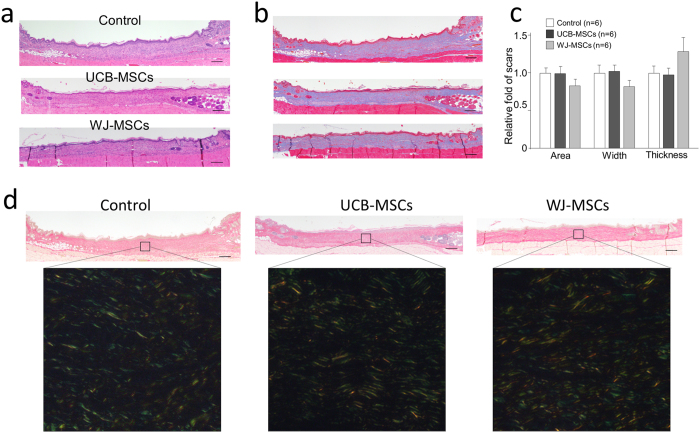
Figure 5. Histological analysis of scar formation of the healed wounds 14 days after treatment.
(a) Representative images of wound tissues with HE staining (40×, scale bars 200 μm). (b) Representative images of wound tissues with Masson’s trichrome staining (40×, scale bars 200 μm); the scar tissues stained blue. (c) Quantitative data on the area, width, and thickness of scars based on the images of tissue sections with Masson’s trichrome staining. (d) Representative images of wound tissues with Picrosirius red staining for analysis of collagen fibers. The inserted high-magnification images in the lower panel were used to detect the alignment of type I collagen (yellow) and type III collagen (green) in the scar using polarized light microscopy.
Figure 6
Figure 6. RT-PCR analysis of the expression of important genes associated with wound healing in wound tissues of nude mice.
Tissue samples were collected 3 days (n = 6 in each group) and 7 days (n = 6 in the Control group and n = 7 in the UCB-MSC and WJ-MSC groups) after treatment. The quantitative data from the RT-PCR was normalized by the expression of 18S ribosomal RNA. formula imageControl group, formula imageUCB-MSC group, formula imageWJ-MSC group. *p < 0.05 vs. Control group. †p < 0.10 vs. Control group.
Figure 7
Figure 7. Angiogenesis and the infiltration of macrophages into wound tissues of nude mice 7 days after treatment.
(a) Representative images of immunohistochemistry staining with the endothelial marker CD31 (400×, scale bars 50 μm). The density of microvessels that positively stained for CD31 was observed to be similar in the wound tissues among groups. (b) Western immunoblot analysis of CD31 expression in wound tissues. (c) Representative images of immunostaining with F4/80, a marker for macrophages (400×, scale bars 50 μm). (d) Western immunoblot analysis of F4/80 expression.

References

    1. Gurtner G. C., Werner S., Barrandon Y. & Longaker M. T. Wound repair and regeneration. Nature 453, 314–321, 10.1038/nature07039 (2008). - DOI - PubMed
    1. Martin P. Wound healing–aiming for perfect skin regeneration. Science (New York, N.Y.) 276, 75–81 (1997). - PubMed
    1. Shin D. & Minn K. W. The effect of myofibroblast on contracture of hypertrophic scar. Plastic and reconstructive surgery 113, 633–640, 10.1097/01.prs.0000101530.33096.5b (2004). - DOI - PubMed
    1. Ferguson M. W. et al. Prophylactic administration of avotermin for improvement of skin scarring: three double-blind, placebo-controlled, phase I/II studies. Lancet 373, 1264–1274, 10.1016/s0140-6736(09)60322-6 (2009). - DOI - PubMed
    1. Larson B. J., Longaker M. T. & Lorenz H. P. Scarless fetal wound healing: a basic science review. Plastic and reconstructive surgery 126, 1172–1180, 10.1097/PRS.0b013e3181eae781 (2010). - DOI - PMC - PubMed

Publication types

MeSH terms