


Molecular Mechanisms of Airway Hyperresponsiveness in a Murine Model of Steroid-Resistant Airway Inflammation
- PMID: 26729801
- PMCID: PMC4724491
- DOI: 10.4049/jimmunol.1501531
Molecular Mechanisms of Airway Hyperresponsiveness in a Murine Model of Steroid-Resistant Airway Inflammation
Abstract
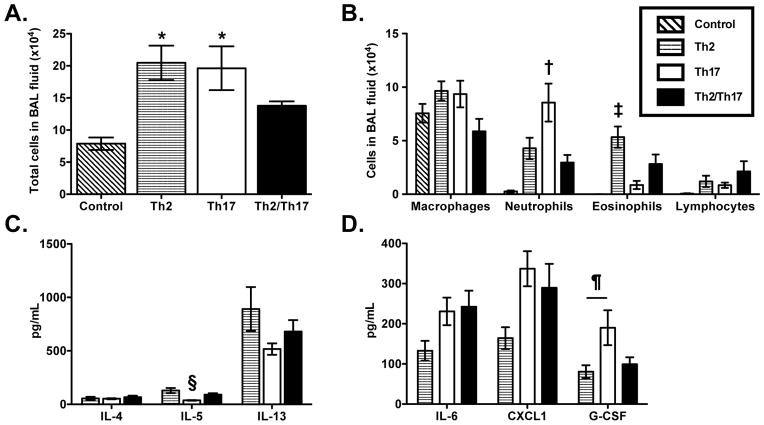
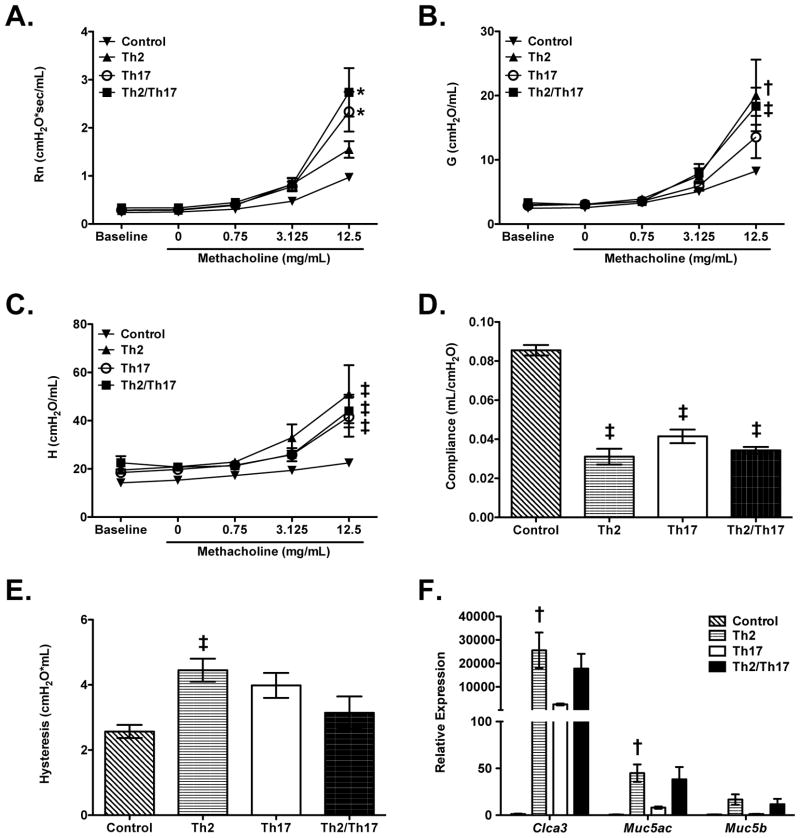
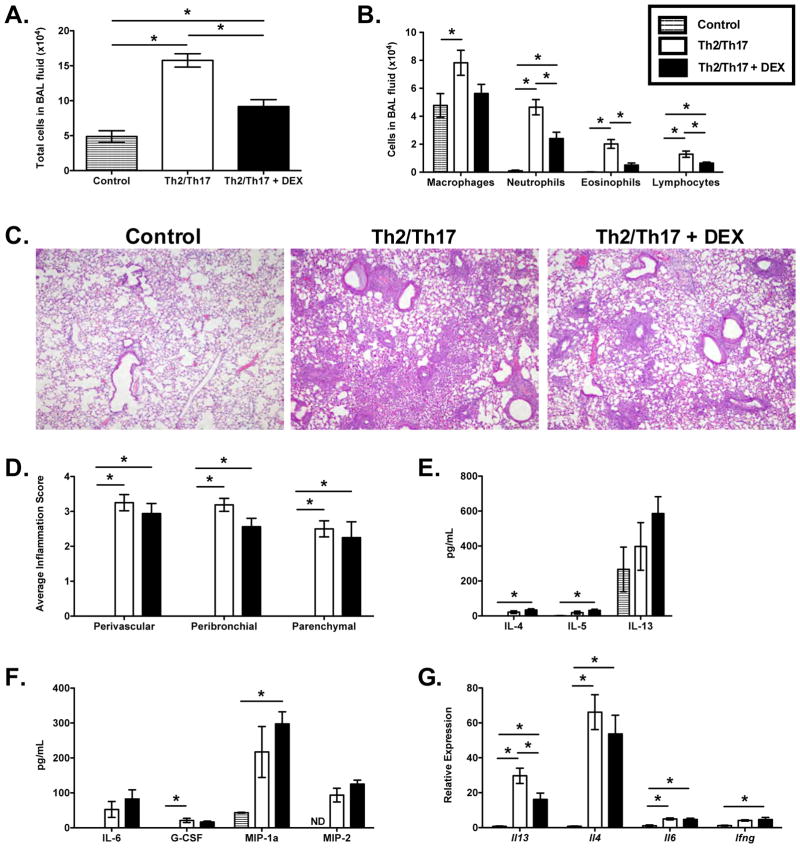
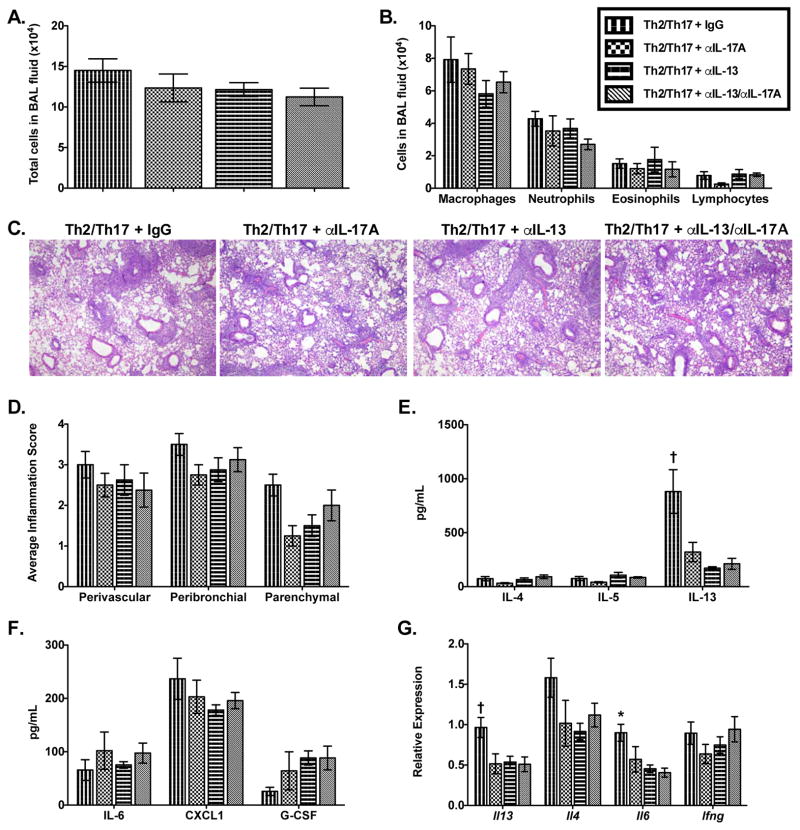
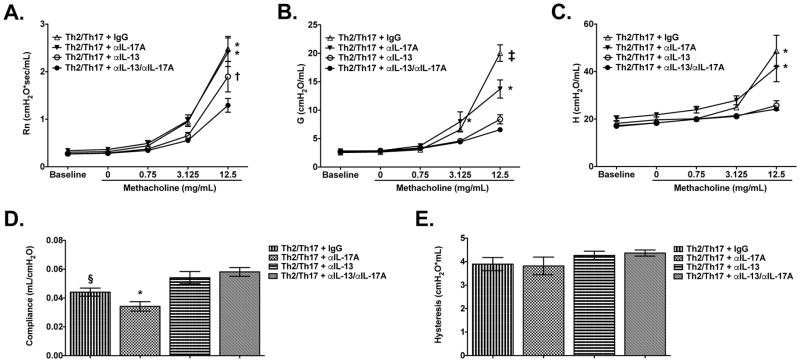
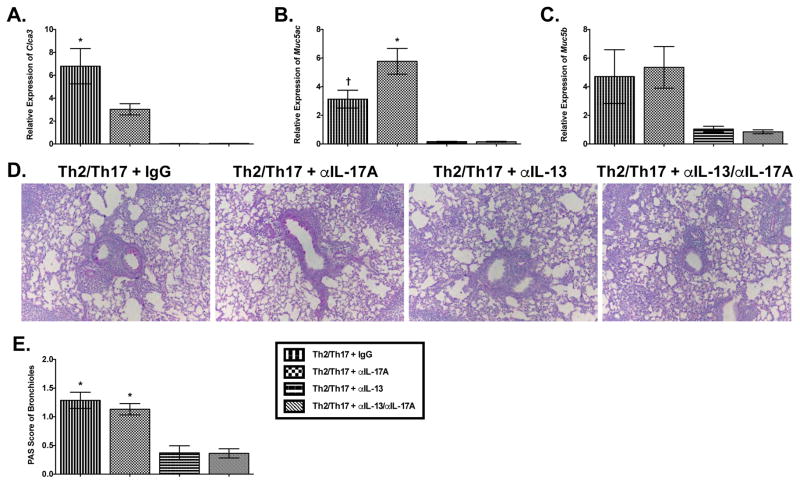
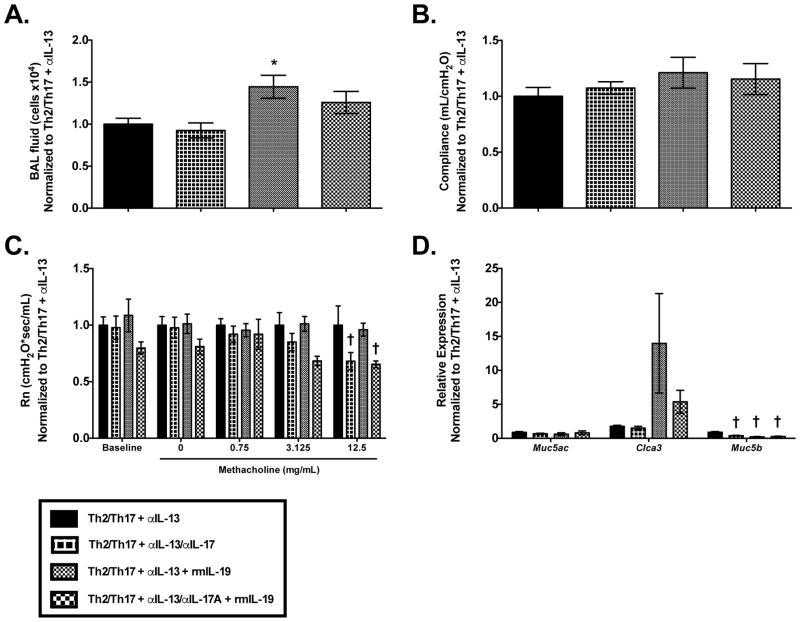
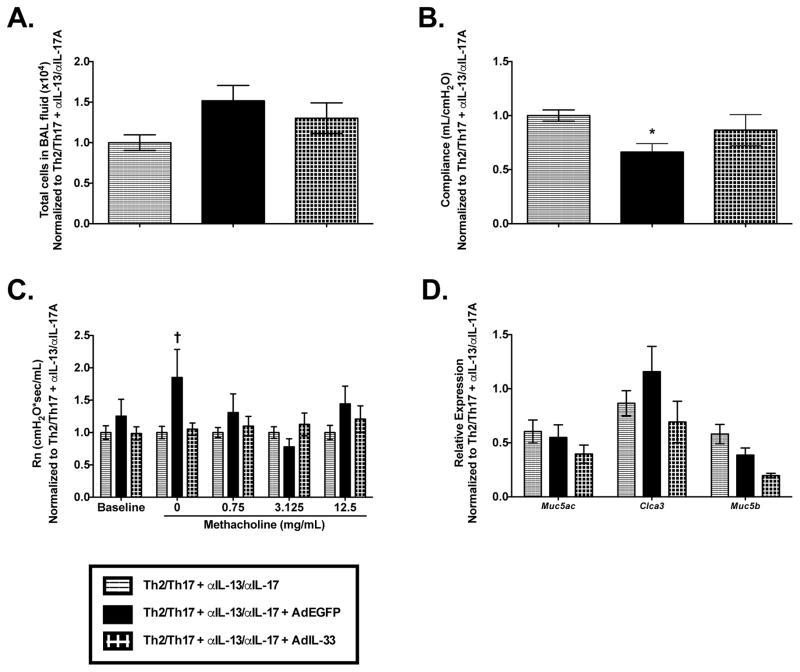
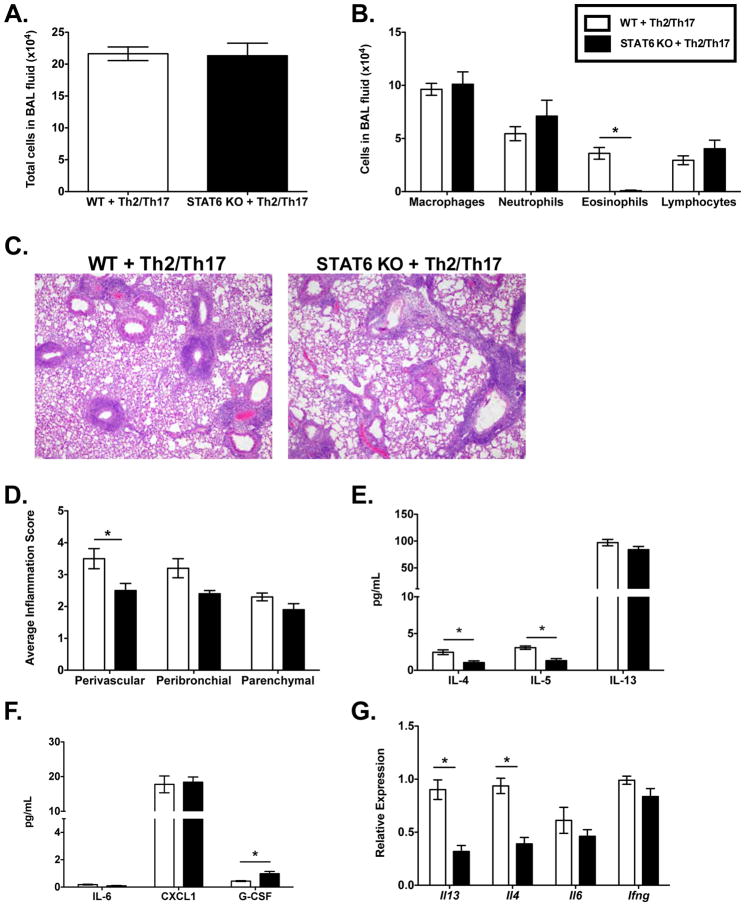
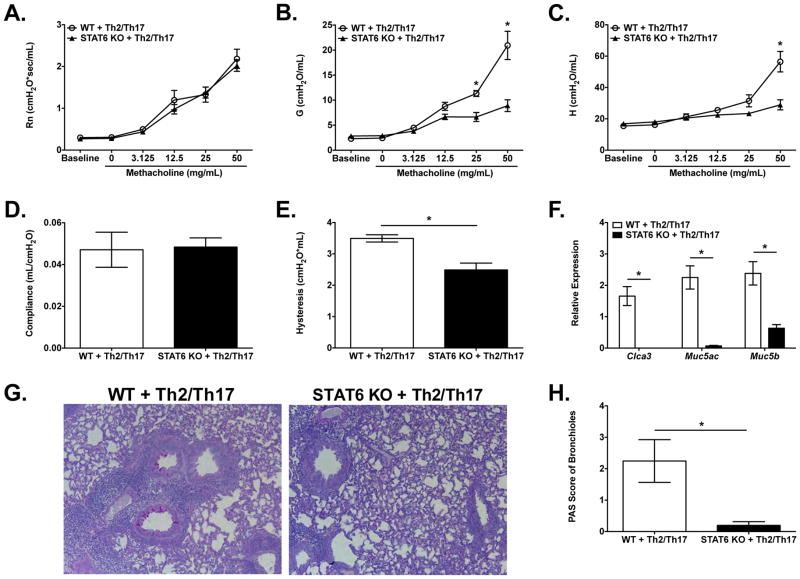
IL-13 and IL-17A, produced mainly by Th2 and Th17 cells, respectively, have an influential role in asthma pathogenesis. We examined the role of IL-13 and IL-17A in mediating airway hyperresponsiveness (AHR), lung inflammation, and mucus metaplasia in a dual Th2/Th17 model of asthma. IL-13 and/or IL-17A were neutralized using mAbs. Th2/Th17 adoptive transfer induced a mixed asthma phenotype characterized by elevated eosinophilia and neutrophilia, tissue inflammation, mucus metaplasia, and AHR that were partially reversible with steroid treatment. Pulmonary inflammation and quasi-static lung compliance were largely unaffected by neutralization of IL-13 and/or IL-17A. However, neutralization of IL-13 alone or in combination with IL-17A significantly attenuated AHR and mucus metaplasia. Further, STAT6 activation was attenuated following IL-13 and IL-13/IL-17A Ab treatment. We next assessed the role of STAT6 in Th2/Th17-mediated allergic airway disease using STAT6(-/-) mice. STAT6(-/-) mice adoptively transferred with Th2/Th17 cells had decreased AHR compared with controls. These data suggest that IL-13 drives AHR and mucus metaplasia in a STAT6-dependent manner, without directly contributing to airway or tissue inflammation. IL-17A independently contributes to AHR, but it only partially mediates inflammation and mucus metaplasia in a mixed Th2/Th17 model of steroid-resistant asthma.
Copyright © 2016 by The American Association of Immunologists, Inc.
Figures



Comment in
-
Do insights from mice imply that combined Th2 and Th17 therapies would benefit select severe asthma patients?Ann Transl Med. 2016 Dec;4(24):505. doi: 10.21037/atm.2016.11.79. Ann Transl Med. 2016. PMID: 28149867 Free PMC article. No abstract available.
References
-
- Wenzel S. Severe asthma: from characteristics to phenotypes to endotypes. Clin Exp Allergy. 2012;42:650–658. - PubMed
-
- Xie M, Wenzel SE. A global perspective in asthma: from phenotype to endotype. Chinese medical journal. 2013;126:166–174. - PubMed
-
- Hellings PW, Kasran A, Liu Z, Vandekerckhove P, Wuyts A, Overbergh L, Mathieu C, Ceuppens JL. Interleukin-17 orchestrates the granulocyte influx into airways after allergen inhalation in a mouse model of allergic asthma. Am J Respir Cell Mol Biol. 2003;28:42–50. - PubMed
-
- Aujla SJ, Alcorn JF. T(H)17 cells in asthma and inflammation. Biochim Biophys Acta. 2011;1810:1066–1079. - PubMed
Publication types
MeSH terms
Substances
Grants and funding
LinkOut - more resources
Full Text Sources
Other Literature Sources
Medical
Research Materials
Miscellaneous
