


An Update on Methods for Revascularization and Expansion of the TASC Lesion Classification to Include Below-the-Knee Arteries: A Supplement to the Inter-Society Consensus for the Management of Peripheral Arterial Disease (TASC II): The TASC Steering Comittee(.)
- PMID: 26730266
- PMCID: PMC4691515
- DOI: 10.3400/avd.tasc.15-01000
An Update on Methods for Revascularization and Expansion of the TASC Lesion Classification to Include Below-the-Knee Arteries: A Supplement to the Inter-Society Consensus for the Management of Peripheral Arterial Disease (TASC II): The TASC Steering Comittee(.)
Abstract
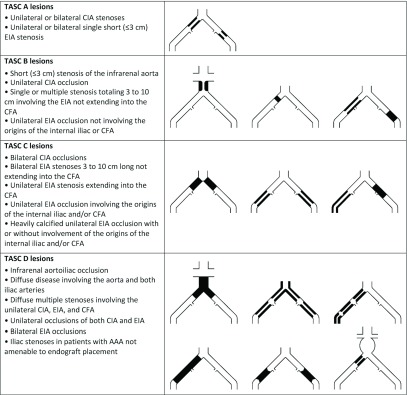
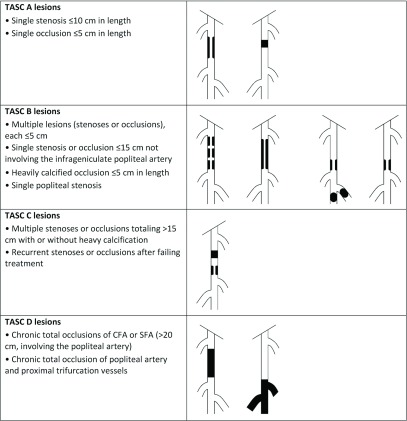
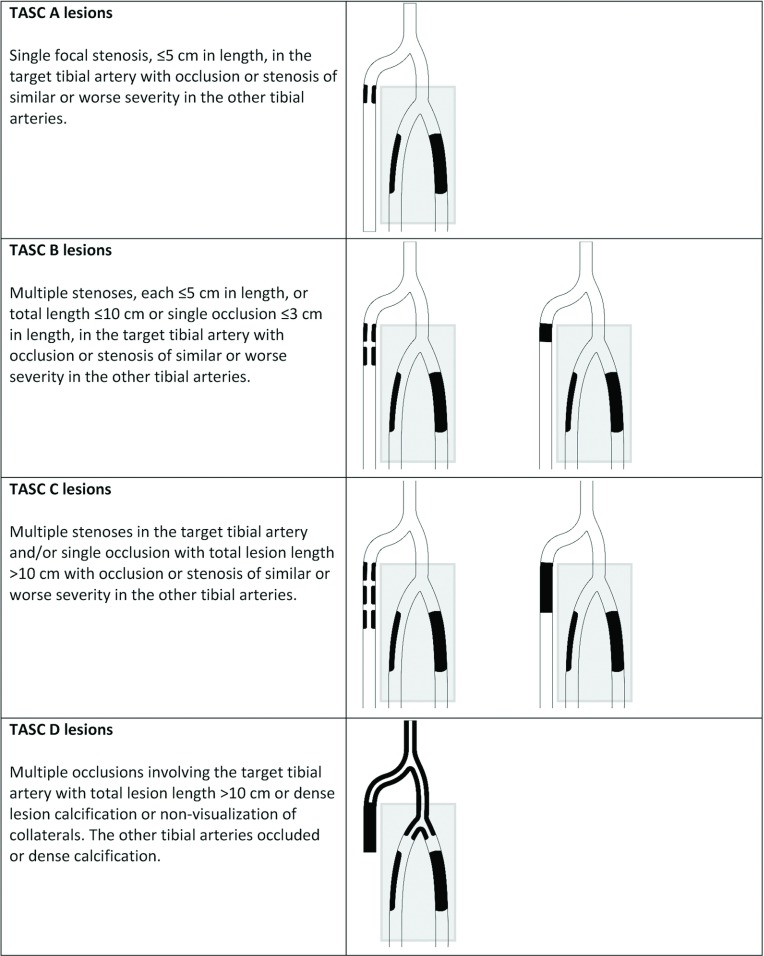
The Inter-Society Consensus for the Management of Peripheral Arterial Disease (TASC) guidelines were last updated in 2007 (TASC II) and represented the collaboration of international vascular specialties involved in the management of patients with peripheral arterial disease (PAD). Since the publication of TASC II, there have been innovations in endovascular revascularization strategies for patients with PAD. The intent of this publication is to provide a complete anatomic lower limb TASC lesion classification, including the infrapopliteal segment, and an updated literature review of new endovascular techniques and practice patterns employed by vascular specialists today.
Keywords: angioplasty; arteries; claudication; critical limb ischemia; occlusion; peripheral artery disease; revascularization; stenosis; stents; surgery.
Figures
References
-
- Dormandy JA, Rutherford RB. Management of peripheral arterial disease (PAD). TASC Working Group. TransAtlantic Inter-Society Consensus (TASC). J Vasc Surg 2000; 31: S1-S296. - PubMed
-
- Norgren L, Hiatt WR, Dormandy JA, et al. Inter-Society Consensus for the Management of Peripheral Arterial Disease (TASC II). J Vasc Surg 2007; 45 Suppl S: S5-67. - PubMed
-
- Krankenberg H, Schlüter M, Steinkamp HJ, et al. Nitinol stent implantation versus percutaneous transluminal angioplasty in superficial femoral artery lesions up to 10 cm in length: the femoral artery stenting trial (FAST). Circulation 2007; 116: 285-92. - PubMed
-
- Saxon RR, Dake MD, Volgelzang RL, et al. Randomized, multicenter study comparing expanded polytetrafluoroethylene-covered endoprosthesis placement with percutaneous transluminal angioplasty in the treatment of superficial femoral artery occlusive disease. J Vasc Interv Radiol 2008; 19: 823-32. - PubMed
-
- Werk M, Langner S, Reinkensmeier B, et al. Inhibition of restenosis in femoropopliteal arteries: paclitaxel-coated versus uncoated balloon: femoral paclitaxel randomized pilot trial. Circulation 2008; 118: 1358-65. - PubMed
LinkOut - more resources
Full Text Sources
Other Literature Sources
Medical