. 2016 Jan 5;11(1):e0146427.
doi: 10.1371/journal.pone.0146427. eCollection 2016.

The Induction of Heme Oxygenase 1 Decreases Painful Diabetic Neuropathy and Enhances the Antinociceptive Effects of Morphine in Diabetic Mice

Affiliations

The Induction of Heme Oxygenase 1 Decreases Painful Diabetic Neuropathy and Enhances the Antinociceptive Effects of Morphine in Diabetic Mice

Sílvia Castany et al. PLoS One. .

Abstract

Painful diabetic neuropathy is a common complication of diabetes mellitus which is poorly controlled by conventional analgesics. This study investigates if treatment with an heme oxygenase 1 (HO-1) inducer, cobalt protoporphyrin IX (CoPP), could modulate the allodynia and hyperalgesia induced by diabetes and enhanced the antinociceptive effects of morphine. In a diabetic mice model induced by the injection of streptozotocin (STZ), we evaluated the antiallodynic and antihyperalgesic effects produced by the intraperitoneal administration of 5 and 10 mg/kg of CoPP at several days after its administration. The antinociceptive actions produced by the systemic administration of morphine alone or combined with CoPP were also evaluated. In addition, the effects of CoPP treatment on the expression of HO-1, the microglial activation marker (CD11b/c), the inducible nitric oxide synthase (NOS2) and μ-opioid receptors (MOR), were also assessed. Our results showed that the administration of 10 mg/kg of CoPP during 5 consecutive days completely blocked the mechanical and thermal hypersensitivity induced by diabetes. These effects are accompanied by the increased spinal cord, dorsal root ganglia and sciatic nerve protein levels of HO-1. In addition, the STZ-induced activation of microglia and overexpression of NOS2 in the spinal cord were inhibited by CoPP treatment. Furthermore, the antinociceptive effects of morphine were enhanced by CoPP treatment and reversed by the administration of an HO-1 inhibitor, tin protoporphyrin IX (SnPP). The spinal cord expression of MOR was also increased by CoPP treatment in diabetic mice. In conclusion, our data provide the first evidence that the induction of HO-1 attenuated STZ-induced painful diabetic neuropathy and enhanced the antinociceptive effects of morphine via inhibition of microglia activation and NOS2 overexpression as well as by increasing the spinal cord levels of MOR. This study proposes the administration of CoPP alone or combined with morphine as an interesting therapeutic approach for the treatment of painful diabetic neuropathy.


Conflict of interest statement

Competing Interests: The authors have declared that no competing interests exist.

Figures

Fig 1
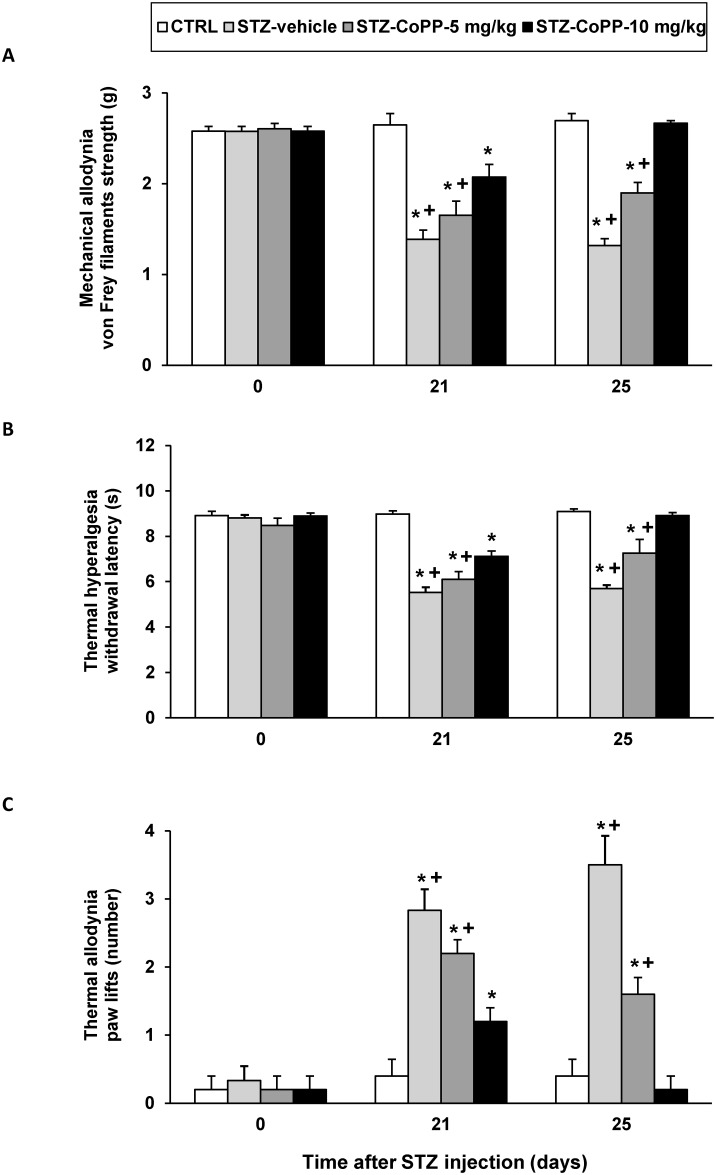
Fig 1. The antinociceptive effects produced by the intraperitoneal administration of CoPP at 5 and 10 mg/kg in STZ injected mice.
The development of mechanical allodynia (A), thermal hyperalgesia (B) and thermal allodynia (C) in the hind paws of control and diabetic mice intraperitoneally treated with vehicle or CoPP at 5 and 10 mg/kg from day 21 to day 25 after STZ injection is shown. Data of tests are shown at day 0 (before diabetes induction) and at days 21 and 25 after STZ injection (one and five days after initiation of CoPP administration, respectively). Data are expressed as von Frey filaments strength (g) for mechanical allodynia, withdrawal latency (s) for thermal hyperalgesia and paw lifts (number) for thermal allodynia. For each day, * indicates significant differences vs. CTRL mice (p< 0.05, one-way ANOVA followed by the Student Newman Keuls test) and + indicates significant differences vs. STZ mice treated with CoPP at 10 mg/kg (p< 0.05, one-way ANOVA followed by the Student Newman Keuls test). The results are shown as the mean values ± SEM; n = 6–8 animals per group.
Fig 2
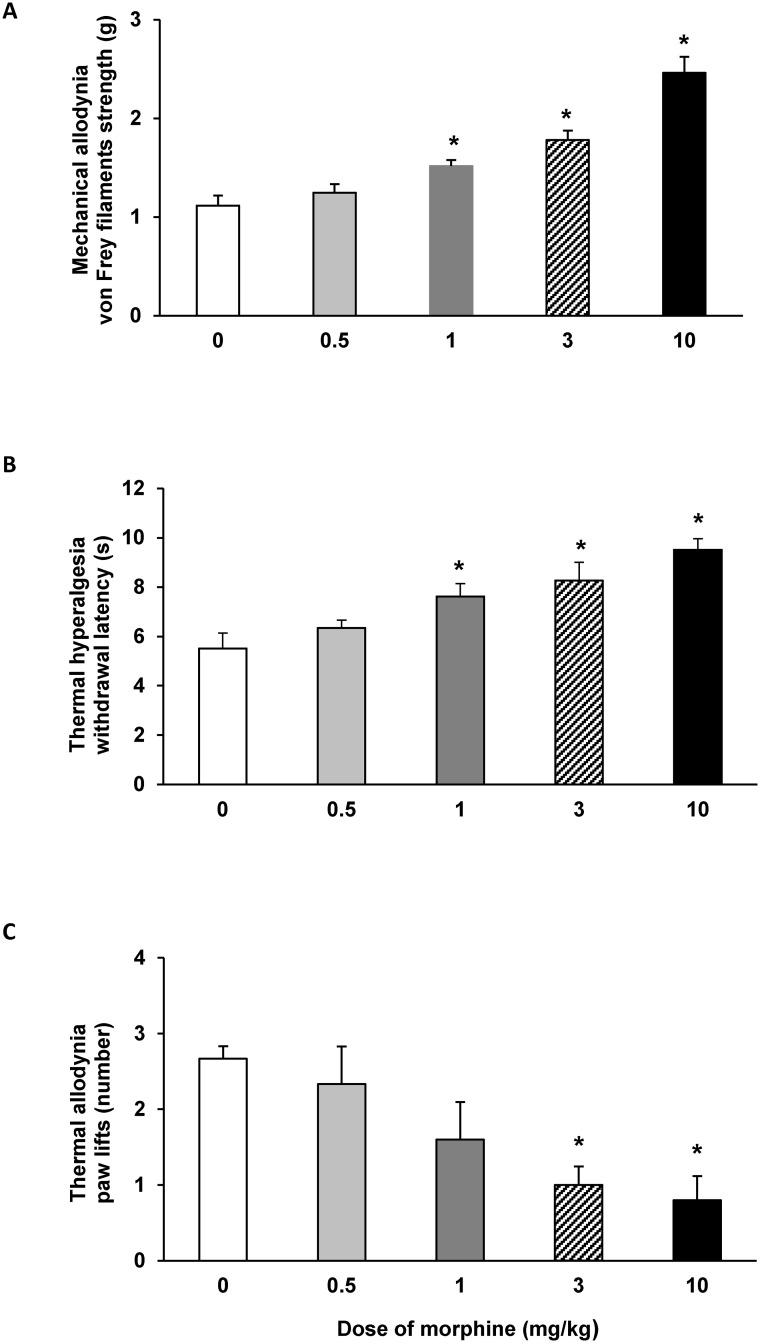
Fig 2. Effects of the subcutaneous administration of morphine on the mechanical allodynia, thermal hyperalgesia and thermal allodynia induced by the administration of STZ.
Mechanical antiallodynic (A), thermal antihyperalgesic (B) and thermal antiallodynic (C) effects produced by the subcutaneous administration of different doses of morphine in STZ-injected mice. Data are expressed as von Frey filaments strength (g) for mechanical allodynia, withdrawal latency (s) for thermal hyperalgesia and paw lifts (number) for thermal allodynia. For each test, * denotes significant differences versus saline treated mice (0 mg/kg) (p< 0.05; one-way ANOVA followed by the Student Newman Keuls test). The results are shown as the mean values ± SEM; n = 6 animals for dose.
Fig 3
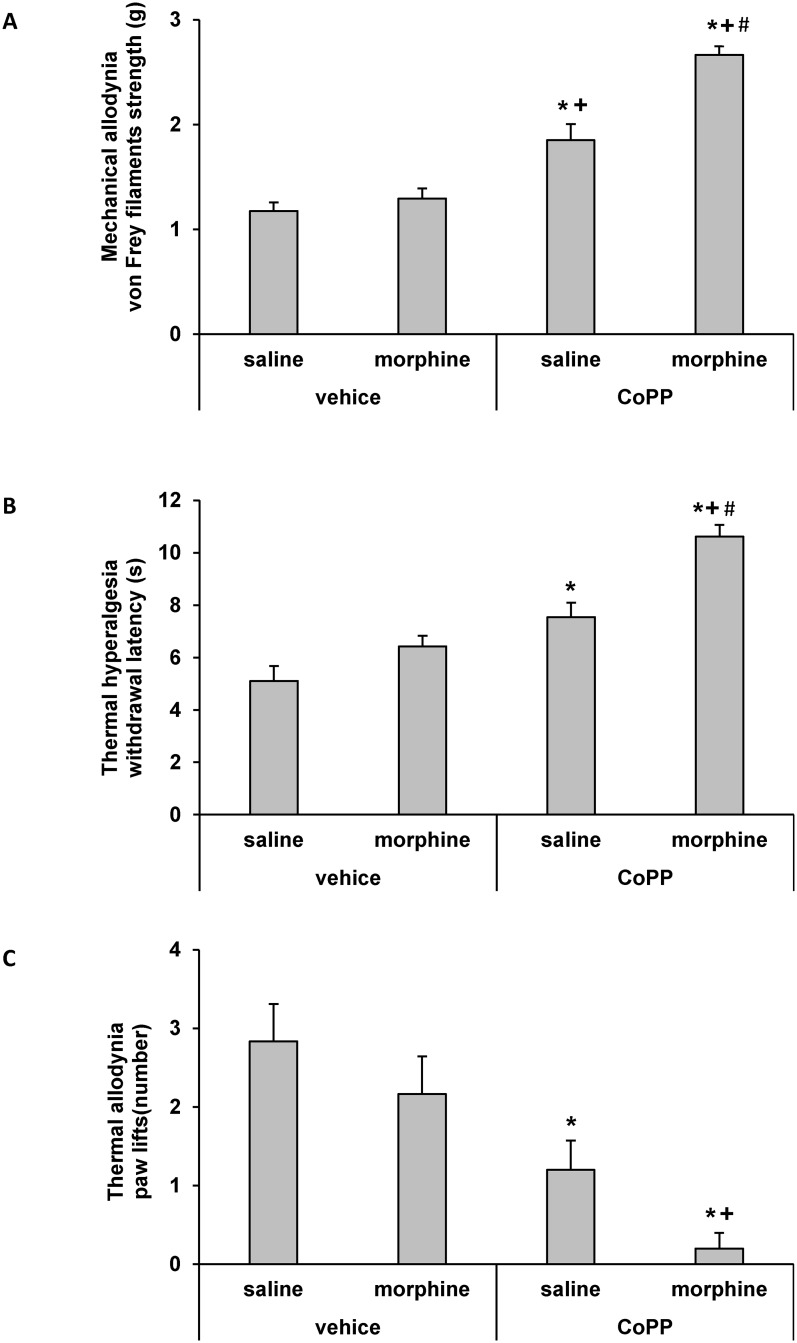
Fig 3. Effects of CoPP treatment on the antiallodynic and antihyperalgesic responses to morphine.
Mechanical antiallodynic (A), thermal antihyperalgesic (B), and thermal antiallodynic (C) effects of the subcutaneous administration of 0.5 mg/kg of morphine or saline in STZ-injected mice pretreated with vehicle (DMSO 1%) or 10 mg/kg of CoPP. The effects of the intraperitoneal administration of CoPP alone are also shown. Data are expressed as von Frey filaments strength (g) for mechanical allodynia, withdrawal latency (s) for thermal hyperalgesia and paw lifts (number) for thermal allodynia. For each behavioral test, * denotes significant differences versus control group treated with vehicle plus saline (p< 0.05, one-way ANOVA followed by Student Newman Keuls test), + denotes significant differences versus group treated with vehicle plus morphine (p< 0.05, one-way ANOVA followed by the Student Newman Keuls test) and # denotes significant differences versus group treated with CoPP plus saline (p< 0.05; one-way ANOVA followed by the Student Newman Keuls test).
Fig 4
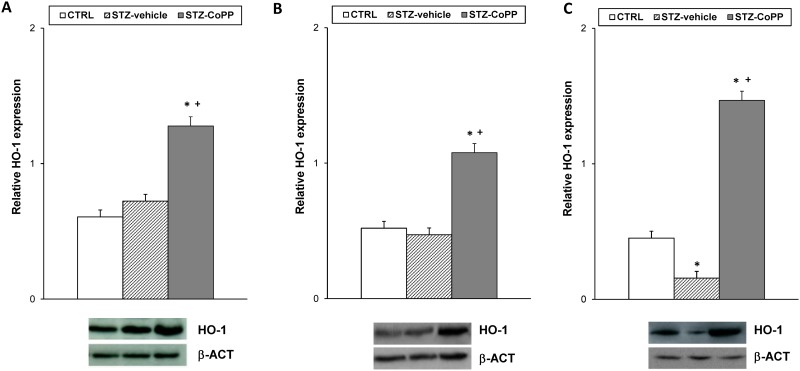
Fig 4. Effect of CoPP treatment on HO-1 protein expression in the spinal cord, dorsal root ganglia and sciatic nerve from STZ-injected mice.
The protein expression of HO-1 in the spinal cord (A), dorsal root ganglia (B) and sciatic nerve (C) from STZ-injected mice treated with vehicle or CoPP is represented. The expression of HO-1 in the spinal cord, dorsal root ganglia and sciatic nerve from CTRL mice treated with vehicle has been also represented as controls. For each tissue, * indicates significant differences when compared to CTRL mice (p< 0.05, one-way ANOVA followed by Student Newman Keuls test) and + when compared to STZ vehicle treated mice (p< 0.05, one-way ANOVA followed by Student Newman Keuls test). Representative examples of western blots for HO-1 (32 kDa) in which β-actin (42 kDa) was used as a loading control, are also shown. Data are expressed as the relative expression ± SEM; n = 4 samples per group.
Fig 5
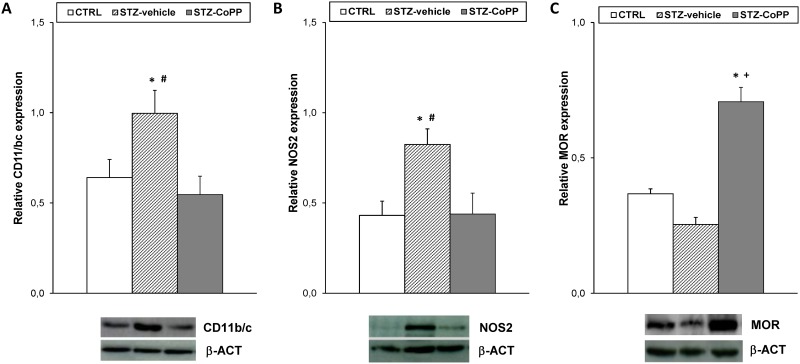
Fig 5. Effect of CoPP treatment on CD11b/c, NOS2 and MOR protein expression in the spinal cord from STZ-injected mice.
The protein expression of CD11b/c (A), NOS2 (B) and MOR (C) in the spinal cord from STZ-injected mice treated with vehicle or CoPP is represented. The expression of CD11b/c, NOS2 and MOR from CTRL mice treated with vehicle has been also represented as controls. For each protein, * indicates significant differences when compared to CTRL animals (p< 0.05, one-way ANOVA followed by Student Newman Keuls test), + indicates significant differences when compared to STZ vehicle treated animals (p< 0.05, one-way ANOVA followed by Student Newman Keuls test) and # indicates significant differences when compared to STZ-CoPP treated animals (p< 0.05, one-way ANOVA followed by Student Newman Keuls test). Representative examples of western blots for CD11b/c (160 kDa), NOS2 (130 kDa) and MOR (50 kDa) proteins, in which β-actin (42 kDa) was used as a loading control, are also shown. Data are expressed as the relative expression ± SEM; n = 4 samples per group.

References

    1. Park TS, Park JH, Baek HS. Can diabetic neuropathy be prevented? Diabetes Res Clin Pract. 2004;66 Suppl 1:S53–6. - PubMed
    1. Courteix C, Bourget P, Caussade F, Bardin M, Coudore F, Fialip J, et al. Is the reduced efficacy of morphine in diabetic rats caused by alterations of opiate receptors or of morphine pharmacokinetics? J Pharmacol Exp Ther. 1998;285:63–70. - PubMed
    1. Gul H, Yildiz O, Dogrul A, Yesilyurt O, Isimer A The interaction between IL-1beta and morphine: possible mechanism of the deficiency of morphine-induced analgesia in diabetic mice. Pain. 2000;89:39–45. - PubMed
    1. Ohsawa M, Mizoguchi H, Narita M, Kamei J, Nagase H, Tseng LF. Effects of a mu-opioid receptor agonist on G-protein activation in streptozotocin-induced diabetic mice. Eur J Pharmacol. 2000;401:55–8. - PubMed
    1. Chen SR, Pan HL. Antinociceptive effect of morphine, but not mu opioid receptor number, is attenuated in the spinal cord of diabetic rats. Anesthesiology. 2003; 99:1409–14. - PubMed

Publication types

MeSH terms