


The plastidial retrograde signal methyl erythritol cyclopyrophosphate is a regulator of salicylic acid and jasmonic acid crosstalk
- PMID: 26733689
- PMCID: PMC4762391
- DOI: 10.1093/jxb/erv550
The plastidial retrograde signal methyl erythritol cyclopyrophosphate is a regulator of salicylic acid and jasmonic acid crosstalk
Abstract
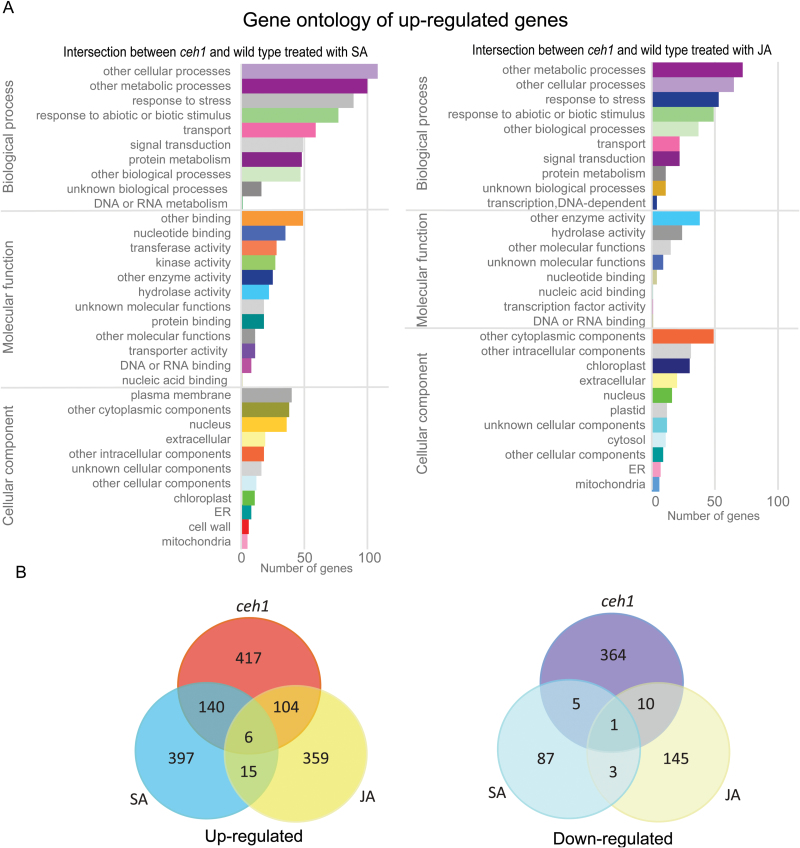
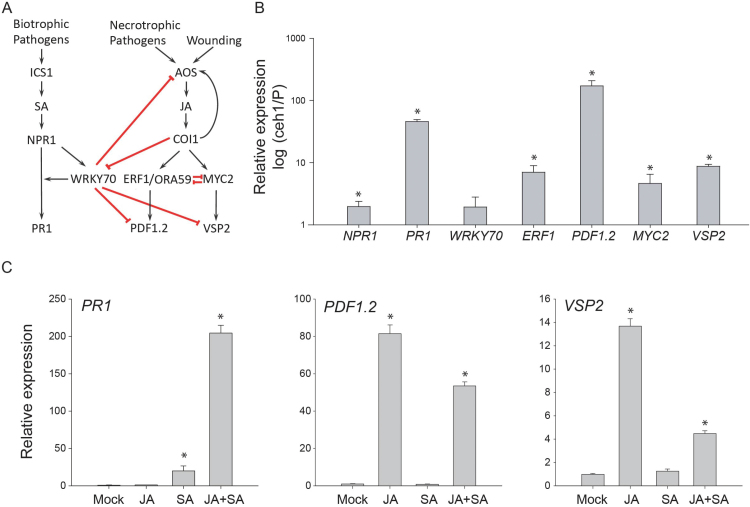
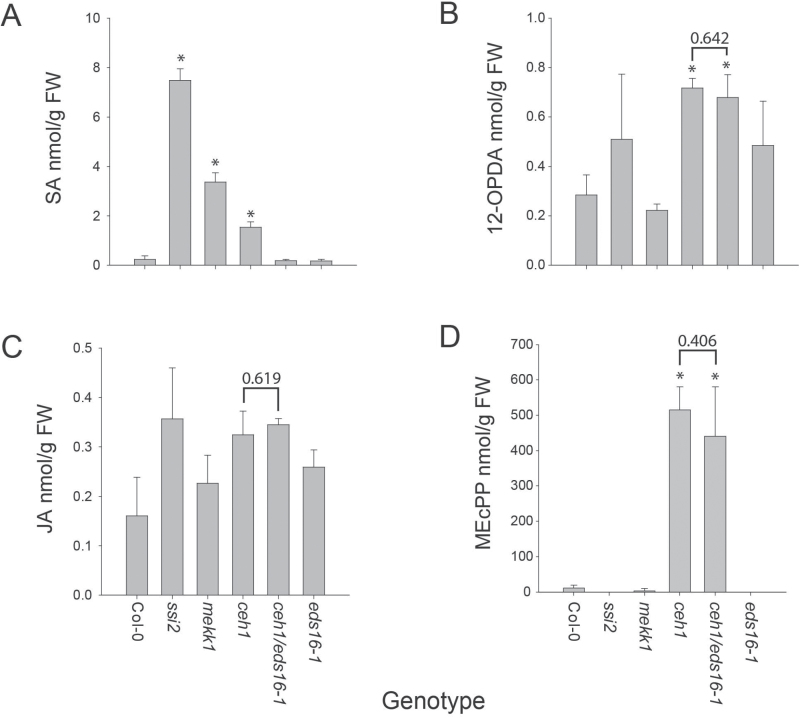
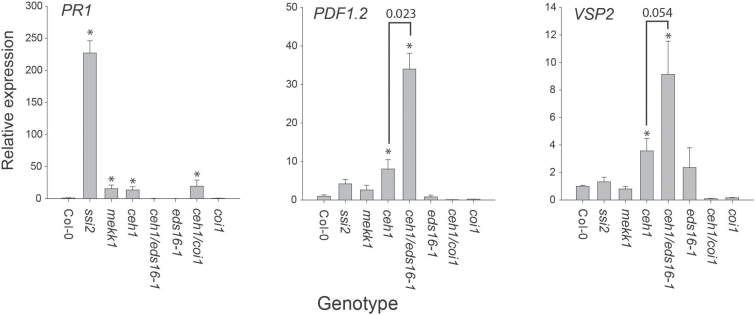
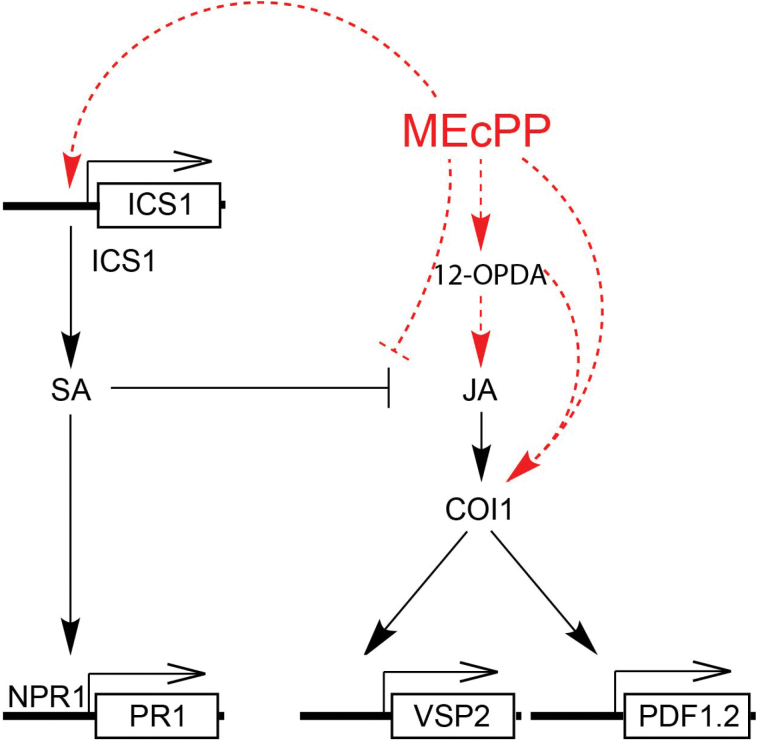
The exquisite harmony between hormones and their corresponding signaling pathways is central to prioritizing plant responses to simultaneous and/or successive environmental trepidations. The crosstalk between jasmonic acid (JA) and salicylic acid (SA) is an established effective mechanism that optimizes and tailors plant adaptive responses. However, the underlying regulatory modules of this crosstalk are largely unknown. Global transcriptomic analyses of mutant plants (ceh1) with elevated levels of the stress-induced plastidial retrograde signaling metabolite 2-C-methyl-D-erythritol cyclopyrophosphate (MEcPP) revealed robustly induced JA marker genes, expected to be suppressed by the presence of constitutively high SA levels in the mutant background. Analyses of a range of genotypes with varying SA and MEcPP levels established the selective role of MEcPP-mediated signal(s) in induction of JA-responsive genes in the presence of elevated SA. Metabolic profiling revealed the presence of high levels of the JA precursor 12-oxo-phytodienoic acid (OPDA), but near wild type levels of JA in the ceh1 mutant plants. Analyses of coronatine-insensitive 1 (coi1)/ceh1 double mutant plants confirmed that the MEcPP-mediated induction is JA receptor COI1 dependent, potentially through elevated OPDA. These findings identify MEcPP as a previously unrecognized central regulatory module that induces JA-responsive genes in the presence of high SA, thereby staging a multifaceted plant response within the environmental context.
Keywords: Coronatine-insensitive1 (COI1); MEcPP (2-C-methyl-d-erythritol cyclopyrophosphate); hormonal interplay; jasmonic acid (JA); plastidial retrograde signaling metabolite; salicylic acid (SA); stress responses..
© The Author 2016. Published by Oxford University Press on behalf of the Society for Experimental Biology.
Figures
References
-
- Bjornson M, Benn G, Song X, Comai L, Franz AK, Dandekar AM, Drakakaki G, Dehesh K. 2014. Distinct roles for mitogen-activated protein kinase signaling and CALMODULIN-BINDING TRANSCRIPTIONAL ACTIVATOR3 in regulating the peak time and amplitude of the plant general stress response. Plant Physiology 166, 988–996. - PMC - PubMed
-
- Doherty HM, Selvendran RR, Bowles DJ. 1988. The wound response of tomato plants can be inhibited by aspirin and related hydroxy-benzoic acids. Physiological and Molecular Plant Pathology 33, 377–384.
-
- Fu ZQ, Dong X. 2013. Systemic acquired resistance: turning local infection into global defense. Annual Review of Plant Biology 64, 839–863. - PubMed
-
- Garcion C, Métraux J-P. 2007. Salicylic Acid. Annual Plant Reviews 24, 229–255.
Publication types
MeSH terms
Substances
Grants and funding
LinkOut - more resources
Full Text Sources
Other Literature Sources
Molecular Biology Databases
