Review
. 2016:56:251-72.
doi: 10.1146/annurev-pharmtox-010715-103417.

Triclosan: A Widespread Environmental Toxicant with Many Biological Effects

Affiliations
Review

Triclosan: A Widespread Environmental Toxicant with Many Biological Effects

Mei-Fei Yueh et al. Annu Rev Pharmacol Toxicol. 2016.

Abstract

Triclosan (TCS) is a broad-spectrum antimicrobial agent that has been added to personal care products, including hand soaps and cosmetics, and impregnated in numerous different materials ranging from athletic clothing to food packaging. The constant disposal of TCS into the sewage system is creating a major environmental and public health hazard. Owing to its chemical properties of bioaccumulation and resistance to degradation, TCS is widely detected in various environmental compartments in concentrations ranging from nanograms to micrograms per liter. Epidemiology studies indicate that significant levels of TCS are detected in body fluids in all human age groups. We document here the emerging evidence--from in vitro and in vivo animal studies and environmental toxicology studies--demonstrating that TCS exerts adverse effects on different biological systems through various modes of action. Considering the fact that humans are simultaneously exposed to TCS and many TCS-like chemicals, we speculate that TCS-induced adverse effects may be relevant to human health.

Keywords: antibacterial; antimicrobial resistance; bioaccumulation; environmental hazard; hormone homeostasis; liver pathogenesis; precautionary principle.


Figures
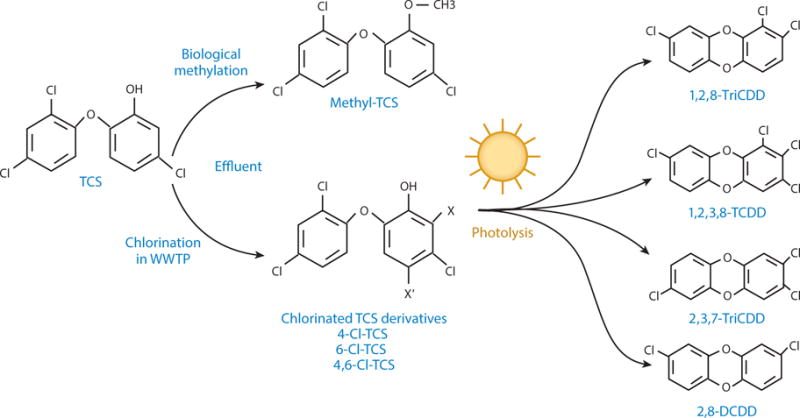
Figure 1
Figure 1
Chlorinated TCS derivatives and their dioxin photoproducts transformed from TCS in the environment. During the disinfection of wastewater with free chlorine, TCS is chemically transformed into chlorinated derivatives, including 4-Cl-TCS, 6-Cl-TCS, and 4,6-Cl-TCS. Through subsequent photolysis, TCS and its chlorinated derivatives are photochemically transformed to various PCDDs, generally with 1,2,8-TriCDD, 1,2,3,8-TCDD, 2,3,7-TriCDD, and 2,8-DCDD being most abundant in the environment. In addition, a small percentage of methyl-TCS is produced during the normal biodegradation process (25). Abbreviations: 1,2,3,8-TCDD, 1,2,3,8-tetrachlorodibenzo-p-dioxin; 1,2,8-TriCDD, 1,2,8-trichlorodibenzo-p-dioxin; 2,3,7-TriCDD, 2,3,7-trichlorodibenzo-p-dioxin; 2,8-DCDD, 2,8-dichlorodibenzo-p-dioxin; PCDD, polychlorodibenzo-p-dioxin; TCS, triclosan; WWTP, wastewater treatment plant.
Figure 2
Figure 2
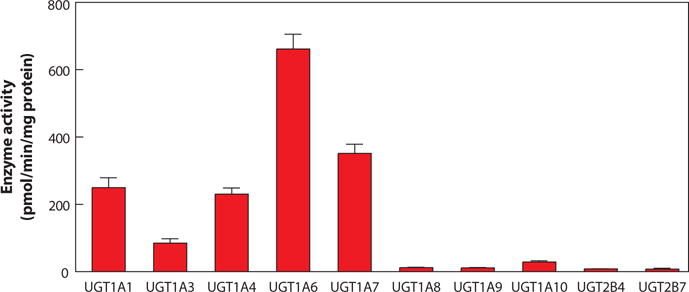
TCS glucuronidation. UGT specificity for the metabolism of TCS was examined using transfected COS cells with individual UGTs. Each of the full-length UGT1As, UGT2B4, and UGT2B7 cDNAs was subcloned to the expression vector. The recombinant plasmids were transfected into COS cells, and TCS glucuronidation activities were measured using a mixture containing cell lysates, TCS, and 14C-UDPGlcA as described previously (119). Abbreviations: TCS, triclosan; UGT, UDP-glucuronosyltransferase.
Figure 3
Figure 3
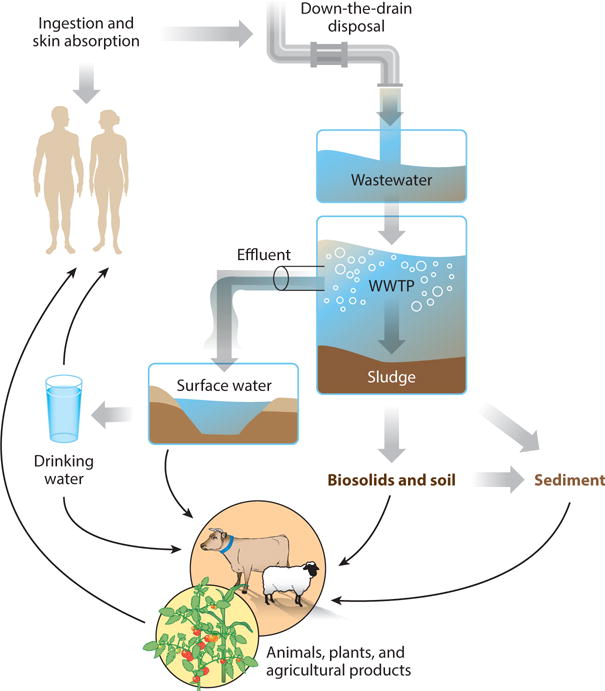
Fate and effects of TCS in the environment. Abbreviations: TCS, triclosan; WWTP, wastewater treatment plant.
Figure 4
Figure 4
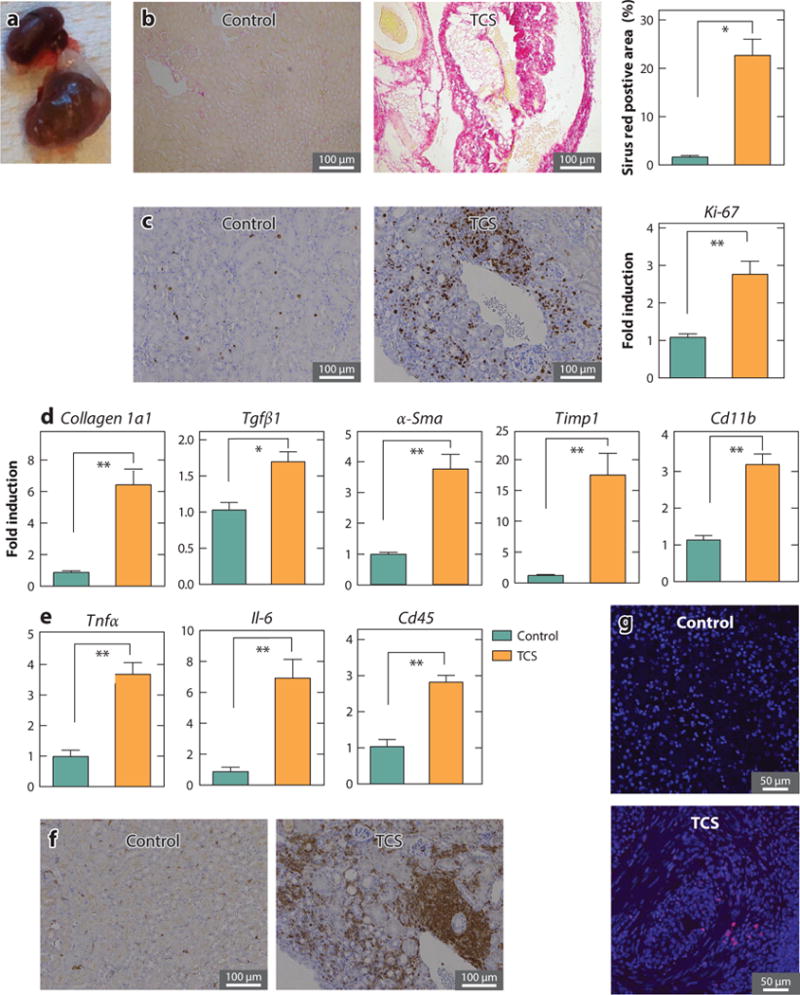
TCS treatment induces kidney fibrosis in mice. Following 8-month treatment with a chow diet containing 0.08% TCS, 8.3% of mice developed kidney fibrosis. Comparisons were made between fibrotic (n = 3) and nondiseased kidneys (n = 3). (a) A normal (top) and enlarged fibrotic (bottom) kidney from TCS-treated mice. (b) Collagen deposition was examined by Sirius red staining (left and center) and its quantification (right). (c) Expression of Ki-67 was determined by immunohistochemistry (left and center) and real-time PCR (right). (d) Expression of genes relevant to renal fibrosis, including Collagen 1a1, Tgfβ1, α-Sma, Timp1, and Cd11b, was detected by real-time PCR. (e) Expression of inflammatory genes, including Tnfα and Il-6, was assessed by real-time PCR. In addition, expression of CD45 was shown by immunostaining with the anti-Cd45 antibody in liver sections (f) and quantitated by real-time PCR (e). (g) Liver cell apoptosis was determined by TUNEL staining. Throughout the figure, P values < 0.05 were considered statistically significant; one asterisk indicates a statistically significant difference of P < 0.005, and two asterisks indicate P < 0.0005. Abbreviations: PCR, polymerase chain reaction; TCS, triclosan. Parts of this figure adapted from Reference 21.
Figure 5
Figure 5
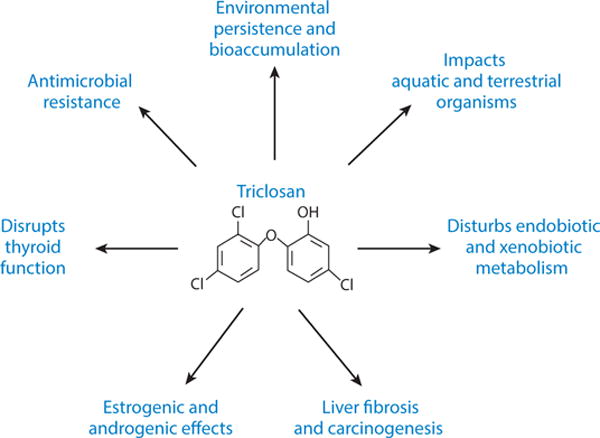
Environmental impacts and health issues surrounding triclosan.

References

    1. Fang JL, Stingley RL, Beland FA, Harrouk W, Lumpkins DL, Howard P. Occurrence, efficacy, metabolism, and toxicity of triclosan. J Environ Sci Health C: Environ Carcinog Ecotoxicol Rev. 2010;28:147–71. - PubMed
    1. Rodricks JV, Swenberg JA, Borzelleca JF, Maronpot RR, Shipp AM. Triclosan: a critical review of the experimental data and development of margins of safety for consumer products. Crit Rev Toxicol. 2010;40:422–84. - PubMed
    1. Dann AB, Hontela A. Triclosan: environmental exposure, toxicity and mechanisms of action. J Appl Toxicol. 2011;31:285–311. - PubMed
    1. Wilcox MH, Hall J, Pike H, Templeton PA, Fawley WN, et al. Use of perioperative mupirocin to prevent methicillin-resistant Staphylococcus aureus (MRSA) orthopaedic surgical site infections. J Hosp Infect. 2003;54:196–201. - PubMed
    1. Aiello AE, Larson EL, Levy SB. Consumer antibacterial soaps: effective or just risky? Clin Infect Dis. 2007;45(Suppl. 2):S137–47. - PubMed

Publication types