


Antimicrobial peptides and wound healing: biological and therapeutic considerations
- PMID: 26738772
- PMCID: PMC4789108
- DOI: 10.1111/exd.12929
Antimicrobial peptides and wound healing: biological and therapeutic considerations
Abstract
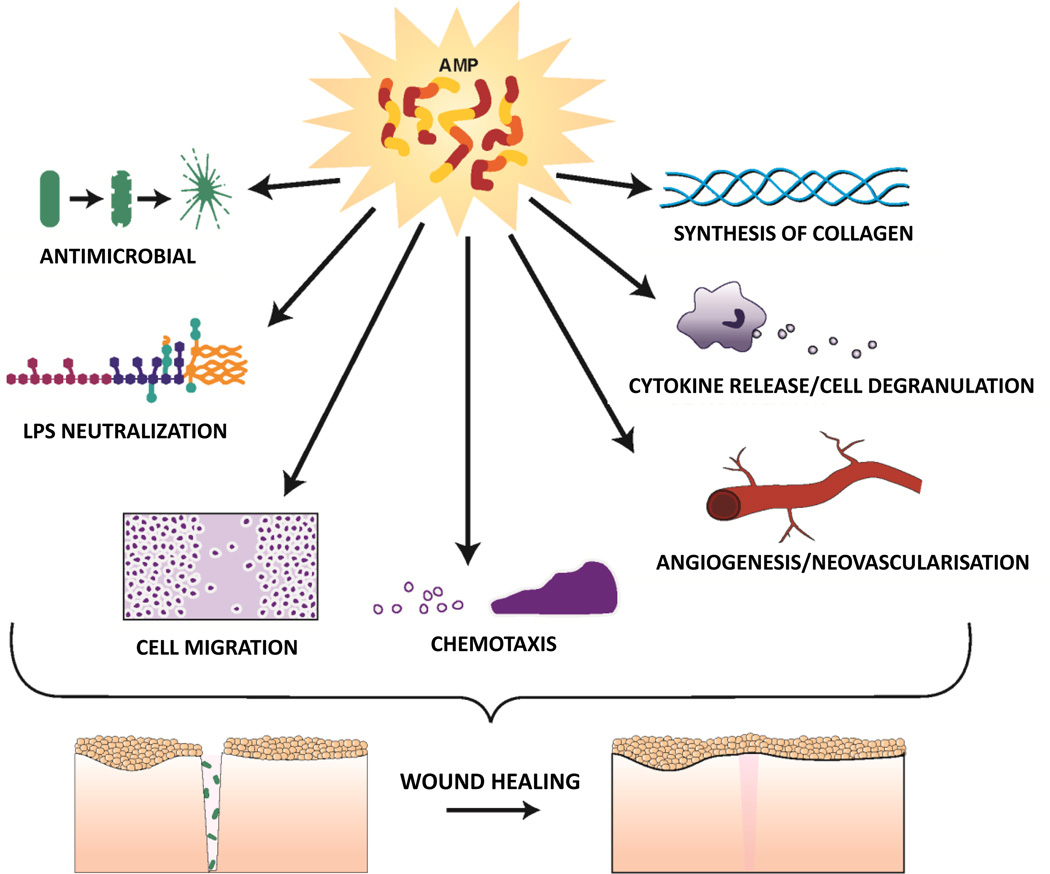
Repair of tissue wounds is a fundamental process to re-establish tissue integrity and regular function. Importantly, infection is a major factor that hinders wound healing. Multicellular organisms have evolved an arsenal of host-defense molecules, including antimicrobial peptides (AMPs), aimed at controlling microbial proliferation and at modulating the host's immune response to a variety of biological or physical insults. In this brief review, we provide the evidence for a role of AMPs as endogenous mediators of wound healing and their promising therapeutic potential for the treatment of non-life-threatening skin and other epithelial injuries.
Keywords: antibiotic resistance; antimicrobial peptide; frog skin; innate immunity; skin infections; wound healing.
© 2016 John Wiley & Sons A/S. Published by John Wiley & Sons Ltd.
Conflict of interest statement
The authors declare no conflict of interest
Figures
Comment in
-
AMP-lification of wound healing.Exp Dermatol. 2016 Aug;25(8):592-3. doi: 10.1111/exd.13039. Exp Dermatol. 2016. PMID: 27094016 No abstract available.
References
-
- Lau K, Paus R, Tiede S, et al. Exp Dermatol. 2009;18:921–933. - PubMed
Publication types
MeSH terms
Substances
Grants and funding
LinkOut - more resources
Full Text Sources
Other Literature Sources
