. 2016 Mar;202(3):961-75.
doi: 10.1534/genetics.115.183533. Epub 2016 Jan 6.

Functional Interplay of Two Paralogs Encoding SWI/SNF Chromatin-Remodeling Accessory Subunits During Caenorhabditis elegans Development

Affiliations

Functional Interplay of Two Paralogs Encoding SWI/SNF Chromatin-Remodeling Accessory Subunits During Caenorhabditis elegans Development

Iris Ertl et al. Genetics. 2016 Mar.

Abstract

SWI/SNF ATP-dependent chromatin-remodeling complexes have been related to several cellular processes such as transcription, regulation of chromosomal stability, and DNA repair. The Caenorhabditis elegans gene ham-3 (also known as swsn-2.1) and its paralog swsn-2.2 encode accessory subunits of SWI/SNF complexes. Using RNA interference (RNAi) assays and diverse alleles we investigated whether ham-3 and swsn-2.2 have different functions during C. elegans development since they encode proteins that are probably mutually exclusive in a given SWI/SNF complex. We found that ham-3 and swsn-2.2 display similar functions in vulva specification, germline development, and intestinal cell proliferation, but have distinct roles in embryonic development. Accordingly, we detected functional redundancy in some developmental processes and demonstrated by RNA sequencing of RNAi-treated L4 animals that ham-3 and swsn-2.2 regulate the expression of a common subset of genes but also have specific targets. Cell lineage analyses in the embryo revealed hyper-proliferation of intestinal cells in ham-3 null mutants whereas swsn-2.2 is required for proper cell divisions. Using a proteomic approach, we identified SWSN-2.2-interacting proteins needed for early cell divisions, such as SAO-1 and ATX-2, and also nuclear envelope proteins such as MEL-28. swsn-2.2 mutants phenocopy mel-28 loss-of-function, and we observed that SWSN-2.2 and MEL-28 colocalize in mitotic and meiotic chromosomes. Moreover, we demonstrated that SWSN-2.2 is required for correct chromosome segregation and nuclear reassembly after mitosis including recruitment of MEL-28 to the nuclear periphery.

Keywords: Caenorhabditis elegans; SWI/SNF; chromatin; development; nuclear envelope.


Figures

Figure 1
Figure 1
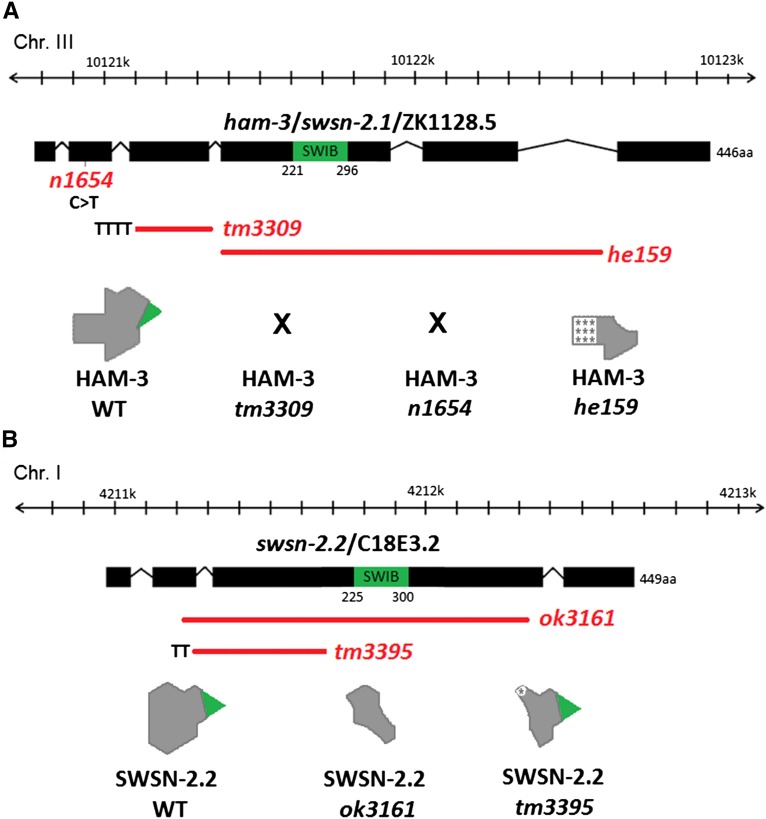
Scheme of ham-3 and swsn-2.2 mutant alleles and their expected gene products. The SWIB domain is labeled in green. Red bars represent deletions. Letters indicate insertions or transitions. In the drawing for the expected protein products, asterisks in the gray background indicate amino acids that are different from the original sequence. (A) ham-3(n1654) and ham-3(tm3309) are putative null alleles. ham-3(he159) encodes a truncated protein lacking the central SWIB domain. (B) Both swsn-2.2 mutant alleles produce truncated proteins. While the product encoded by swsn-2.2(ok3161) lacks the central domain, swsn-2.2(tm3395) gives a chimeric protein containing the SWIB motif.
Figure 2
Figure 2
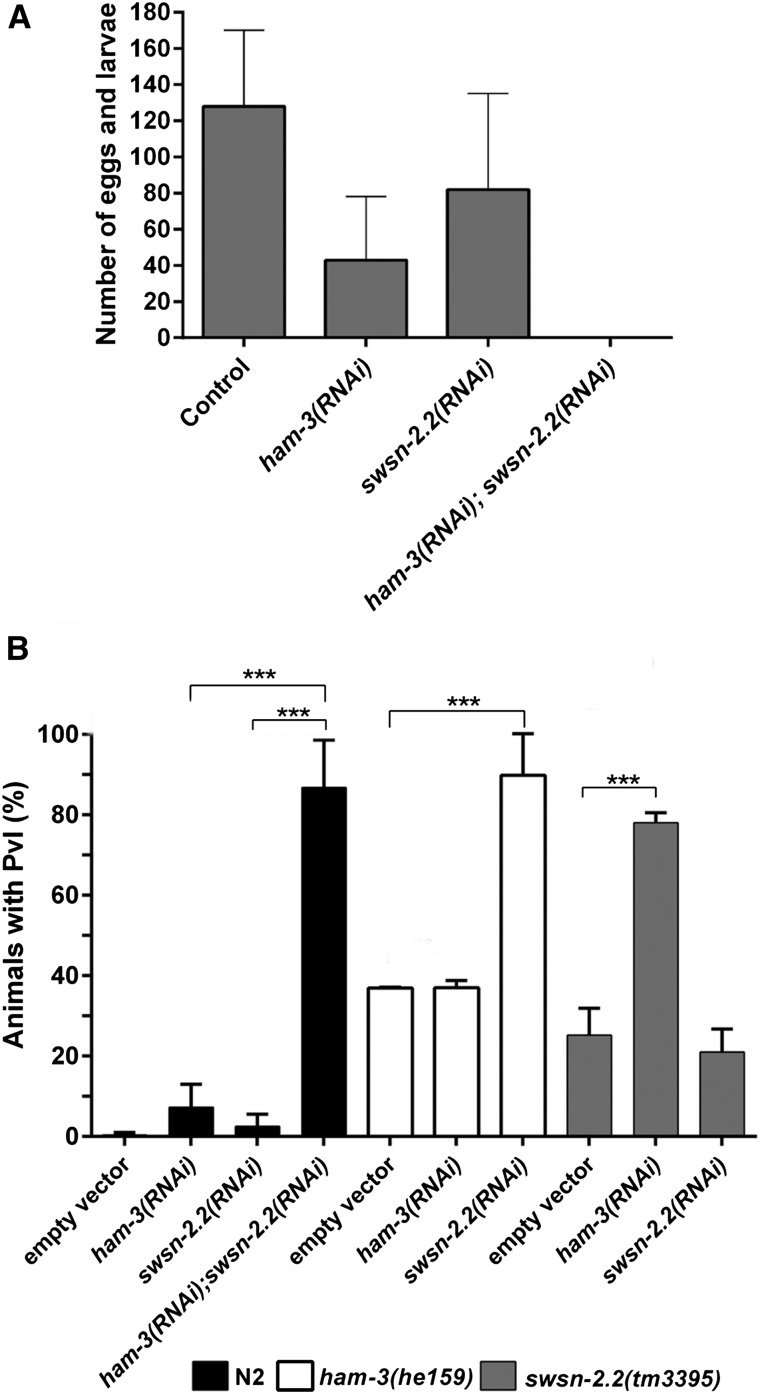
ham-3 and swsn-2.2 act redundantly in fertility and vulva development. (A) RNAi of ham-3 or swsn-2.2 causes reduced brood size, but double RNAi results in sterility. Synchronized L1 larvae (n ≥ 24) were grown on the indicated RNAi plate at 25° and their progeny were counted. Error bars indicate the standard deviations in the brood sizes determined in two independent experiments. (B) ham-3 and swsn-2.2 act redundantly in vulval induction. Wild type (N2) (n ≥ 86) or mutants (n ≥ 58) were seeded on the indicated RNAi plates at L1 stage. Experiments with N2 were performed at 25°, and the experiments with ham-3 or swsn-2.2 mutants were performed at 20°. The number of animals showing Pvl was determined at the young adult stage. Error bars indicate the standard deviation between two independent experiments. The statistical significance was calculated with a two-tailed student’s t-test. ***P-value ≤ 0.001.
Figure 3
Figure 3
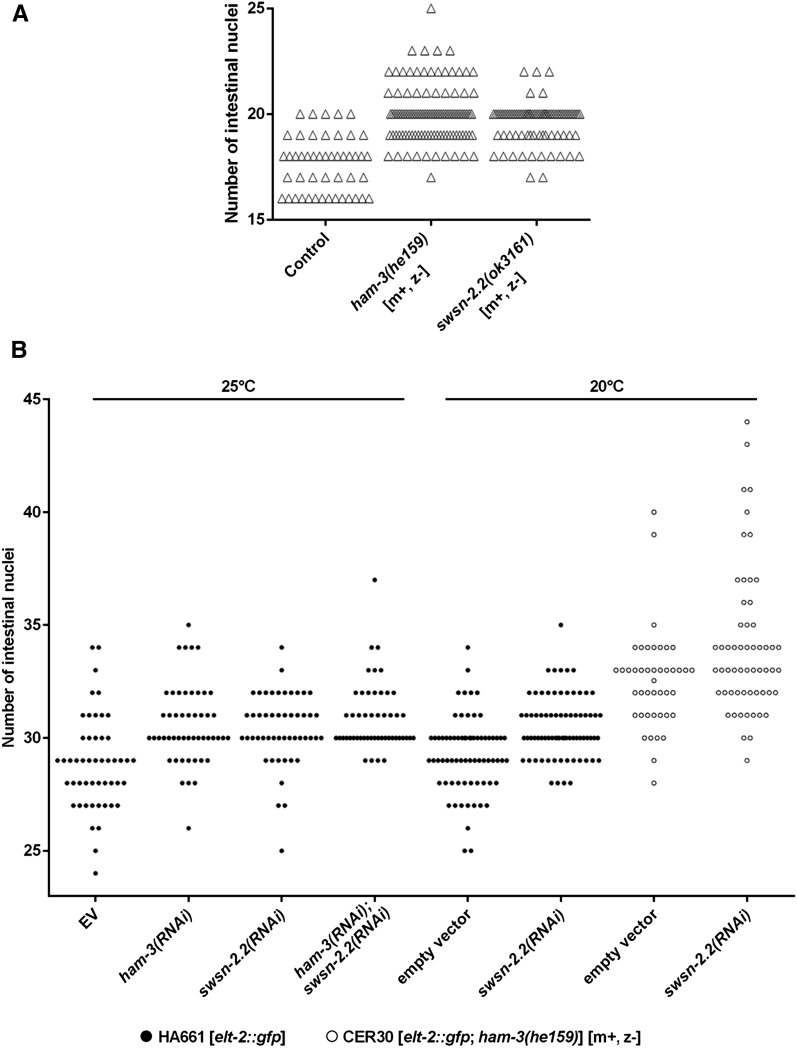
ham-3 and swsn-2.2 regulate the number of intestinal nuclei. (A) The number of intestinal nuclei of homozygous ham-3(he159) and swsn-2.2(ok3161) mutants bearing a Pelt-2::gfp reporter was determined at the L1 stage (n ≥ 48). In both cases mutants came from heterozygous mothers [m+, z−] and were grown at 20°. [m+ or m−] indicates maternal, and [z+ or z−] indicates zygotic contribution of the respective protein. (B) The number of GFP-positive intestinal nuclei was determined at the L4 stage in Pelt-2::gfp animals (n ≥ 44). Due to the sickness of ham-3(he159) mutants at high temperatures, experiments with this allele were performed at 20°.
Figure 4
Figure 4
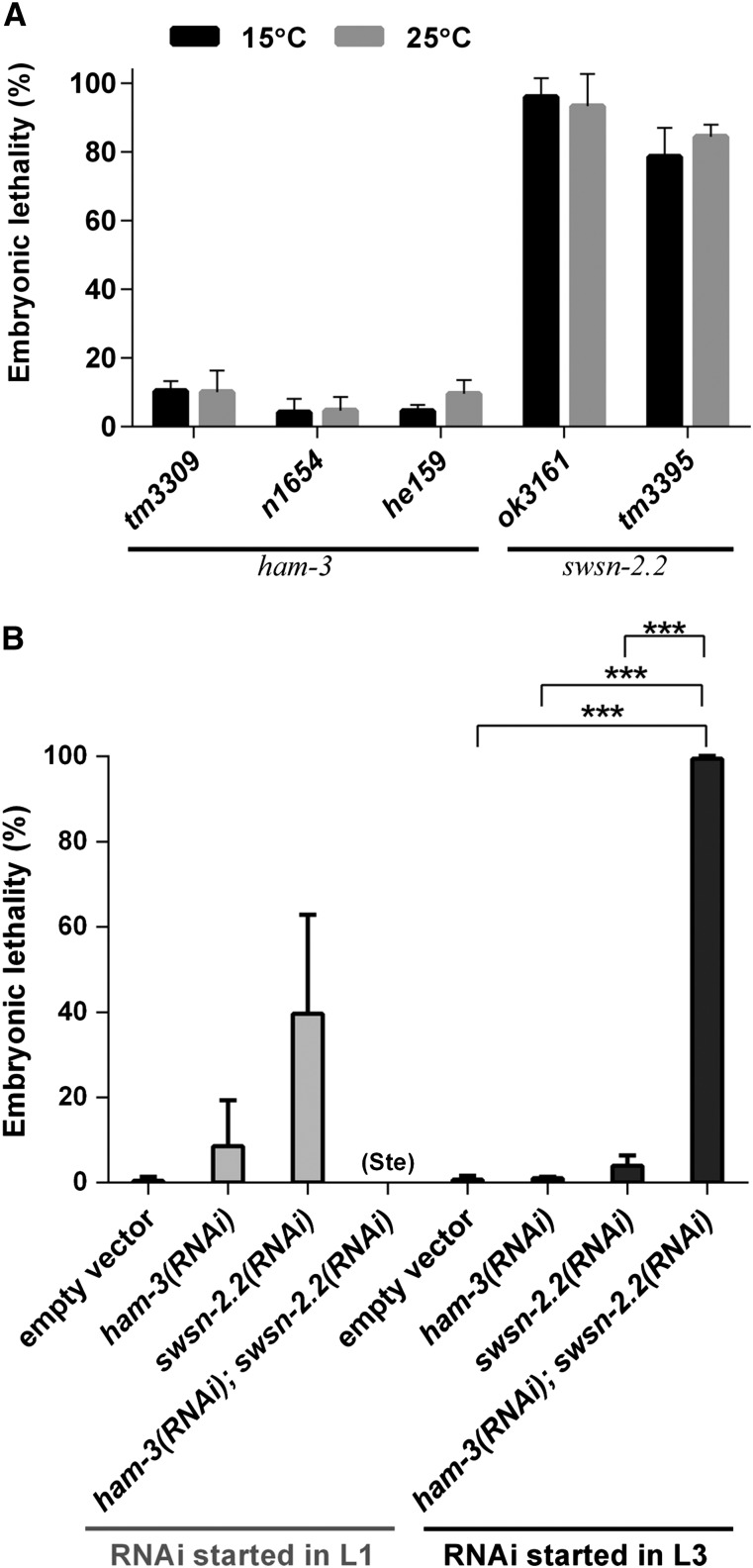
Embryonic lethality caused by RNAi and mutations of ham-3 and swsn-2.2. (A) swsn-2.2 mutants display higher embryonic lethality than ham-3 mutants. Homozygote mutants (F1) were grown at 15° until reaching the adult stage and were then dissected, and the embryos (F2) were incubated at the indicated temperatures. Twenty-four hours after dissection, the number of eggs unable to hatch was determined (n ≥ 371). Apart from swsn-2.2(ok3161) and ham-3(tm3309), all dissected animals derived from homozygote mothers (P0). (B) RNAi assays uncover a functional redundancy between ham-3 and swsn-2.2 in embryonic development. Starting the RNAi at the L3 stage, the animals fed with both RNAi clones bypassed the sterile phenotype, observed when RNAi starts at L1, and a synthetic embryonic phenotype was observed. Error bars indicate the standard deviation between two independent experiments. The statistical significance was calculated based on a two-tailed student’s t-test. ***P-value ≤ 0.001.
Figure 5
Figure 5
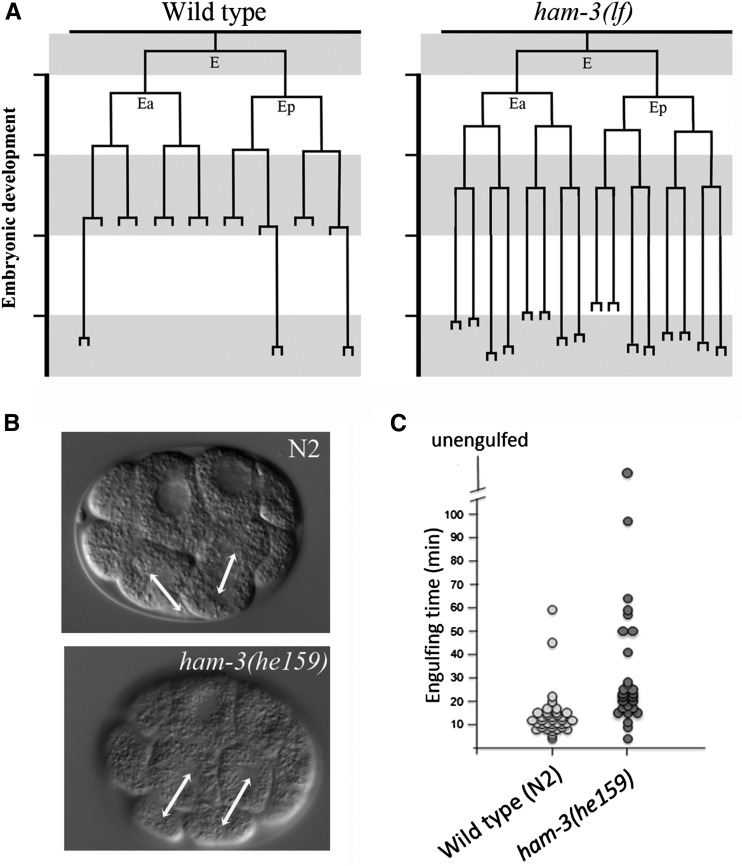
Embryonic phenotypes of ham-3 mutants. (A) ham-3(he159) and ham-3(n1654) mutants [represented as ham-3(lf)] exhibit additional cell divisions in the E lineage. (B) ham-3(he159) embryo displaying an abnormal orientation of the mitotic spindle of the embryonic ABar cell. (C) ham-3(he159) embryos show a delay in the engulfment of apoptotic bodies.
Figure 6
Figure 6
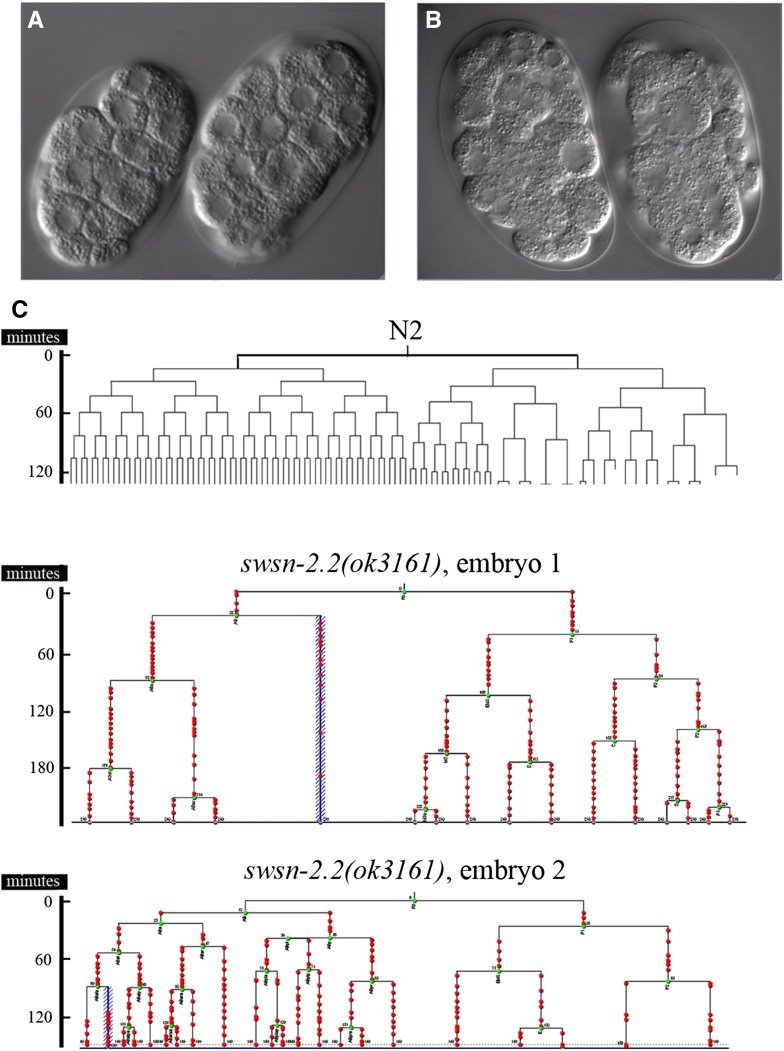
swsn-2.2 mutants present cell division defects in the early embryo. (A) N2 wild-type embryos after few rounds of cell division. The size of nuclei in each embryo is uniform. (B) Early swsn-2.2(ok3161) embryos show nuclei of different sizes, which are indicative of defective cell divisions. (C) Wild-type embryonic cell lineage for the first cell divisions and cell lineages of two swsn-2.2(ok3161) embryos produced by homozygote mothers. Green and red spots indicate cell divisions and points of lineage scoring, respectively. The aberrant cell division pattern in swsn-2.2(ok3161) embryos hampers the lineage analysis after few divisions and causes the death of the embryos before the comma stage.
Figure 7
Figure 7
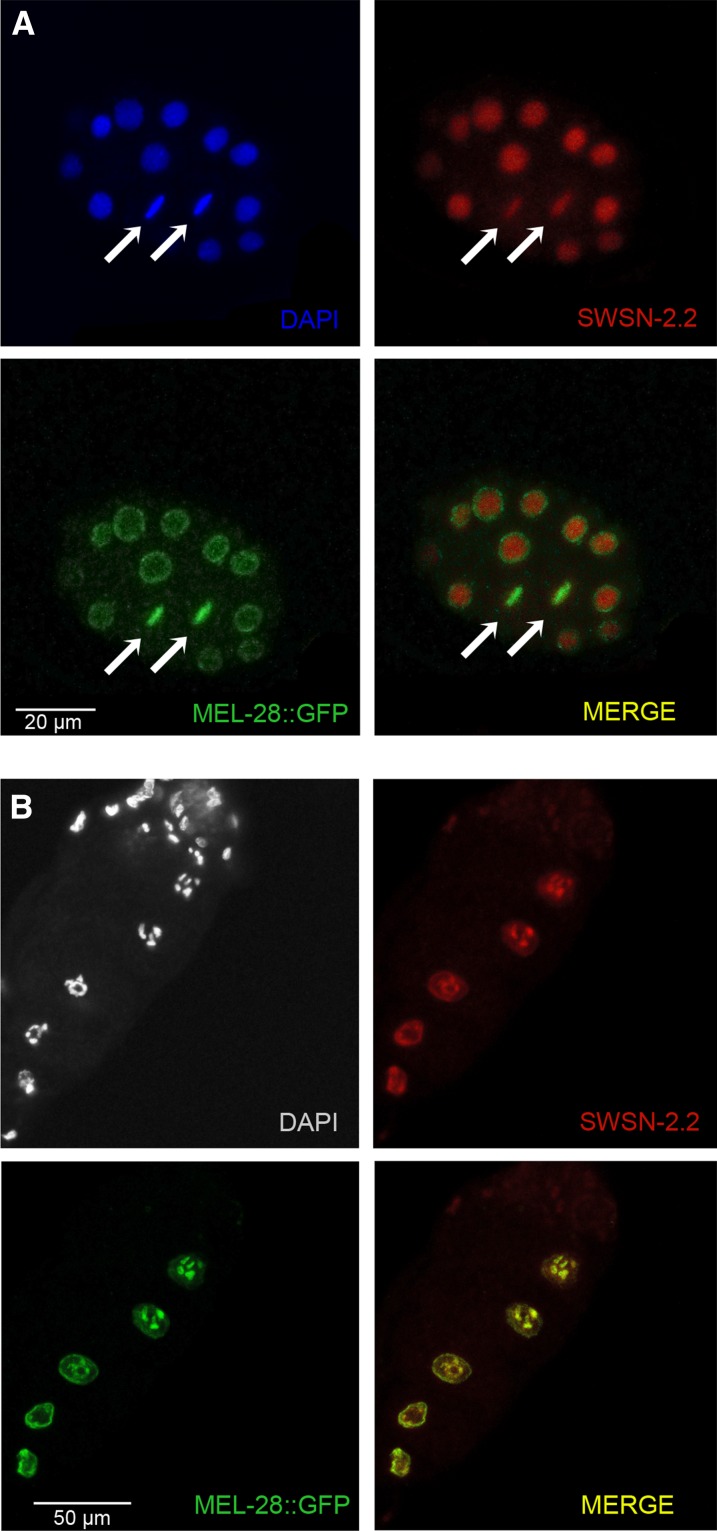
SWSN-2.2 and GFP::MEL-28 colocalize in early embryos and in oocytes. Immunofluorescence with anti-SWSN-2.2 and anti-GFP antibodies in transgenic animals expressing GFP::MEL-28. All images are the projection of three confocal sections of 1 µm. (A) Arrows indicate mitotic chromosomes of early embryonic cells. (B) SWSN-2.2 and GFP::MEL-28 colocalize in the nuclear membrane and in meiotic chromosomes of developing oocytes.
Figure 8
Figure 8
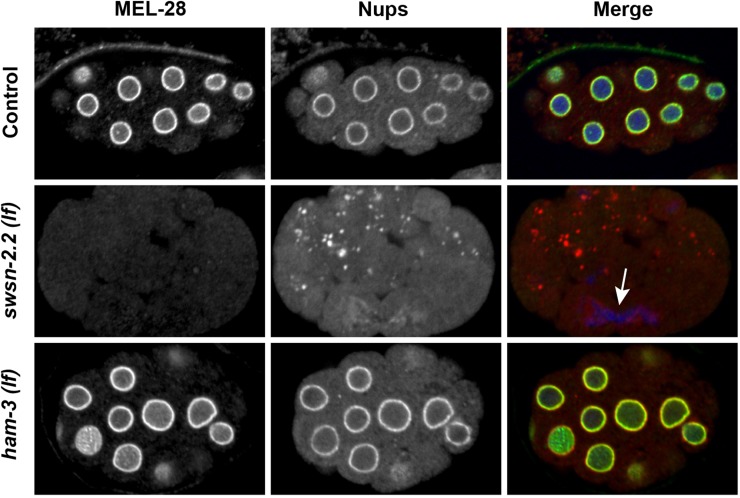
SWSN-2.2 is required for correct chromosome inheritance and postmitotic nuclear reassembly in early embryos. Immunostaining with specific antibodies against MEL-28 and mAb414 against several nuclear pore proteins (Nups) in early swsn-2.2(ok3161) and ham-3(he159) embryos shows distinct functions of HAM-3 and SWSN-2.2 in cell division. While absence of functional swsn-2.2 impairs nuclear reassembly and correct chromosome segregation, these processes are not affected by ham-3(lf). In swsn-2.2 mutants, the MEL-28 signal is strongly reduced, whereas Nups accumulate in cytoplasmic aggregates. The arrow indicates chromatin trapped in a cleavage furrow.
Figure 9
Figure 9
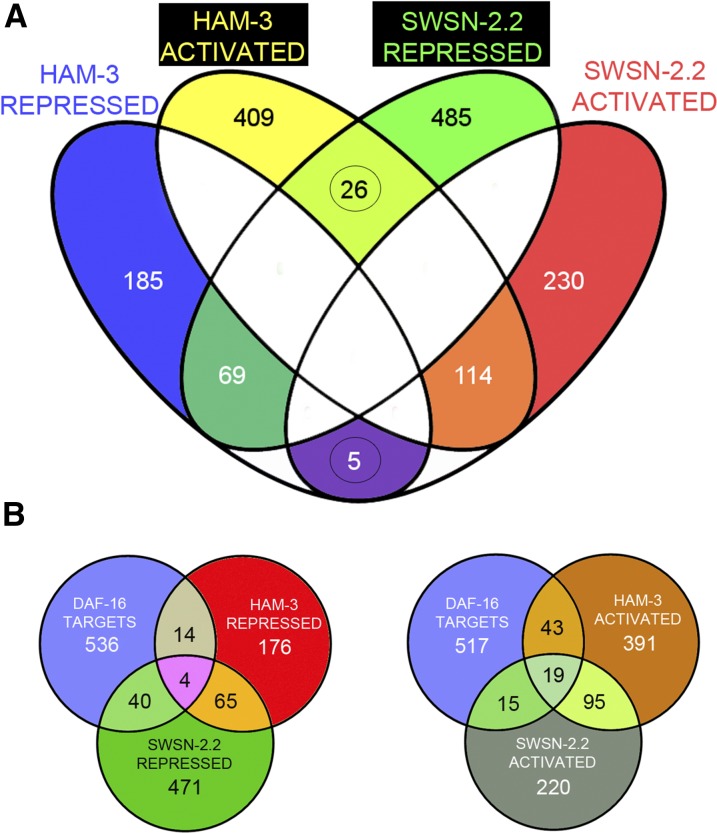
Transcriptomic analysis of ham-3(RNAi) and swsn-2.2(RNAi) animals. (A) Genes whose expression is activated or repressed by ham-3 or swsn-2.2. L1 animals were fed for 36 hr at 25° with ham-3(RNAi), swsn-2.2(RNAi) or gfp(RNAi) as a control. The 31 genes that seem to be antagonistically regulated by ham-3 and swsn-2.2 are not statistically significant (P ≤ 0.96). The overlaps between genes activated and repressed by both genes were significant with P-values ≤ 0.0001. Expression of five of these genes was analyzed by quantitative PCR, and we detected a differential rather than an antagonistic regulation (Figure S18). (B) HAM-3 and SWSN-2.2 targets significantly overlap with DAF-16 targets (P ≤ 0.0001). A list of 594 genes regulated by DAF-16 was retrieved from Pinkston-Gosse and Kenyon (2007) and compared with genes activated or repressed by HAM-3 or SWSN-2.2. Overlap significance was calculated with χ2 tests with Yates’ correction.

References

    1. Andersen E. C., Saffer A. M., Horvitz H. R., 2008. Multiple levels of redundant processes inhibit Caenorhabditis elegans vulval cell fates. Genetics 179: 2001–2012. - PMC - PubMed
    1. Askjaer P., Galy V., Meister P., 2014. Modern tools to study nuclear pore complexes and nucleocytoplasmic transport in Caenorhabditis elegans. Methods Cell Biol. 122: 277–310. - PubMed
    1. Berdasco M., Esteller M., 2013. Genetic syndromes caused by mutations in epigenetic genes. Hum. Genet. 132: 359–383. - PubMed
    1. Bezhani S., Winter C., Hershman S., Wagner J. D., Kennedy J. F., et al. , 2007. Unique, shared, and redundant roles for the Arabidopsis SWI/SNF chromatin remodeling ATPases BRAHMA and SPLAYED. Plant Cell 19: 403–416. - PMC - PubMed
    1. Cabello J., Neukomm L. J., Günesdogan U., Burkart K., Charette S. J., et al. , 2010. The Wnt pathway controls cell death engulfment, spindle orientation, and migration through CED-10/Rac. PLoS Biol. 8: e1000297. - PMC - PubMed

Publication types

MeSH terms

Substances