. 2016 Jan 7:6:18919.
doi: 10.1038/srep18919.

A comprehensive characterization of simple sequence repeats in pepper genomes provides valuable resources for marker development in Capsicum

Affiliations

A comprehensive characterization of simple sequence repeats in pepper genomes provides valuable resources for marker development in Capsicum

Jiaowen Cheng et al. Sci Rep. .

Abstract

The sequences of the full set of pepper genomes including nuclear, mitochondrial and chloroplast are now available for use. However, the overall of simple sequence repeats (SSR) distribution in these genomes and their practical implications for molecular marker development in Capsicum have not yet been described. Here, an average of 868,047.50, 45.50 and 30.00 SSR loci were identified in the nuclear, mitochondrial and chloroplast genomes of pepper, respectively. Subsequently, systematic comparisons of various species, genome types, motif lengths, repeat numbers and classified types were executed and discussed. In addition, a local database composed of 113,500 in silico unique SSR primer pairs was built using a homemade bioinformatics workflow. As a pilot study, 65 polymorphic markers were validated among a wide collection of 21 Capsicum genotypes with allele number and polymorphic information content value per marker raging from 2 to 6 and 0.05 to 0.64, respectively. Finally, a comparison of the clustering results with those of a previous study indicated the usability of the newly developed SSR markers. In summary, this first report on the comprehensive characterization of SSR motifs in pepper genomes and the very large set of SSR primer pairs will benefit various genetic studies in Capsicum.


Figures
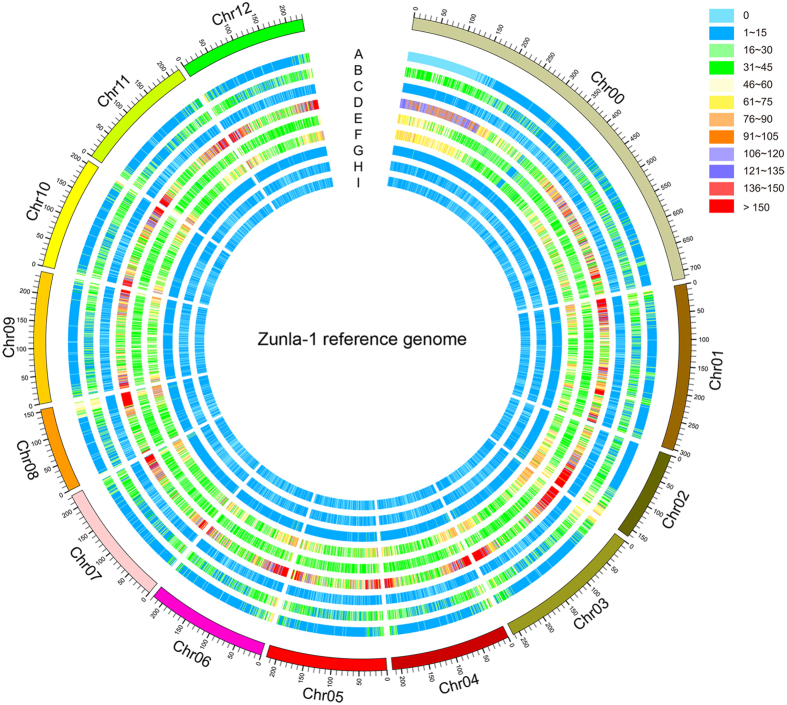
Figure 1
Figure 1. Overview of SSR distribution in the Zunla-1 reference genome.
A total of 876,580 SSR loci with 136,857 present in compound formation (C and C*) that form into 739,723 SSR units were identified in the Zunla-1 reference genome. The various numbers of SSR units and protein coding genes in each window size of 1000 kb were used for drawing this picture and are shown with different colours. Track A shows the gene density; tracks B to I refer to the C, C*, Mono-, Di-, Tri-, Tetra-, Penta-, Hexa- types, respectively.
Figure 2
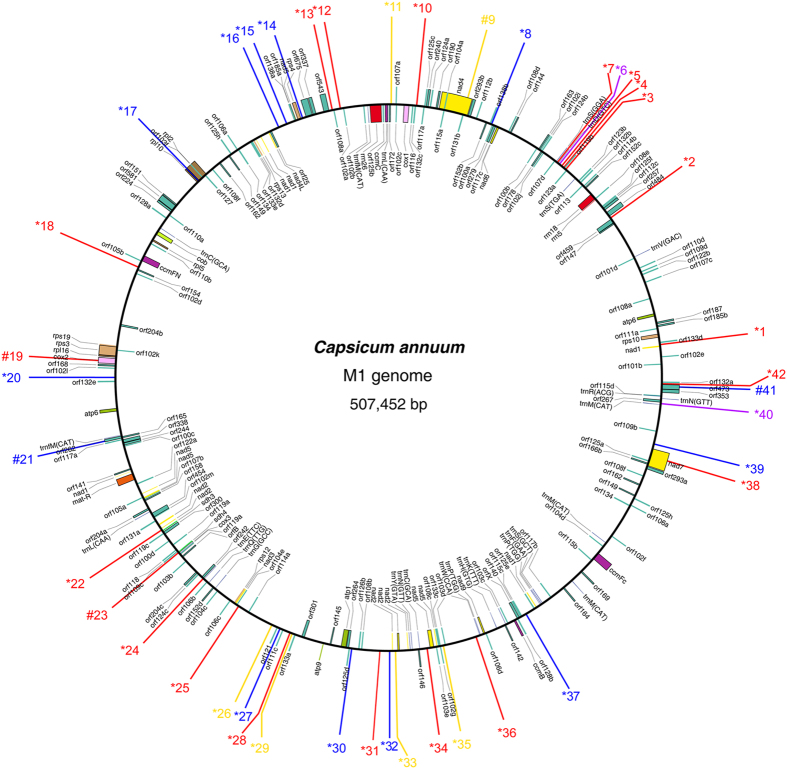
Figure 2. Overview of SSR distribution in pepper M1 mitochondrial genome.
The M1 genome refers to the mitochondrial genome of pepper line ‘FS4401’ (Capsicum annuum). Perfect SSRs with 1, 2, 3 and 4 bp length of motif are represented by red, yellow, blue and green lines, respectively. Compound SSRs are shown with purple lines. Numbers with * and # in the front means that the corresponding SSRs were located in the intergenic and genic region, respectively.
Figure 3
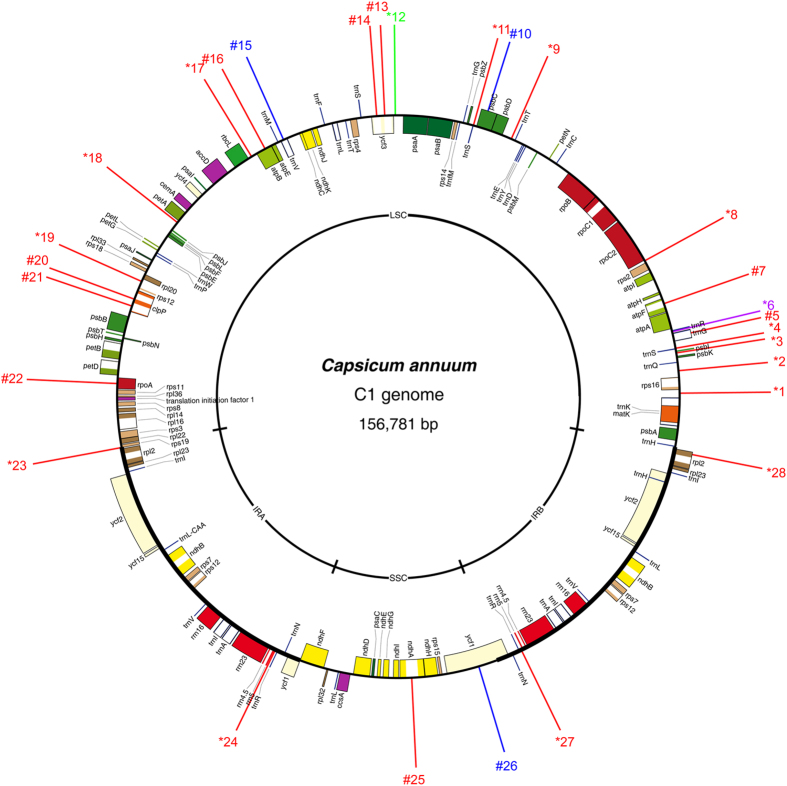
Figure 3. Overview of SSR distribution in pepper C1 chloroplast genome.
The C1 genome refers to the chloroplast genome of the pepper line ‘FS4401’ (Capsicum annuum). Perfect SSRs with 1, 3 and 4 bp length of motif are represented by red, blue and green lines, respectively. Compound SSRs are shown with purple lines. Numbers with * and # in the front means that the corresponding SSRs were located in the intergenic and genic region, respectively.
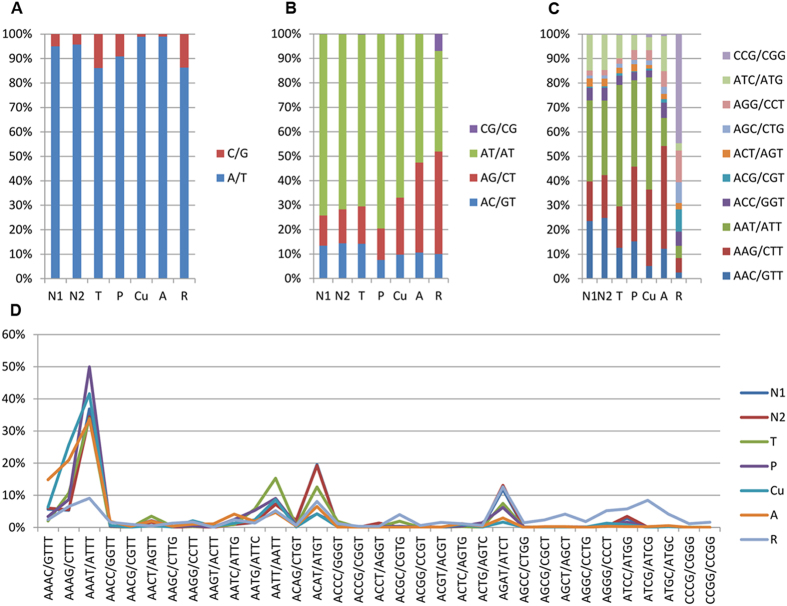
Figure 4
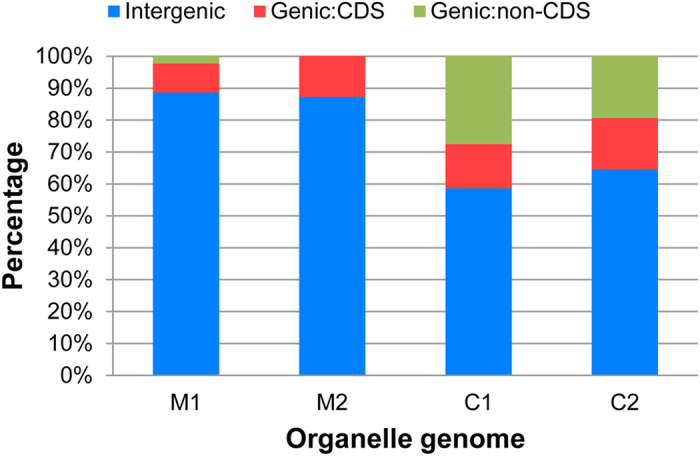
Figure 4. The relative proportion of SSR motifs in organelle genomes with different locations.
Figure 5
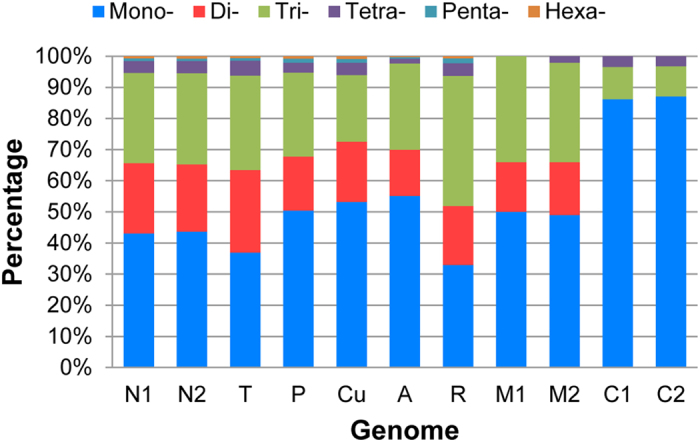
Figure 5. The relative proportion of SSR motifs with different lengths (1–6 bp) in eleven investigated genomes.
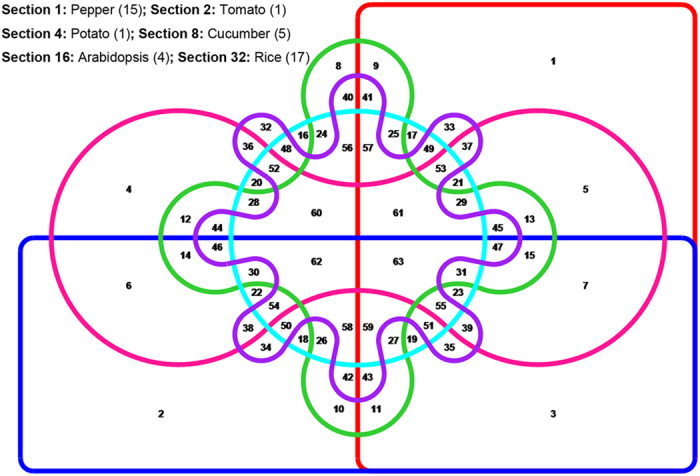
Figure 6
Figure 6. Identification of species-specific SSR motifs for the six species investigated in the present study.
A set of 387 kinds of classified SSR motifs that were identified from the combination of Zunla-1(N1) and Chiltepin (N2) was used for the present analysis. Sets with red, blue, pink, green, light blue and purple colours represents pepper, tomato, potato, cucumber, Arabidopsis and rice, respectively. Intersection numbers are shown in the disjoint sets, and the total number of specific motifs for each species is shown with brackets in the upper left corner of the picture.
Figure 7
Figure 7. The percentage of classified SSR motifs within the corresponding type with different lengths.
(A) Mono-; (B) Di-; (C) Tri-; (D) Tetra-.
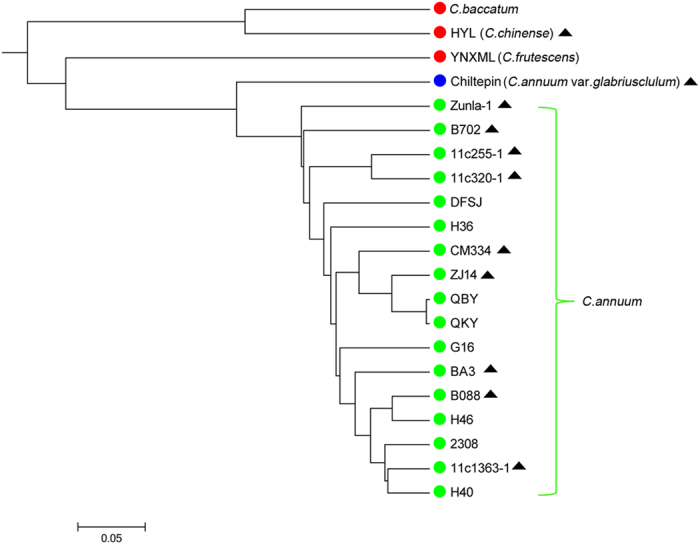
Figure 8
Figure 8. Phylogenetic tree of 21 pepper lines based on 65 polymorphic SSR markers.
Genetic relationships of 11 pepper lines that were previously studied based on genome-wide SNP markers are marked with a solid black triangle suffix.

References

    1. Tautz D. & Renz M. Simple sequences are ubiquitous repetitive components of eukaryotic genomes. Nucleic Acids Res (12)10, 4127–38 (1984). - PMC - PubMed
    1. Mrazek J., Guo X. & Shah A. Simple sequence repeats in prokaryotic genomes. Proc Natl Acad Sci USA (104)20, 8472–7 (2007). doi: 10.1073/pnas.0702412104. - DOI - PMC - PubMed
    1. Silver L.M. Bouncing off microsatellites. Nat Genet (2)1, 8–9 (1992). doi: 10.1038/ng0992-8. - DOI - PubMed
    1. Zalapa J.E. et al. Using next-generation sequencing approaches to isolate simple sequence repeat (SSR) loci in the plant sciences. Am J Bot (99)2, 193–208 (2012). doi: 10.3732/ajb.1100394. - DOI - PubMed
    1. Powell W., Machray G.C. & Provan J. Polymorphism revealed by simple sequence repeats. Trends in Plant Science (1)7, 215–222 (1996). doi: 10.1016/1360-1385(96)86898-1. - DOI

Publication types

Substances