


Neurophenotypes in Airway Diseases. Insights from Translational Cough Studies
- PMID: 26741046
- PMCID: PMC4910890
- DOI: 10.1164/rccm.201508-1602OC
Neurophenotypes in Airway Diseases. Insights from Translational Cough Studies
Abstract
Rationale: Most airway diseases, including chronic obstructive pulmonary disease (COPD), are associated with excessive coughing. The extent to which this may be a consequence of increased activation of vagal afferents by pathology in the airways (e.g., inflammatory mediators, excessive mucus) or an altered neuronal phenotype is unknown. Understanding whether respiratory diseases are associated with dysfunction of airway sensory nerves has the potential to identify novel therapeutic targets.
Objectives: To assess the changes in cough responses to a range of inhaled irritants in COPD and model these in animals to investigate the underlying mechanisms.
Methods: Cough responses to inhaled stimuli in patients with COPD, healthy smokers, refractory chronic cough, asthma, and healthy volunteers were assessed and compared with vagus/airway nerve and cough responses in a cigarette smoke (CS) exposure guinea pig model.
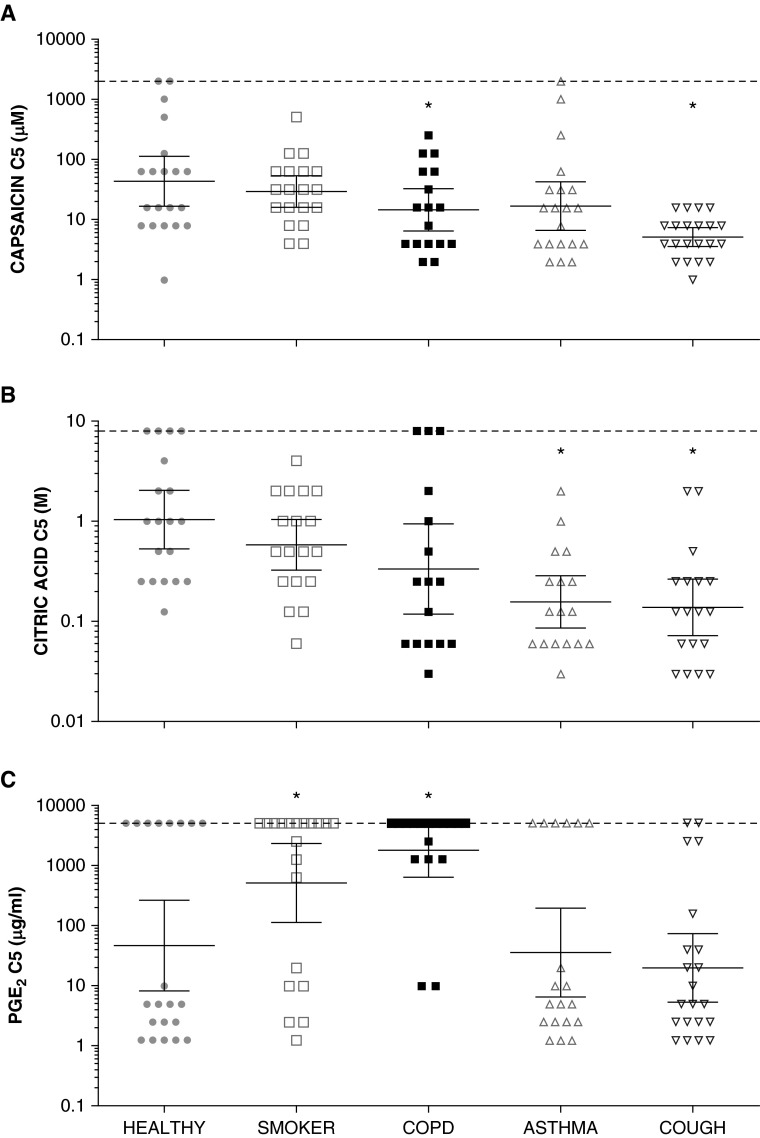
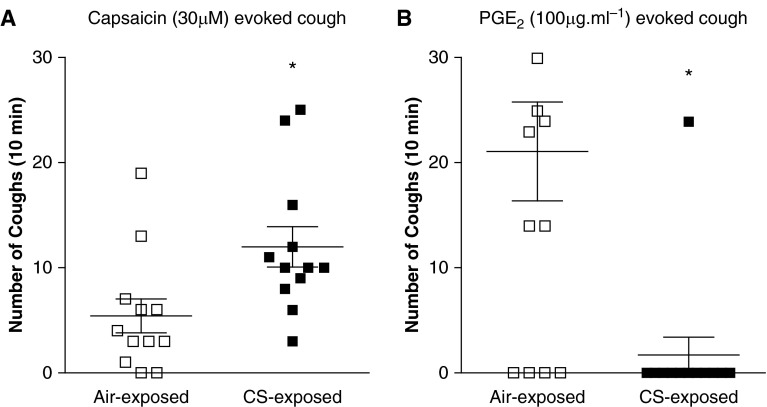
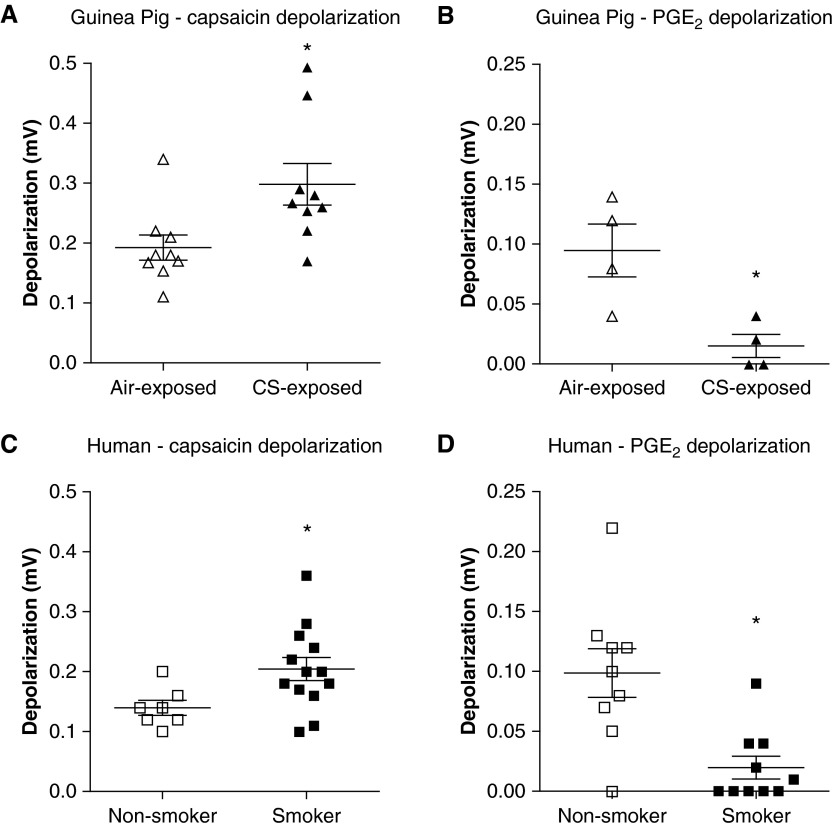
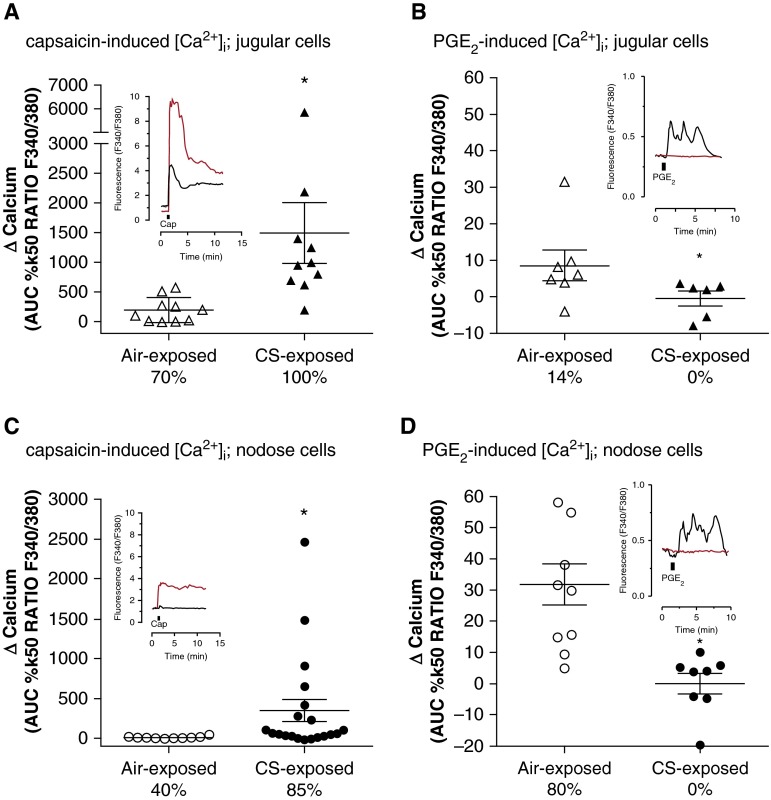
Measurements and main results: Patients with COPD had heightened cough responses to capsaicin but reduced responses to prostaglandin E2 compared with healthy volunteers. Furthermore, the different patient groups all exhibited different patterns of modulation of cough responses. Consistent with these findings, capsaicin caused a greater number of coughs in CS-exposed guinea pigs than in control animals; similar increased responses were observed in ex vivo vagus nerve and neuron cell bodies in the vagal ganglia. However, responses to prostaglandin E2 were decreased by CS exposure.
Conclusions: CS exposure is capable of inducing responses consistent with phenotypic switching in airway sensory nerves comparable with the cough responses observed in patients with COPD. Moreover, the differing profiles of cough responses support the concept of disease-specific neurophenotypes in airway disease. Clinical trial registered with www.clinicaltrials.gov (NCT 01297790).
Trial registration: ClinicalTrials.gov NCT01297790.
Keywords: COPD; asthma; cough; guinea pig; vagus nerve.
Figures
Comment in
-
A Cough Is a Cough, Is It Not? Neurophenotypes Define Patients with Chronic Cough.Am J Respir Crit Care Med. 2016 Jun 15;193(12):1324-6. doi: 10.1164/rccm.201601-0100ED. Am J Respir Crit Care Med. 2016. PMID: 27304236 No abstract available.
References
-
- Janson C, Chinn S, Jarvis D, Burney P. Determinants of cough in young adults participating in the European Community Respiratory Health Survey. Eur Respir J. 2001;18:647–654. - PubMed
-
- Sumner H, Woodcock A, Kolsum U, Dockry R, Lazaar AL, Singh D, Vestbo J, Smith JA. Predictors of objective cough frequency in chronic obstructive pulmonary disease. Am J Respir Crit Care Med. 2013;187:943–949. - PubMed
-
- Carr MJ, Kollarik M, Meeker SN, Undem BJ. A role for TRPV1 in bradykinin-induced excitation of vagal airway afferent nerve terminals. J Pharmacol Exp Ther. 2003;304:1275–1279. - PubMed
Publication types
MeSH terms
Substances
Associated data
Grants and funding
LinkOut - more resources
Full Text Sources
Other Literature Sources
Medical
