


The Metals in the Biological Periodic System of the Elements: Concepts and Conjectures
- PMID: 26742035
- PMCID: PMC4730311
- DOI: 10.3390/ijms17010066
The Metals in the Biological Periodic System of the Elements: Concepts and Conjectures
Abstract
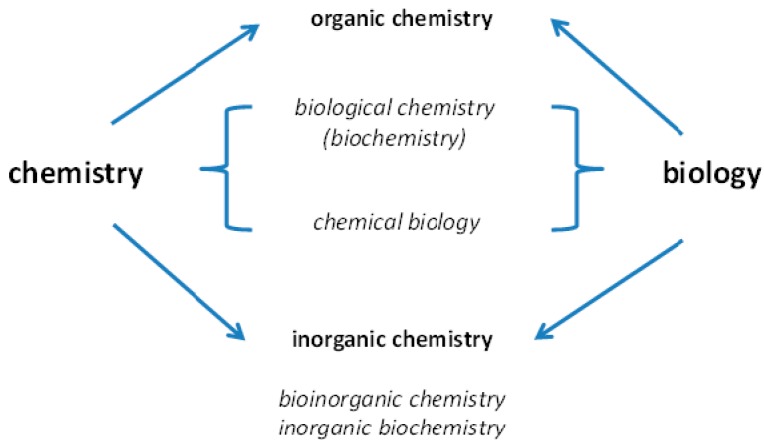
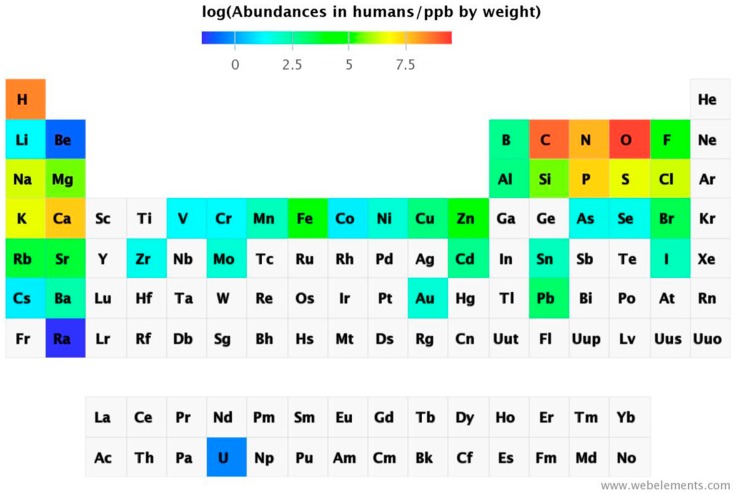
A significant number of chemical elements are either essential for life with known functions, or present in organisms with poorly defined functional outcomes. We do not know all the essential elements with certainty and we know even less about the functions of apparently non-essential elements. In this article, I discuss a basis for a biological periodic system of the elements and that biochemistry should include the elements that are traditionally part of inorganic chemistry and not only those that are in the purview of organic chemistry. A biological periodic system of the elements needs to specify what "essential" means and to which biological species it refers. It represents a snapshot of our present knowledge and is expected to undergo further modifications in the future. An integrated approach of biometal sciences called metallomics is required to understand the interactions of metal ions, the biological functions that their chemical structures acquire in the biological system, and how their usage is fine-tuned in biological species and in populations of species with genetic variations (the variome).
Keywords: essential metals; metallomics; non-essential metals; periodic system of the elements.
Figures

References
-
- Irving H., Williams R.J.P. Order of stability of metal complexes. Nature. 1948;162:746–747. doi: 10.1038/162746a0. - DOI
-
- Maret W. Molecular aspects of zinc signals. In: Fukuda T., Kambe T., editors. Zinc Signals in Cellular Functions and Disorders. Springer Japan KK; Tokyo, Japan: 2014. pp. 7–26.
Publication types
MeSH terms
Substances
Grants and funding
LinkOut - more resources
Full Text Sources
Other Literature Sources
