


Role of overlapping genetic and environmental factors in the relationship between early adolescent conduct problems and substance use in young adulthood
- PMID: 26748618
- PMCID: PMC4861688
- DOI: 10.1111/add.13303
Role of overlapping genetic and environmental factors in the relationship between early adolescent conduct problems and substance use in young adulthood
Abstract
Aims: To determine (1) the prospective associations of conduct problems during early adolescence with tobacco, alcohol and cannabis use in young adulthood and (2) to what extent these associations are due to overlapping genetic versus environmental influences.
Design: A prospective twin study using biometric twin modelling.
Setting: Finland.
Participants: A total of 1847 Finnish twins (943 males and 904 females) were interviewed in early adolescence, 73% of whom (n = 1353, 640 males and 713 females) were retained in young adulthood.
Measurements: Symptom counts of conduct disorder (CD) criteria were obtained from a semi-structured clinical interview in early adolescence [age 14-15 years, mean = 14.2, standard deviation (SD) = 0.15]. Frequency of alcohol, tobacco and cannabis use was obtained from a semi-structured clinical interview in young adulthood (age 19.9-26.6 years, mean = 22.4, SD = 0.7).
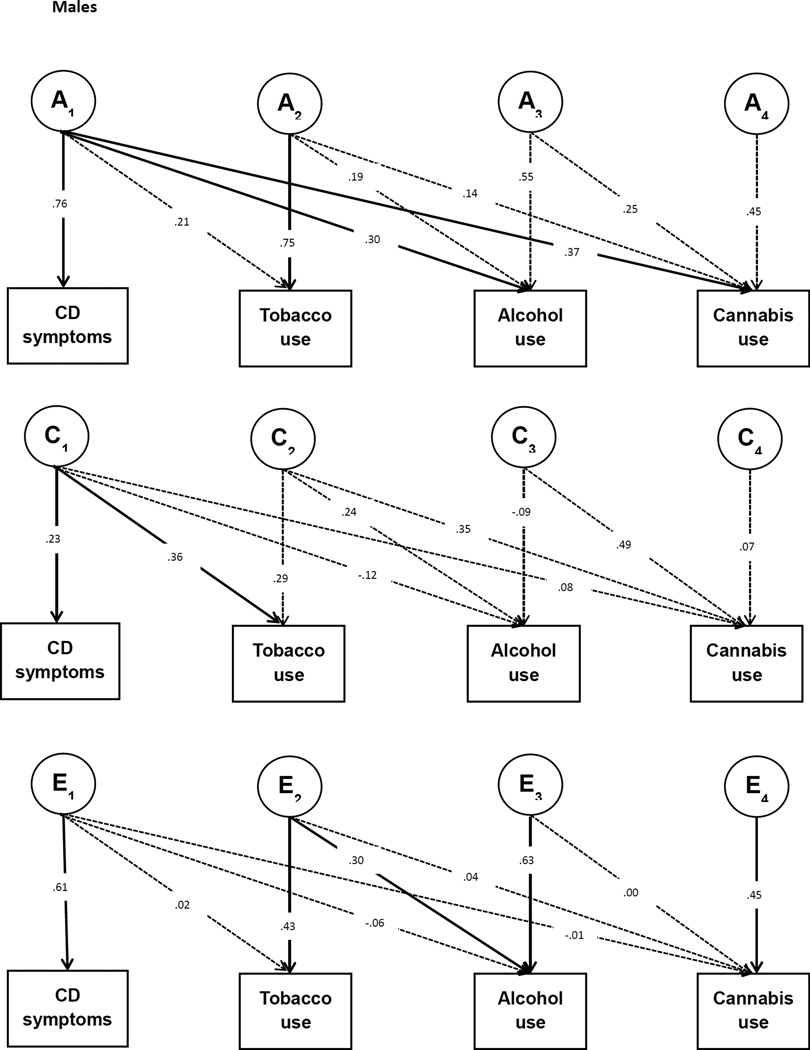
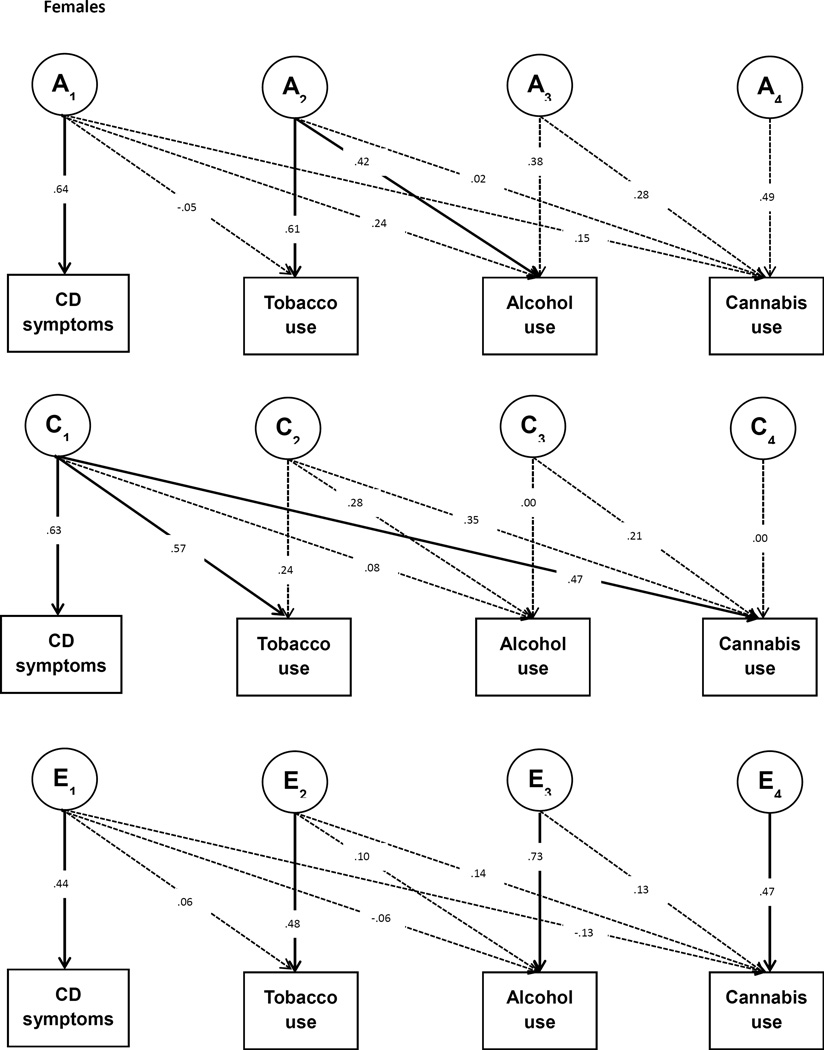
Findings: We found modest to moderate phenotypical correlations (r = 0.16-0.35) between early adolescent CD symptoms and substance use in young adulthood. In males, the phenotypical correlations of CD symptoms with all three substance use variables are explained largely by overlapping genetic influences. In females, overlapping shared environmental influences predominantly explain the phenotypical correlation between CD symptoms and tobacco and cannabis use.
Conclusions: Conduct disorder symptoms in early adolescence appear to moderately predict substance use in early adulthood. In males, genetic influences seem to be most important in explaining the relationship between conduct disorder symptoms and substance use whereas in females, shared environmental influences seem to be most important.
Keywords: Adolescent twins; common environments; conduct problems; genetics; substance use; young adult twins.
© 2016 Society for the Study of Addiction.
Conflict of interest statement
The authors have no conflicts of interest.
Figures
Comment in
-
Commentary on Verweij et al. (2016): Conduct problems and substance use-genetic and environmental perspectives on sex differences.Addiction. 2016 Jun;111(6):1046-7. doi: 10.1111/add.13371. Addiction. 2016. PMID: 27157903 Free PMC article.
References
-
- Brook JS, Brook DW, Zhang C, Cohen P. Tobacco Use and Health in Young Adulthood. The Journal of Genetic Psychology: Research and Theory on Human Development. 2004;165:310–323. - PubMed
Publication types
MeSH terms
Grants and funding
LinkOut - more resources
Full Text Sources
Other Literature Sources
Medical
