


Sugar uptake by the solventogenic clostridia
- PMID: 26748809
- PMCID: PMC4706839
- DOI: 10.1007/s11274-015-1981-4
Sugar uptake by the solventogenic clostridia
Abstract
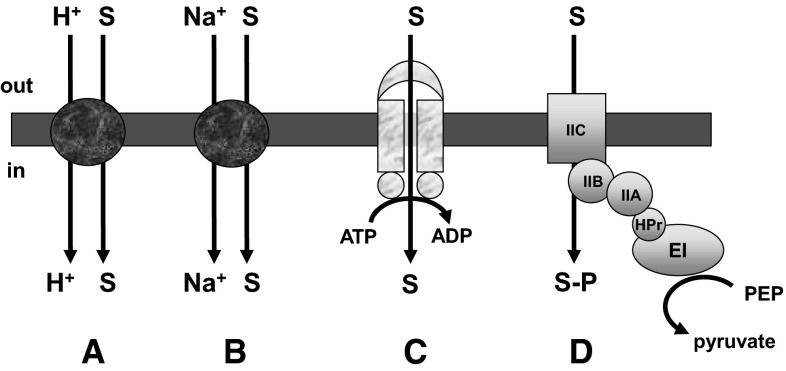
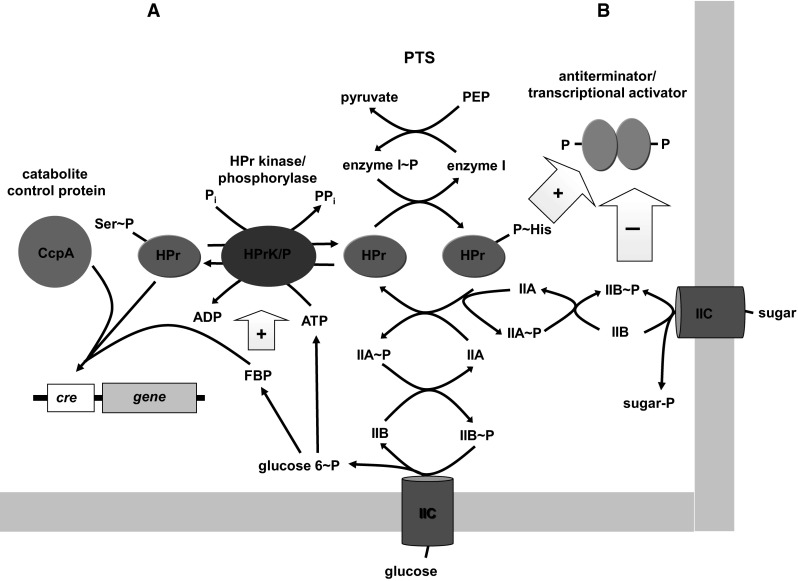
The acetone-butanol-ethanol fermentation of solventogenic clostridia was operated as a successful, worldwide industrial process during the first half of the twentieth century, but went into decline for economic reasons. The recent resurgence in interest in the fermentation has been due principally to the recognised potential of butanol as a biofuel, and development of reliable molecular tools has encouraged realistic prospects of bacterial strains being engineered to optimise fermentation performance. In order to minimise costs, emphasis is being placed on waste feedstock streams containing a range of fermentable carbohydrates. It is therefore important to develop a detailed understanding of the mechanisms of carbohydrate uptake so that effective engineering strategies can be identified. This review surveys present knowledge of sugar uptake and its control in solventogenic clostridia. The major mechanism of sugar uptake is the PEP-dependent phosphotransferase system (PTS), which both transports and phosphorylates its sugar substrates and plays a central role in metabolic regulation. Clostridial genome sequences have indicated the presence of numerous phosphotransferase systems for uptake of hexose sugars, hexose derivatives and disaccharides. On the other hand, uptake of sugars such as pentoses occurs via non-PTS mechanisms. Progress in characterization of clostridial sugar transporters and manipulation of control mechanisms to optimise sugar fermentation is described.
Keywords: ABE fermentation; Catabolite repression; Phosphotransferase system; Sugar uptake.
Figures

References
-
- Albasheri KA, Mitchell WJ. Identification of two α-glucosidase activities in Clostridium acetobutylicum NCIB 8052. J Appl Bacteriol. 1995;78:149–156. doi: 10.1111/j.1365-2672.1995.tb02835.x. - DOI
-
- Andreeva IG, Golubeva LI, Katashkina JI. Putative GalP, XylE and FucP H+ symporters from Pantoea asanatis are capable of transporting glucose into Escherichia coli cells. Appl Biochem Microbiol. 2013;49:638–645. doi: 10.1134/S0003683813070016. - DOI
MeSH terms
Substances
LinkOut - more resources
Full Text Sources
Other Literature Sources
Molecular Biology Databases
Miscellaneous
