


The victims of unethical human experiments and coerced research under National Socialism
- PMID: 26749461
- PMCID: PMC4822534
- DOI: 10.1016/j.endeavour.2015.10.005
The victims of unethical human experiments and coerced research under National Socialism
Abstract
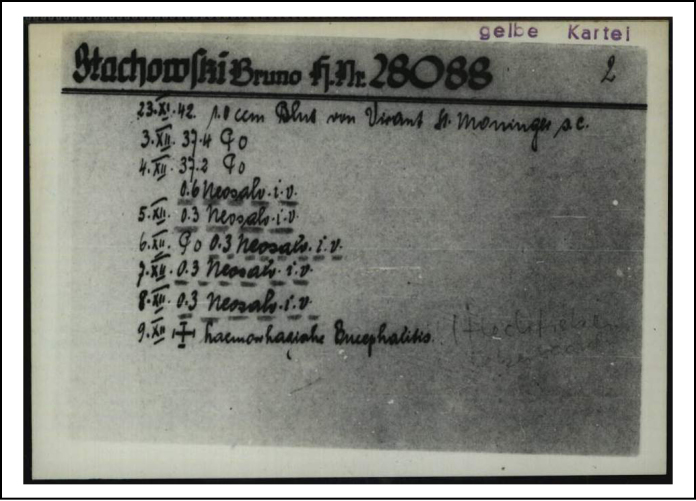
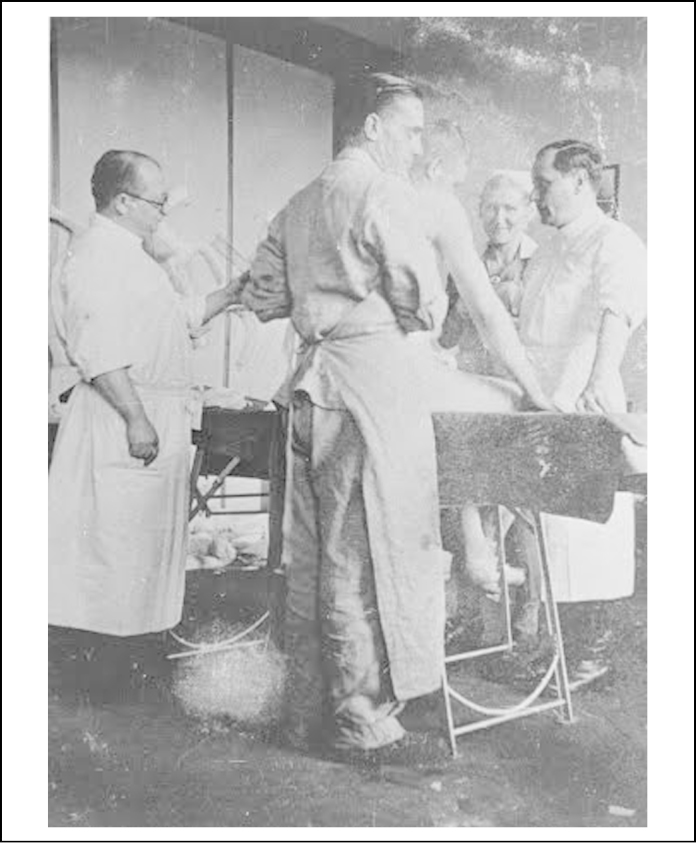
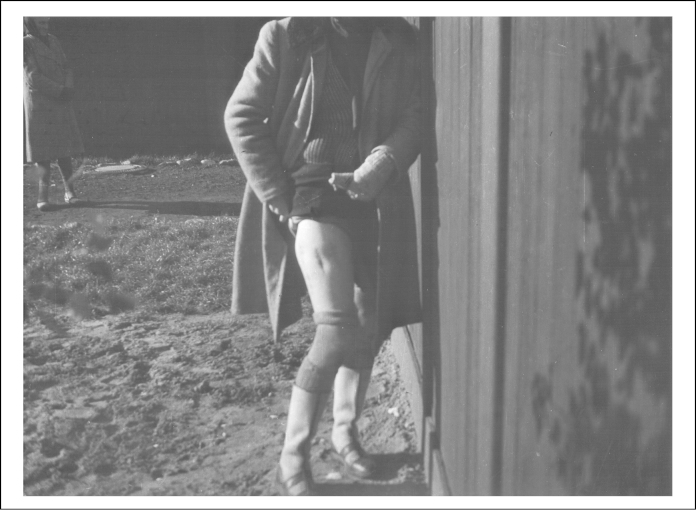
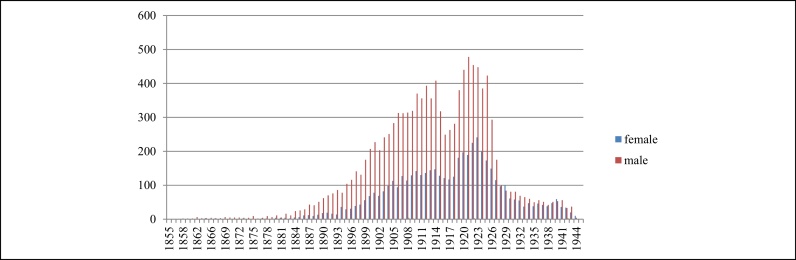
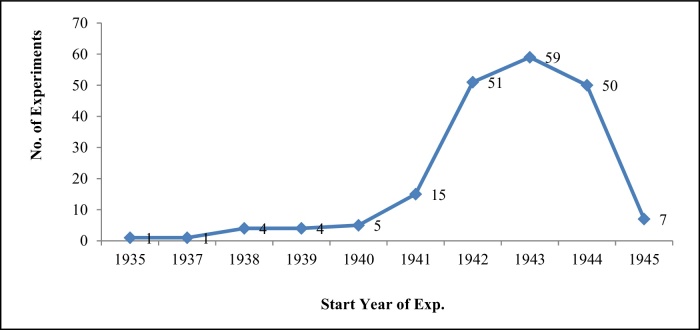
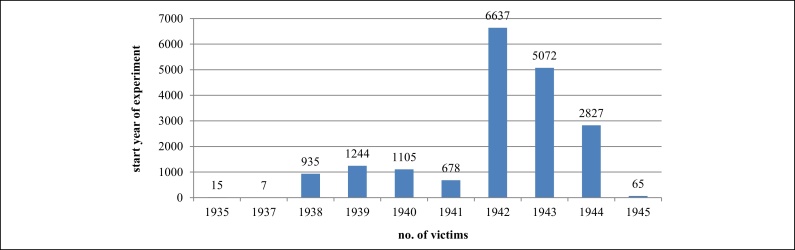
There has been no full evaluation of the numbers of victims of Nazi research, who the victims were, and of the frequency and types of experiments and research. This paper gives the first results of a comprehensive evidence-based evaluation of the different categories of victims. Human experiments were more extensive than often assumed with a minimum of 15,754 documented victims. Experiments rapidly increased from 1942, reaching a high point in 1943. The experiments remained at a high level of intensity despite imminent German defeat in 1945. There were more victims who survived than were killed as part of or as a result of the experiments, and the survivors often had severe injuries.
Keywords: Auschwitz; Concentration camps; German National Socialism; Gypsy victims; Holocaust; Jewish victims; Mengele; Nazi euthanasia; Unethical human experiments.
Copyright © 2015 The Authors. Published by Elsevier Ltd.. All rights reserved.
Figures
Publication types
MeSH terms
Grants and funding
LinkOut - more resources
Full Text Sources
Other Literature Sources
