. 2016 Feb;48(2):167-75.
doi: 10.1038/ng.3481. Epub 2016 Jan 11.

Genomic analysis of 38 Legionella species identifies large and diverse effector repertoires

Affiliations

Genomic analysis of 38 Legionella species identifies large and diverse effector repertoires

David Burstein et al. Nat Genet. 2016 Feb.

Abstract

Infection by the human pathogen Legionella pneumophila relies on the translocation of ∼ 300 virulence proteins, termed effectors, which manipulate host cell processes. However, almost no information exists regarding effectors in other Legionella pathogens. Here we sequenced, assembled and characterized the genomes of 38 Legionella species and predicted their effector repertoires using a previously validated machine learning approach. This analysis identified 5,885 predicted effectors. The effector repertoires of different Legionella species were found to be largely non-overlapping, and only seven core effectors were shared by all species studied. Species-specific effectors had atypically low GC content, suggesting exogenous acquisition, possibly from the natural protozoan hosts of these species. Furthermore, we detected numerous new conserved effector domains and discovered new domain combinations, which allowed the inference of as yet undescribed effector functions. The effector collection and network of domain architectures described here can serve as a roadmap for future studies of effector function and evolution.


Figures
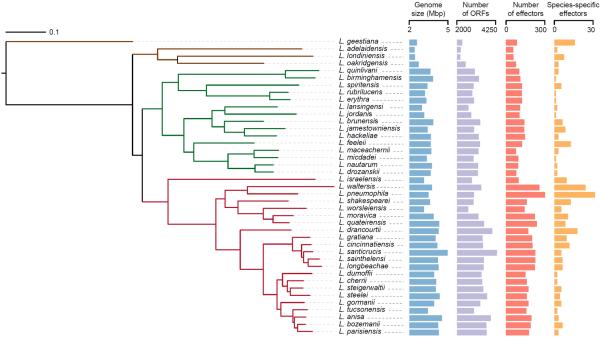
Figure 1
Figure 1. Phylogenetic tree of the Legionella genus
A maximum-likelihood tree of 41 sequenced Legionella species was reconstructed based on concatenated amino-acid alignment of 78 orthologous ORFs. For each species the following are also illustrated: genome sizes (blue), number of ORFs (purple), number of effectors (red), and number of unique effectors (orange). The evolutionary dynamics in general, and specifically of effectors, differ between the two major clades (marked in dark red and dark green), and between these and the deep-branching clade (marked in brown). Bootstrap values are presented as part of Supplementary Figure 4.
Figure 2
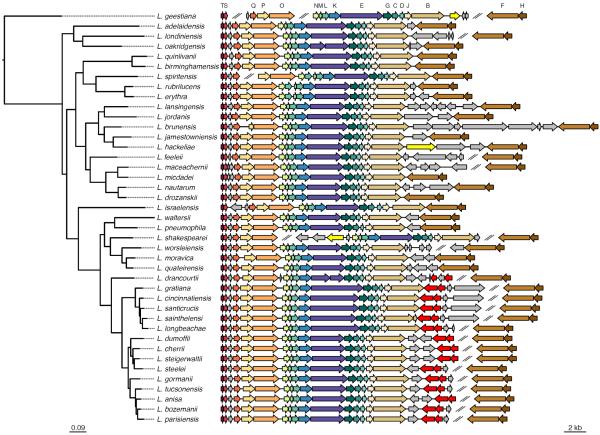
Figure 2. Icm/Dot secretion system region II in 41 Legionella species
In 15 genomes, genes coding for an OmpR-family two-component system were found (bright red). In three other genomes putative effectors were found in Region II (bright yellow). Genes colored in grey represent non-effector genes found between the two parts of the region. Icm/Dot genes symbols: T: icmT, S: icmS, R: icmR, Q: icmQ, P: icmP/dotM, O: icmO/dotL, N: icmN/dotK, M: icmM/dotJ, L: icmL/dotI, K: icmK/dotH, E: icmE/dotG, G: icmG/dotF, C: icmC/dotE, D: icmD/dotP, J: icmJ/dotN, B: icmB/dotO, F: icmF and H: icmH/dotU. A similar analysis of region I is presented in Supplementary Fig. 1).
Figure 3
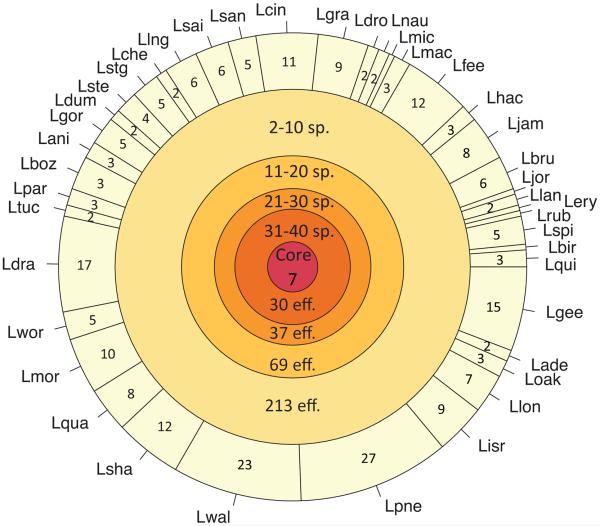
Figure 3. Extent of effector sharing by the Legionella species studied
Circles represent sets of effectors share by different number of Legionella species. The number of species in which these effectors were found is indicated in the top of the circles, and the number of effectors contained in the set is marked on the bottom. The innermost circle represents the set of core effectors shared by all Legionella species studied. The outermost circle depicts the 258 species-specific effectors, and is sliced based on the number of species-specific effectors found in each Legionella species. Notably, only seven effectors were shared among all Legionella species, and most effectors (78.5%) are shared by less than ten species (two outermost circles).
Figure 4
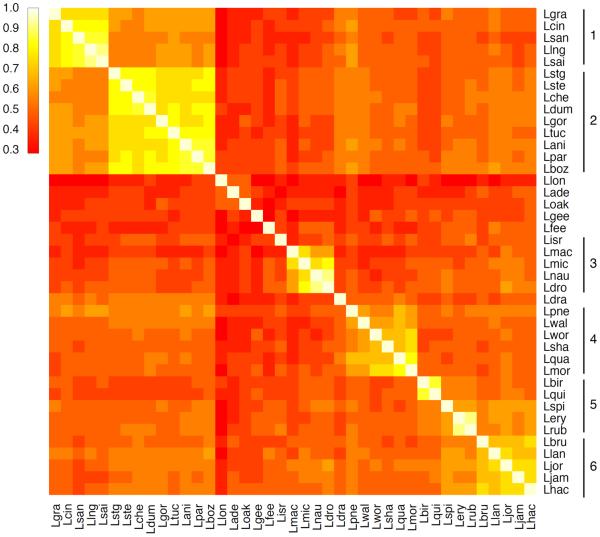
Figure 4. Comparison of the putative effector pools among Legionella species
Color gradient represent similarity between sets of effectors (light colors for high similarity). Clusters defined based on similar effector repertoires (marked on the right) are in agreement with the clades of the phylogenetic tree (Supplementary Fig. 6).
Figure 5
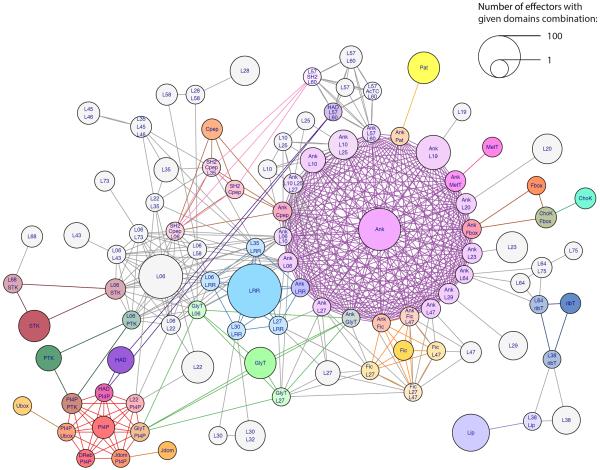
Figure 5. Protein architecture network of effectors
Each node represents a specific protein architecture (combination of effector domains). Node labels indicate domains taking part in the architecture. Edges represent domains shared between architectures. Known domains are colored; novel conserved effector domains are in grey. Node size is proportional to the number of ORFs with the architecture represented by the node.
Figure 6
Figure 6. Architectures containing either PI4P-binding domain or LED006
Each protein architecture containing either PI4P-binding domain or the novel uncharacterized LED0006 is represented by a single putative effector.
Figure 7
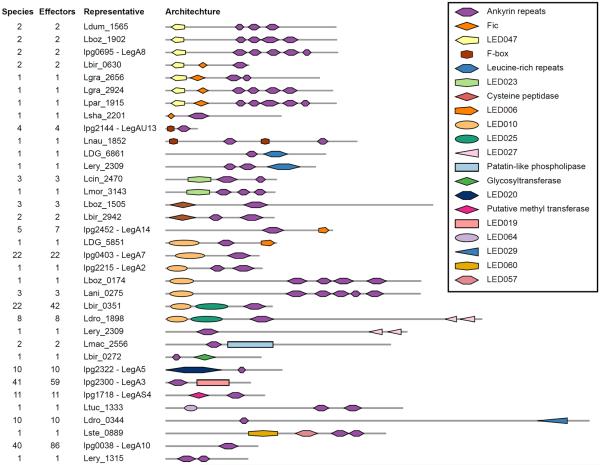
Figure 7. Diversity of ankyrin-containing putative effectors
Each domain configuration that includes an ankyrin domain is represented by a single example (architectures with different number of ankyrin repeats are represented separately). The number of putative effectors, as well as the number of Legionella species in which each configuration occurs, are indicated.

Comment in

References

    1. Fields BS. The molecular ecology of legionellae. Trends Microbiol. 1996;4:286–290. - PubMed
    1. Fields BS, Benson RF, Besser RE. Legionella and Legionnaires' Disease: 25 Years of Investigation. Clin. Microbiol. Rev. 2002;15:506–526. - PMC - PubMed
    1. Diederen BMW. Legionella spp. and Legionnaires' disease. J. Infect. 2008;56:1–12. - PubMed
    1. Horwitz MA. The Legionnaires' disease bacterium (Legionella pneumophila) inhibits phagosome-lysosome fusion in human monocytes. J. Exp. Med. 1983;158:2108–2126. - PMC - PubMed
    1. Horwitz MA. Formation of a novel phagosome by the Legionnaires' disease bacterium (Legionella pneumophila) in human monocytes. J. Exp. Med. 1983;158:1319–1331. - PMC - PubMed

Publication types