


Unpacking the psychological weight of weight stigma: A rejection-expectation pathway
- PMID: 26752792
- PMCID: PMC4702265
- DOI: 10.1016/j.jesp.2015.12.003
Unpacking the psychological weight of weight stigma: A rejection-expectation pathway
Abstract
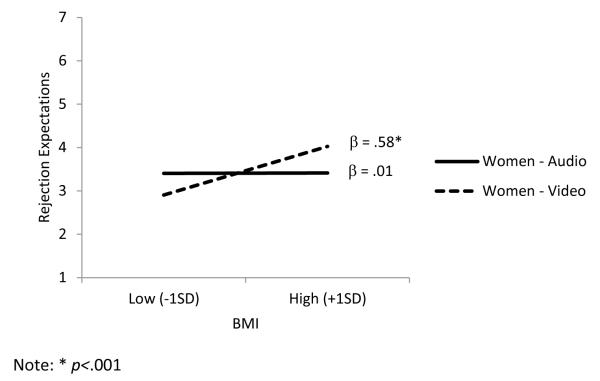
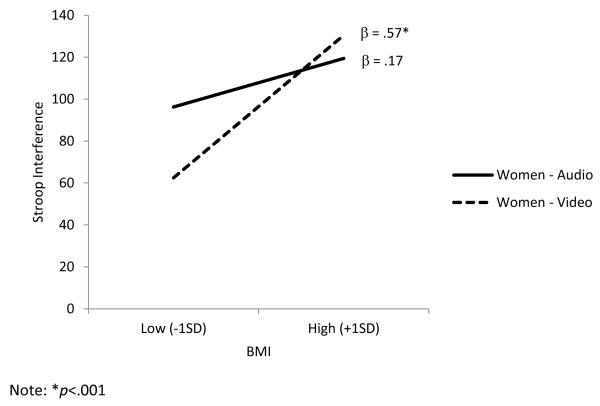
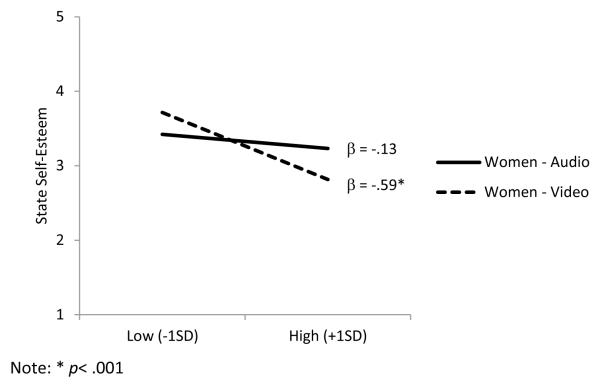
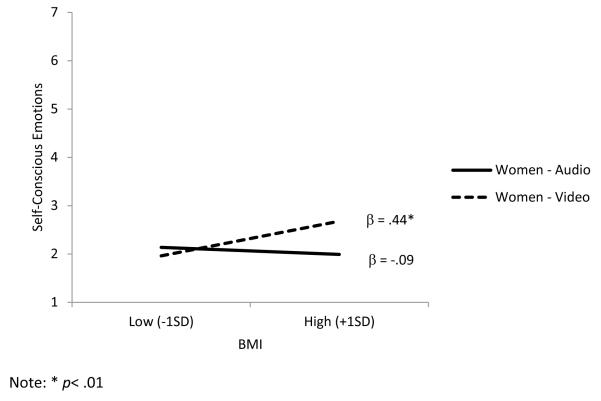
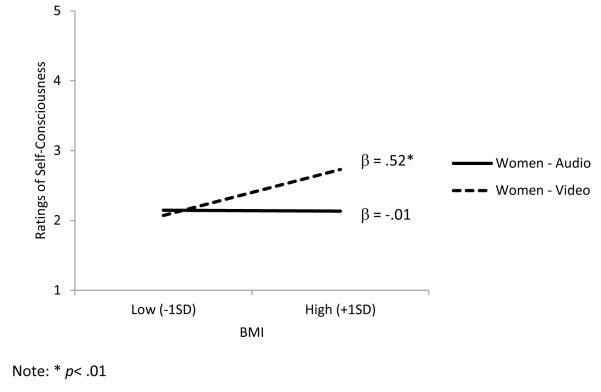
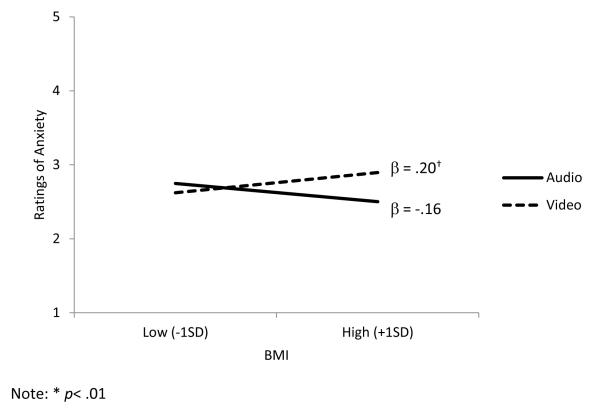
The present research tested the hypothesis that the negative effects of weight stigma among higher body-weight individuals are mediated by expectations of social rejection. Women and men who varied in objective body-weight (body mass index; BMI) gave a speech describing why they would make a good date. Half believed that a potential dating partner would see a videotape of their speech (weight seen) and half believed that a potential dating partner would listen to an audiotape of their speech (weight unseen). Among women, but not men, higher body-weight predicted increased expectations of social rejection, decreased executive control resources, decreased self-esteem, increased self-conscious emotions and behavioral displays of self-consciousness when weight was seen but not when weight was unseen. As predicted, higher body-weight women reported increased expectations of social rejection when weight was seen (versus unseen), which in turn predicted decreased self-esteem, increased self-conscious emotions, and increased stress. In contrast, lower body-weight women reported decreased expectations of social rejection when weight was seen (versus unseen), which in turn predicted increased self-esteem, decreased self-conscious emotions, and decreased stress. Men's responses were largely unaffected by body-weight or visibility, suggesting that a dating context may not be identity threatening for higher body-weight men. Overall, the present research illuminates a rejection-expectation pathway by which weight stigma undermines higher body-weight women's health.
Keywords: gender; obesity; social identity threat; social rejection; weight stigma.
Figures
References
-
- Andreyeva T, Puhl R, Brownell K. Changes in perceived weight discrimination among Americans, 1995-1996 through 2004-2006. Obesity. 2008;16:1129–1134. doi: 10.1038/oby.2008.35. - PubMed
-
- Baumeister RF, DeWall CN, Ciarocco NJ, Twenge JM. Social exclusion impairs self-regulation. Journal of Personality and Social Psychology. 2005;88:589–604. doi: 10.1037/0022-3514.88.4.589. - PubMed
-
- Baumeister RF, Leary MR. The need to belong: Desire for interpersonal attachments as a fundamental human motivation. Psychological Bulletin. 1995;117:497–529. doi: 10.1037/0033-2909.117.3.497. - PubMed
-
- Brochu PM, Dovidio JF. Would you like fries (380 calories) with that? Menu labeling mitigates the impact of weight-based stereotype threat on food choice. Social Psychology and Personality Science. 2014;5:414–421. doi: 10.1177/1948550613499941.
-
- Brown RP, Pinel EC. Stigma on my mind: Individual differences in the experience of stereotype threat. Journal of experimental social psychology. 2003;39:626–633.
Grants and funding
LinkOut - more resources
Full Text Sources
Other Literature Sources
Medical