


Increasing vegetable intakes: rationale and systematic review of published interventions
- PMID: 26754302
- PMCID: PMC4819941
- DOI: 10.1007/s00394-015-1130-8
Increasing vegetable intakes: rationale and systematic review of published interventions
Abstract
Purpose: While the health benefits of a high fruit and vegetable consumption are well known and considerable work has attempted to improve intakes, increasing evidence also recognises a distinction between fruit and vegetables, both in their impacts on health and in consumption patterns. Increasing work suggests health benefits from a high consumption specifically of vegetables, yet intakes remain low, and barriers to increasing intakes are prevalent making intervention difficult. A systematic review was undertaken to identify from the published literature all studies reporting an intervention to increase intakes of vegetables as a distinct food group.
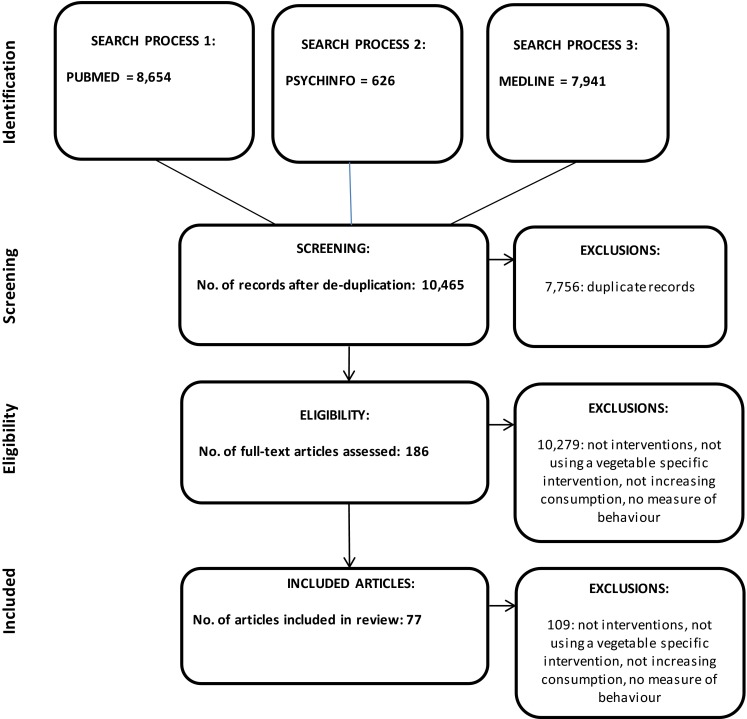
Methods: Databases-PubMed, PsychInfo and Medline-were searched over all years of records until April 2015 using pre-specified terms.
Results: Our searches identified 77 studies, detailing 140 interventions, of which 133 (81 %) interventions were conducted in children. Interventions aimed to use or change hedonic factors, such as taste, liking and familiarity (n = 72), use or change environmental factors (n = 39), use or change cognitive factors (n = 19), or a combination of strategies (n = 10). Increased vegetable acceptance, selection and/or consumption were reported to some degree in 116 (83 %) interventions, but the majority of effects seem small and inconsistent.
Conclusions: Greater percent success is currently found from environmental, educational and multi-component interventions, but publication bias is likely, and long-term effects and cost-effectiveness are rarely considered. A focus on long-term benefits and sustained behaviour change is required. Certain population groups are also noticeably absent from the current list of tried interventions.
Keywords: Interventions; Published literature; Systematic review; Vegetables.
Figures
References
-
- Dauchet L, Amouyel P, Hercberg S, Dallongeville J. Fruit and vegetable consumption and risk of coronary heart disease: a meta-analysis of cohort studies. J Nutr. 2006;136:2588–2593. - PubMed
Publication types
MeSH terms
LinkOut - more resources
Full Text Sources
Other Literature Sources
Miscellaneous
