


County-level heat vulnerability of urban and rural residents in Tibet, China
- PMID: 26757705
- PMCID: PMC4711018
- DOI: 10.1186/s12940-015-0081-0
County-level heat vulnerability of urban and rural residents in Tibet, China
Abstract
Background: Tibet is especially vulnerable to climate change due to the relatively rapid rise of temperature over past decades. The effects on mortality and morbidity of extreme heat in Tibet have been examined in previous studies; no heat adaptation initiatives have yet been implemented. We estimated heat vulnerability of urban and rural populations in 73 Tibetan counties and identified potential areas for public health intervention and further research.
Methods: According to data availability and vulnerability factors identified previously in Tibet and elsewhere, we selected 10 variables related to advanced age, low income, illiteracy, physical and mental disability, small living spaces and living alone. We separately created and mapped county-level cumulative heat vulnerability indices for urban and rural residents by summing up factor scores produced by a principal components analysis (PCA).
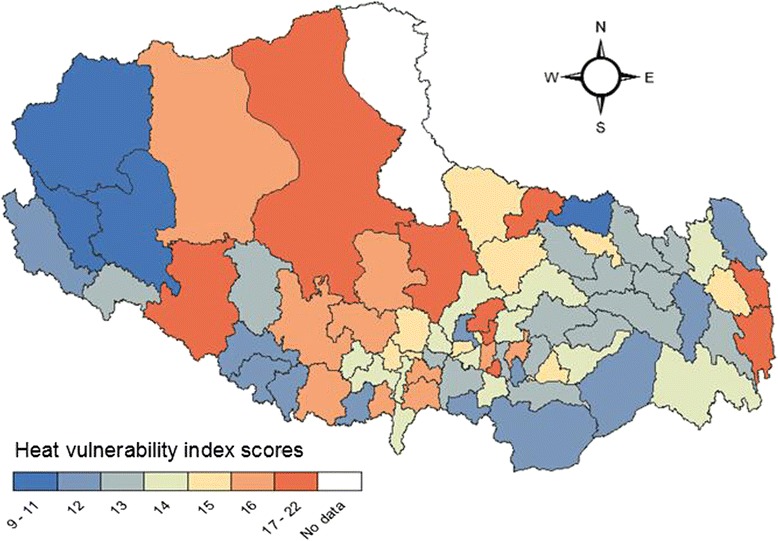
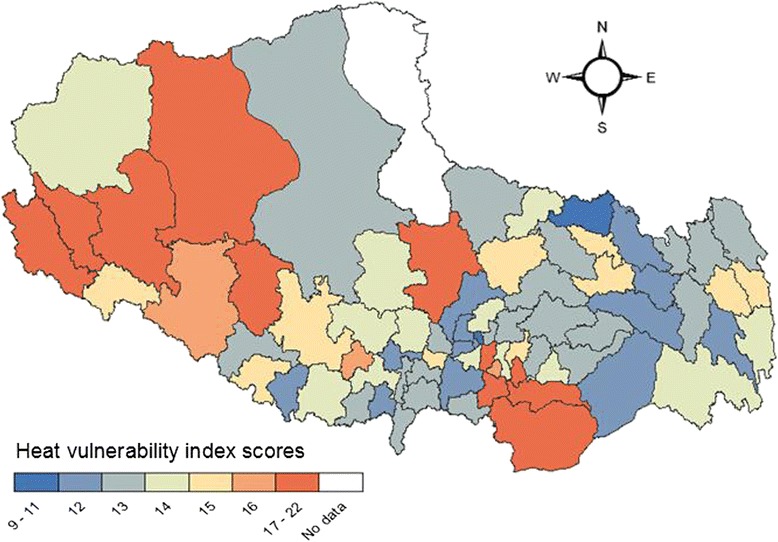
Results: For both study populations, PCA yielded four factors with similar structure. The components for rural and urban residents explained 76.5 % and 77.7 % respectively of the variability in the original vulnerability variables. We found spatial variability of heat vulnerability across counties, with generally higher vulnerability in high-altitude counties. Although we observed similar median values and ranges of the cumulative heat vulnerability index values among urban and rural residents overall, the pattern varied strongly from one county to another.
Conclusions: We have developed a measure of population vulnerability to high temperatures in Tibet. These are preliminary findings, but they may assist targeted adaptation plans in response to future rapid warming in Tibet.
Figures
References
-
- China Meteorological Administration: Assessement Report of Climate Change in the Southwest of China 2012. China Meteorological Press 2013.
-
- Du J, Yang ZG, Shi L, Ma PF. Climate change characteristics of cold and warm winters in Tibet in 50 years. Acta Geographica Sinica. 2011;66:885–94.
Publication types
MeSH terms
LinkOut - more resources
Full Text Sources
Other Literature Sources
Medical
Miscellaneous
