


On the Utility of ToxCast™ and ToxPi as Methods for Identifying New Obesogens
- PMID: 26757984
- PMCID: PMC4977052
- DOI: 10.1289/ehp.1510352
On the Utility of ToxCast™ and ToxPi as Methods for Identifying New Obesogens
Abstract
Background: In ToxCast™ Phase I, the U.S. EPA commissioned screening of 320 pesticides, herbicides, fungicides, and other chemicals in a series of high-throughput assays. The agency also developed a toxicological prioritization tool, ToxPi, to facilitate using ToxCast™ assays to predict biological function.
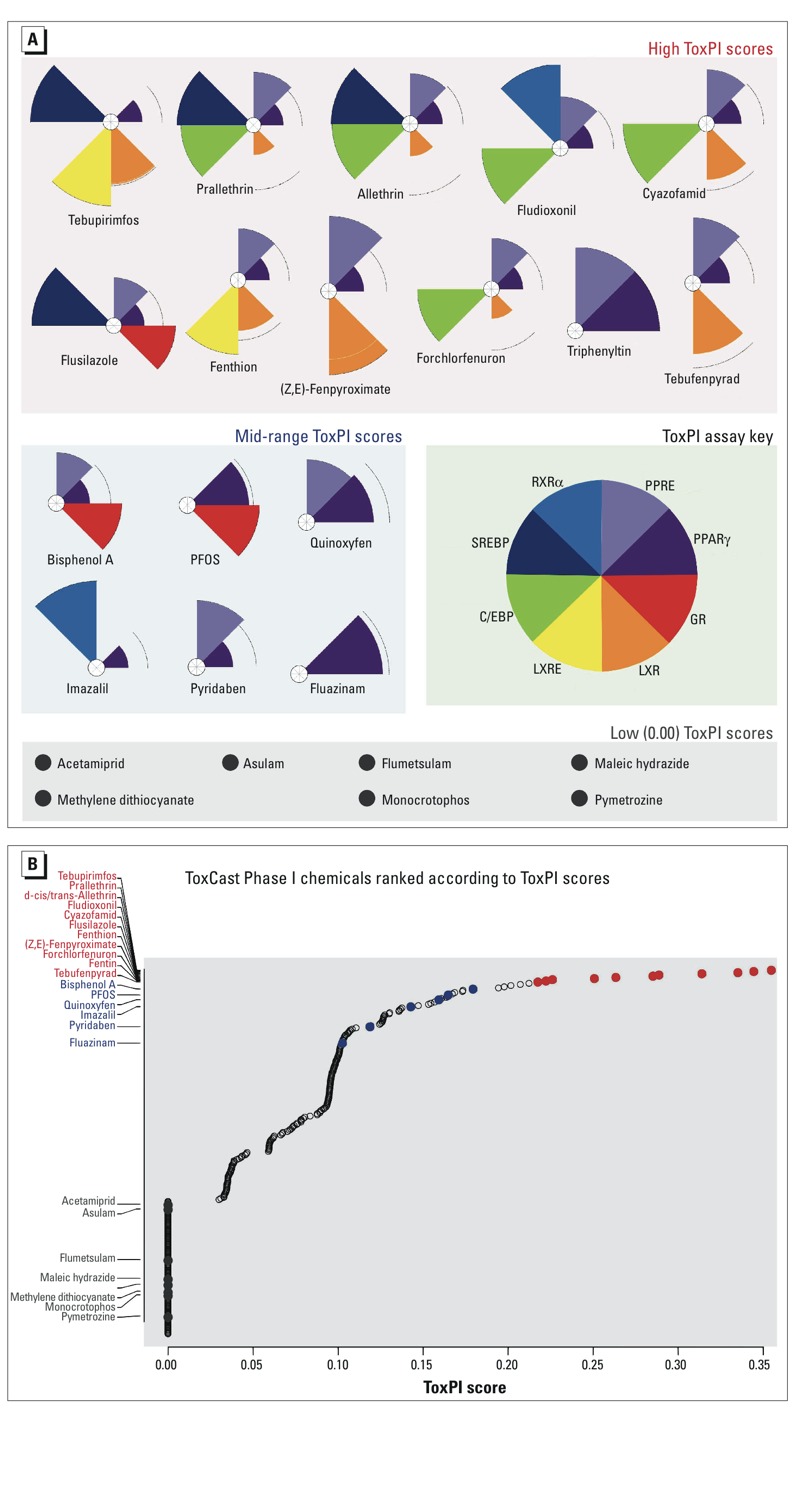
Objectives: We asked whether top-scoring PPARγ activators identified in ToxCast™ Phase I were genuine PPARγ activators and inducers of adipogenesis. Next, we identified ToxCast™ assays that should predict adipogenesis, developed an adipogenesis ToxPi, and asked how well the ToxPi predicted adipogenic activity.
Methods: We used transient transfection to test the ability of ToxCast™ chemicals to modulate PPARγ and RXRα, and differentiation assays employing 3T3-L1 preadipocytes and mouse bone marrow-derived mesenchymal stem cells (mBMSCs) to evaluate the adipogenic capacity of ToxCast™ chemicals.
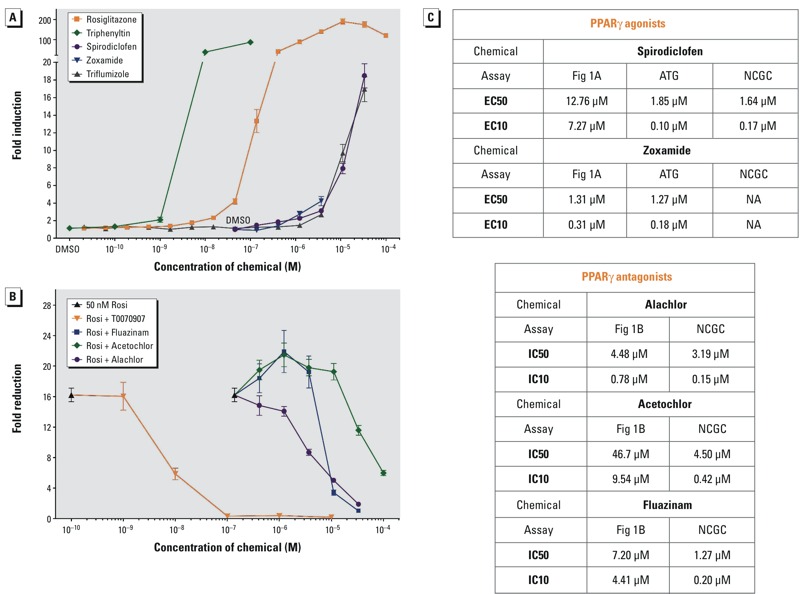
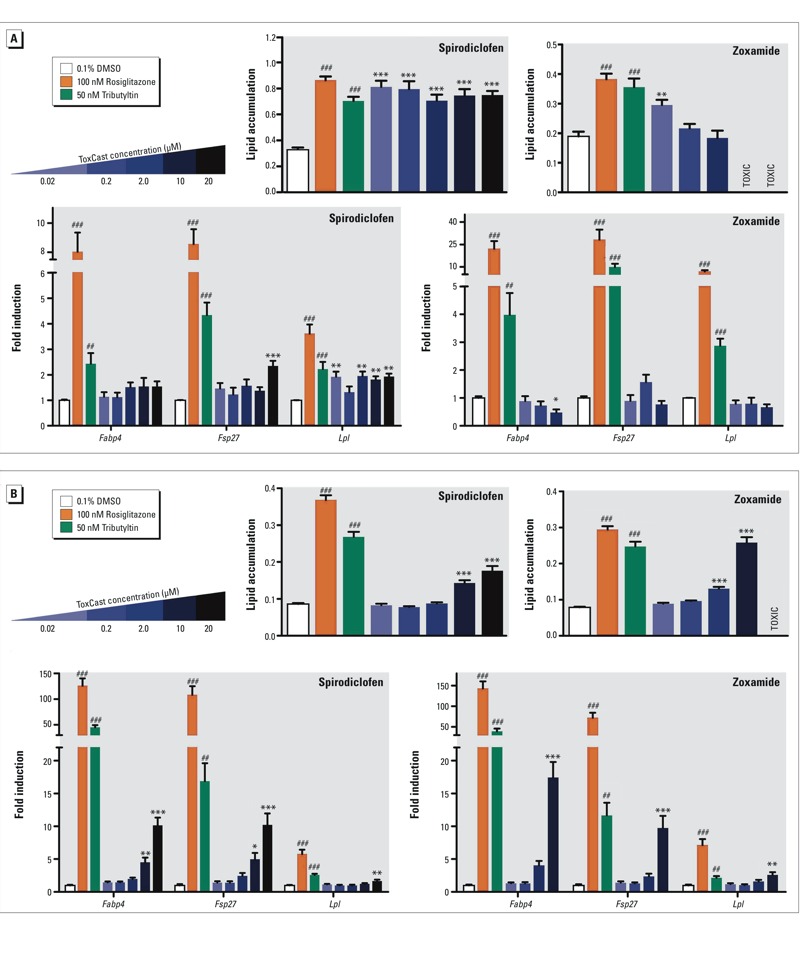
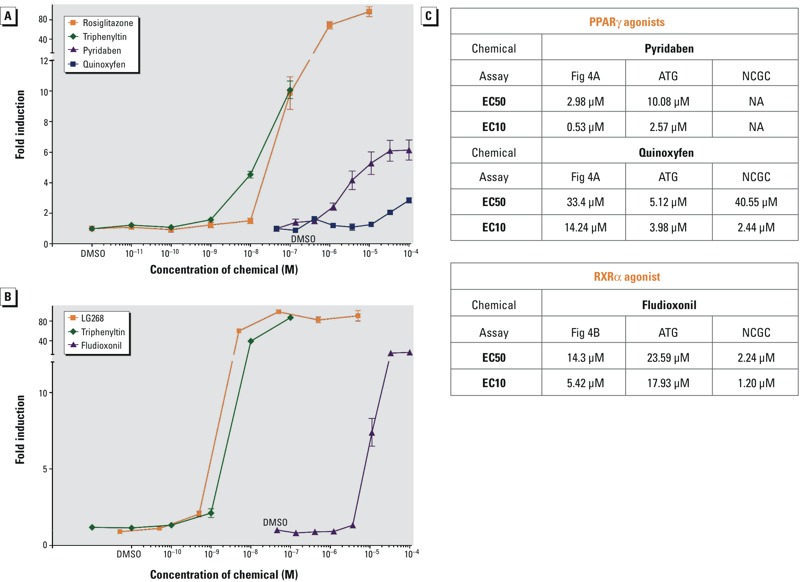
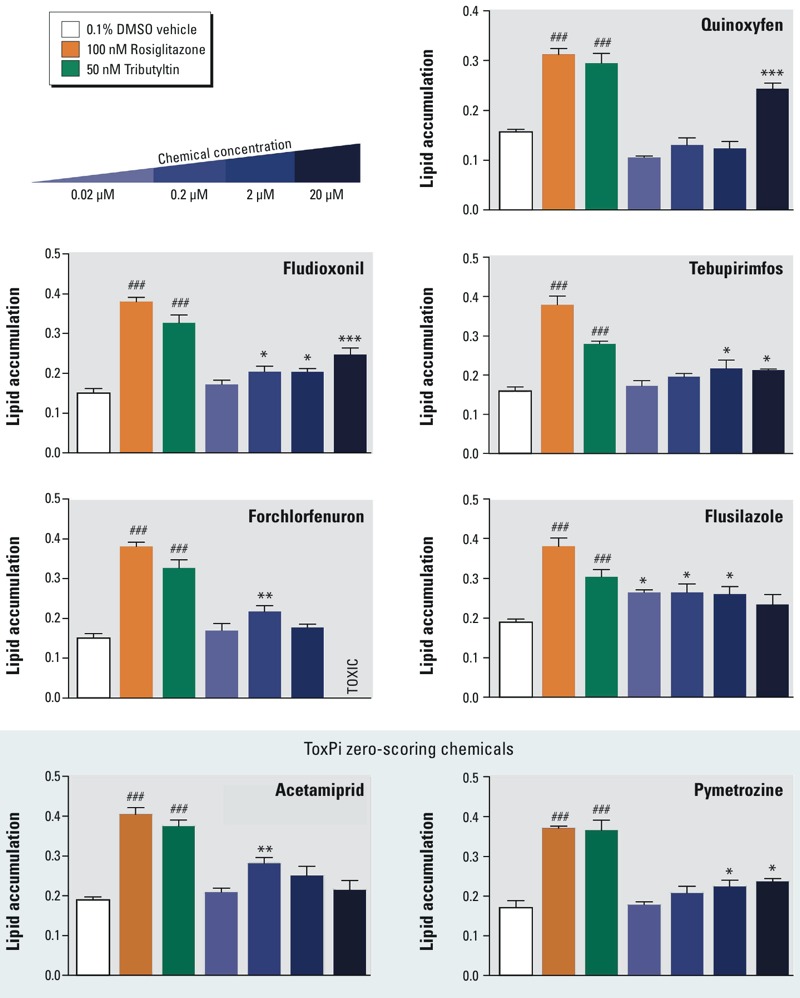
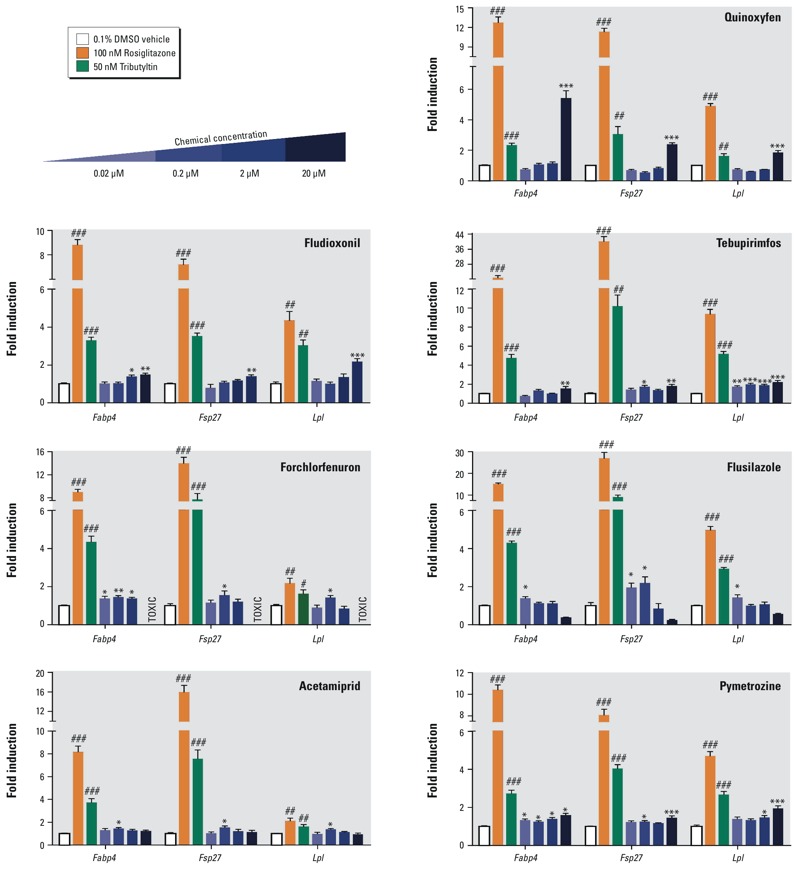
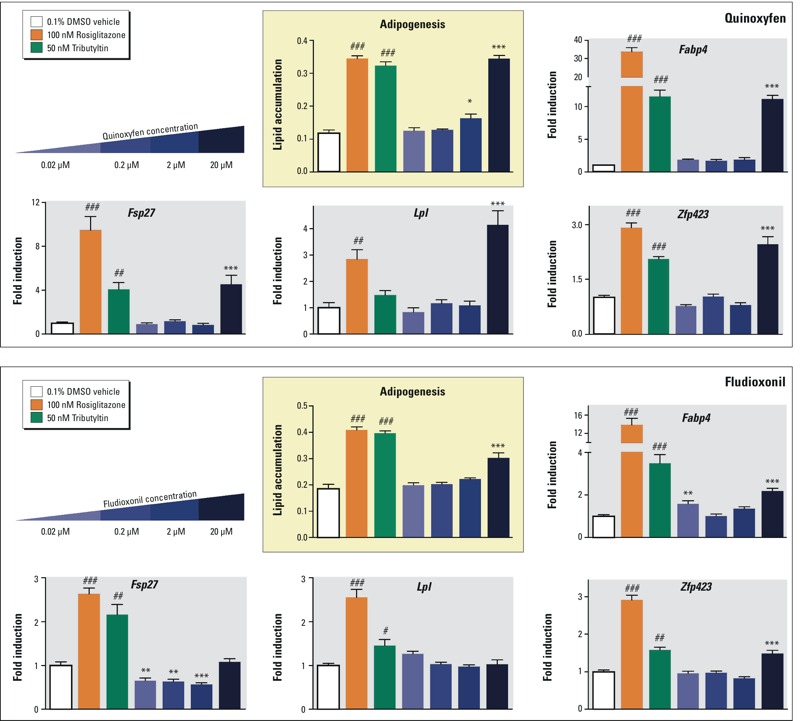
Results: Only 5/21 of the top scoring ToxCast™ PPARγ activators were activators in our assays, 3 were PPARγ antagonists, the remainder were inactive. The bona fide PPARγ activators we identified induced adipogenesis in 3T3-L1 cells and mBMSCs. Only 7 of the 17 chemicals predicted to be active by the ToxPi promoted adipogenesis, 1 inhibited adipogenesis, and 2 of the 7 predicted negatives were also adipogenic. Of these 9 adipogenic chemicals, 3 activated PPARγ, and 1 activated RXRα.
Conclusions: ToxCast™ PPARγ and RXRα assays do not correlate well with laboratory measurements of PPARγ and RXRα activity. The adipogenesis ToxPi performed poorly, perhaps due to the performance of ToxCast™ assays. We observed a modest predictive value of ToxCast™ for PPARγ and RXRα activation and adipogenesis and it is likely that many obesogenic chemicals remain to be identified.
Citation: Janesick AS, Dimastrogiovanni G, Vanek L, Boulos C, Chamorro-García R, Tang W, Blumberg B. 2016. On the utility of ToxCast™ and ToxPi as methods for identifying new obesogens. Environ Health Perspect 124:1214-1226; http://dx.doi.org/10.1289/ehp.1510352.
Conflict of interest statement
The other authors declare they have no actual or potential competing financial interests.
Figures
Comment in
-
Comment on "On the Utility of ToxCast™ and ToxPi as Methods for Identifying New Obesogens".Environ Health Perspect. 2017 Jan 1;125(1):A8-A11. doi: 10.1289/EHP881. Environ Health Perspect. 2017. PMID: 28055944 Free PMC article. No abstract available.
-
Reply to "Comment on 'On the Utility of ToxCast™ and ToxPi as Methods for Identifying New Obesogens'".Environ Health Perspect. 2017 Jan 1;125(1):A12-A14. doi: 10.1289/EHP1122. Environ Health Perspect. 2017. PMID: 28055946 Free PMC article. No abstract available.
References
-
- Bevington PR, Robinson DK. Boston, MA: McGraw-Hill Education; 2003. Data Reduction and Error Analysis for the Physical Sciences.
-
- Browne P, Judson RS, Casey WM, Kleinstreuer NC, Thomas RS. Screening chemicals for estrogen receptor bioactivity using a computational model. Environ Sci Technol. 2015;49(14):8804–8814. - PubMed
-
- Chamorro-García R, Kirchner S, Li X, Janesick A, Casey SC, Chow C, et al. 2012. Bisphenol A diglycidyl ether induces adipogenic differentiation of multipotent stromal stem cells through a peroxisome proliferator–activated receptor gamma-independent mechanism. Environ Health Perspect 120 984 989, doi: 10.1289/ehp.1205063 - DOI - PMC - PubMed
Publication types
MeSH terms
Substances
Grants and funding
LinkOut - more resources
Full Text Sources
Other Literature Sources
Research Materials