


Medical students are afraid to include abortion in their future practices: in-depth interviews in Maharastra, India
- PMID: 26758763
- PMCID: PMC4710021
- DOI: 10.1186/s12909-016-0532-5
Medical students are afraid to include abortion in their future practices: in-depth interviews in Maharastra, India
Abstract
Background: Unsafe abortions are estimated to cause eight per-cent of maternal mortality in India. Lack of providers, especially in rural areas, is one reason unsafe abortions take place despite decades of legal abortion. Education and training in reproductive health services has been shown to influence attitudes and increase chances that medical students will provide abortion care services in their future practice. To further explore previous findings about poor attitudes toward abortion among medical students in Maharastra, India, we conducted in-depth interviews with medical students in their final year of education.
Method: We used a qualitative design conducting in-depth interviews with twenty-three medical students in Maharastra applying a topic guide. Data was organized using thematic analysis with an inductive approach.
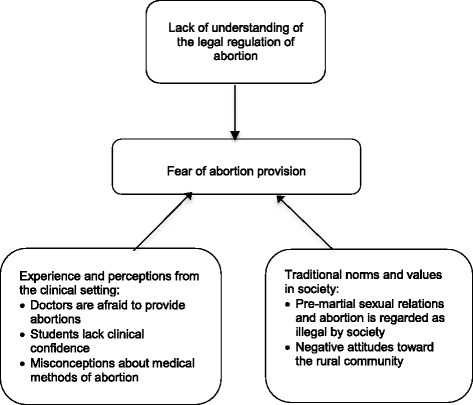
Results: The participants described a fear to provide abortion in their future practice. They lacked understanding of the law and confused the legal regulation of abortion with the law governing gender biased sex selection, and concluded that abortion is illegal in Maharastra. The interviewed medical students' attitudes were supported by their experiences and perceptions from the clinical setting as well as traditions and norms in society. Medical abortion using mifepristone and misoprostol was believed to be unsafe and prohibited in Maharastra. The students perceived that nurse-midwives were knowledgeable in Sexual and Reproductive Health and many found that they could be trained to perform abortions in the future.
Conclusions: To increase chances that medical students in Maharastra will perform abortion care services in their future practice, it is important to strengthen their confidence and knowledge through improved medical education including value clarification and clinical training.
Figures
References
-
- Kassebaum NJ, Bertozzi-Villa A, Coggeshall MS, Shackelford KA, Steiner C, Heuton KR, et al. Global, regional, and national levels and causes of maternal mortality during 1990–2013: a systematic analysis for the Global Burden of Disease Study 2013. Lancet. 2014;384(9947):980–1004. doi: 10.1016/S0140-6736(14)60696-6. - DOI - PMC - PubMed
-
- WHO, UNICEF, UNFPA, The World Bank, Division UNP. Trends in Maternal Mortality: 1990 to 2013. 2014.
-
- Government of India Ministry of Health and Family Planning. The Medical Termination of Pregnancy Act In: Act no 34. New Delhi; 1971.
-
- Registrar General India: Report on Medical Certification of cause of death 2012. In. Edited by Government of India MoHA. RK Puram New Delhi; 2015.
-
- Government of India Ministry of Health and Family Planning, Statistics Division. Family Welfare Statistics in India 2011.
MeSH terms
LinkOut - more resources
Full Text Sources
Other Literature Sources
Medical
