


Transitions between Multiband Oscillatory Patterns Characterize Memory-Guided Perceptual Decisions in Prefrontal Circuits
- PMID: 26758840
- PMCID: PMC4710772
- DOI: 10.1523/JNEUROSCI.3678-15.2016
Transitions between Multiband Oscillatory Patterns Characterize Memory-Guided Perceptual Decisions in Prefrontal Circuits
Abstract
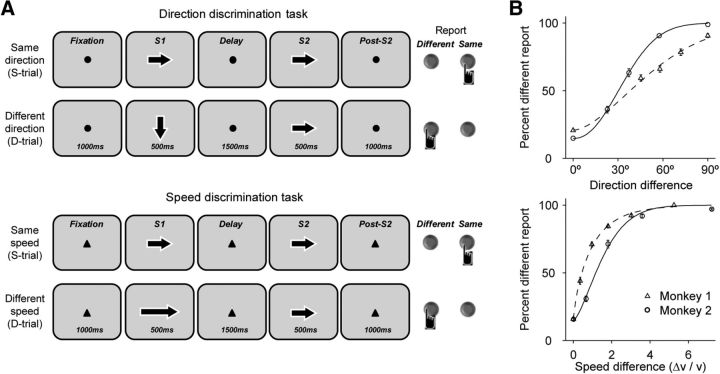
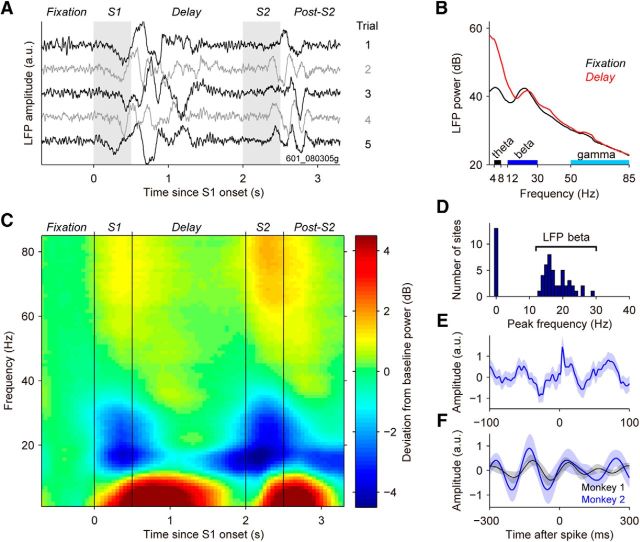
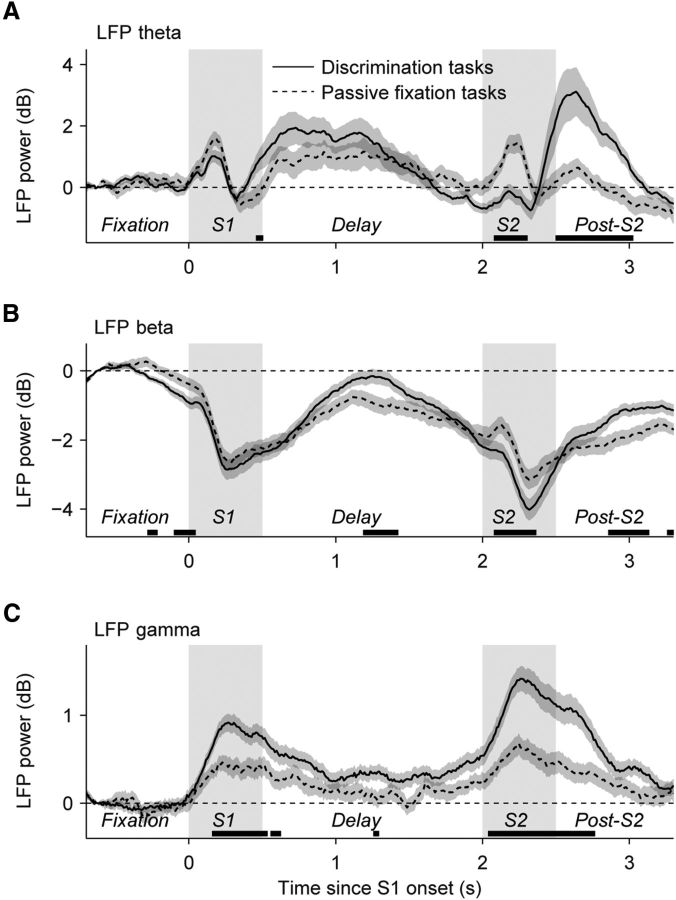
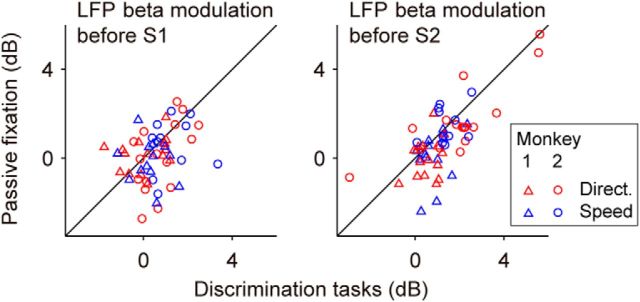
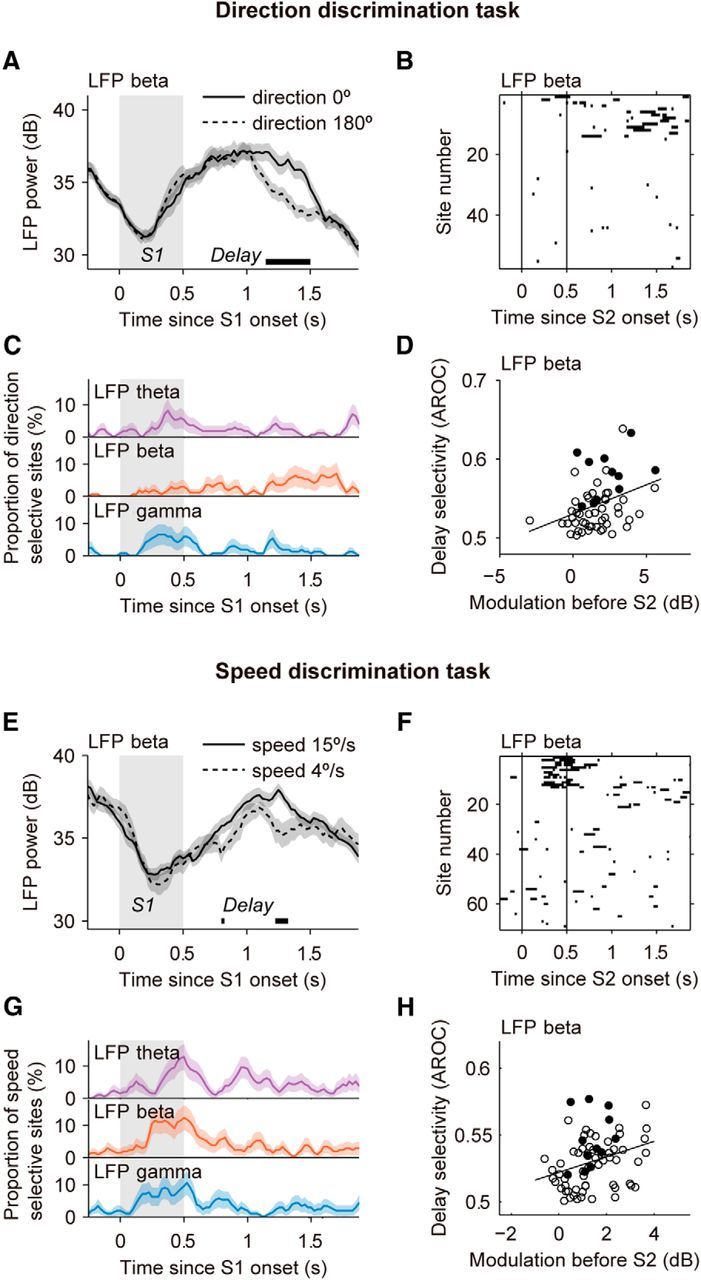
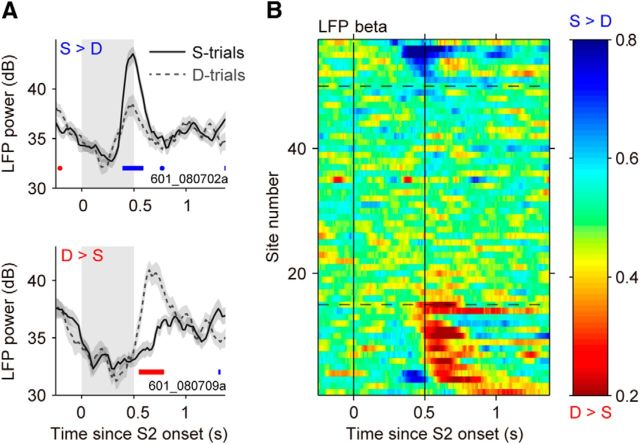
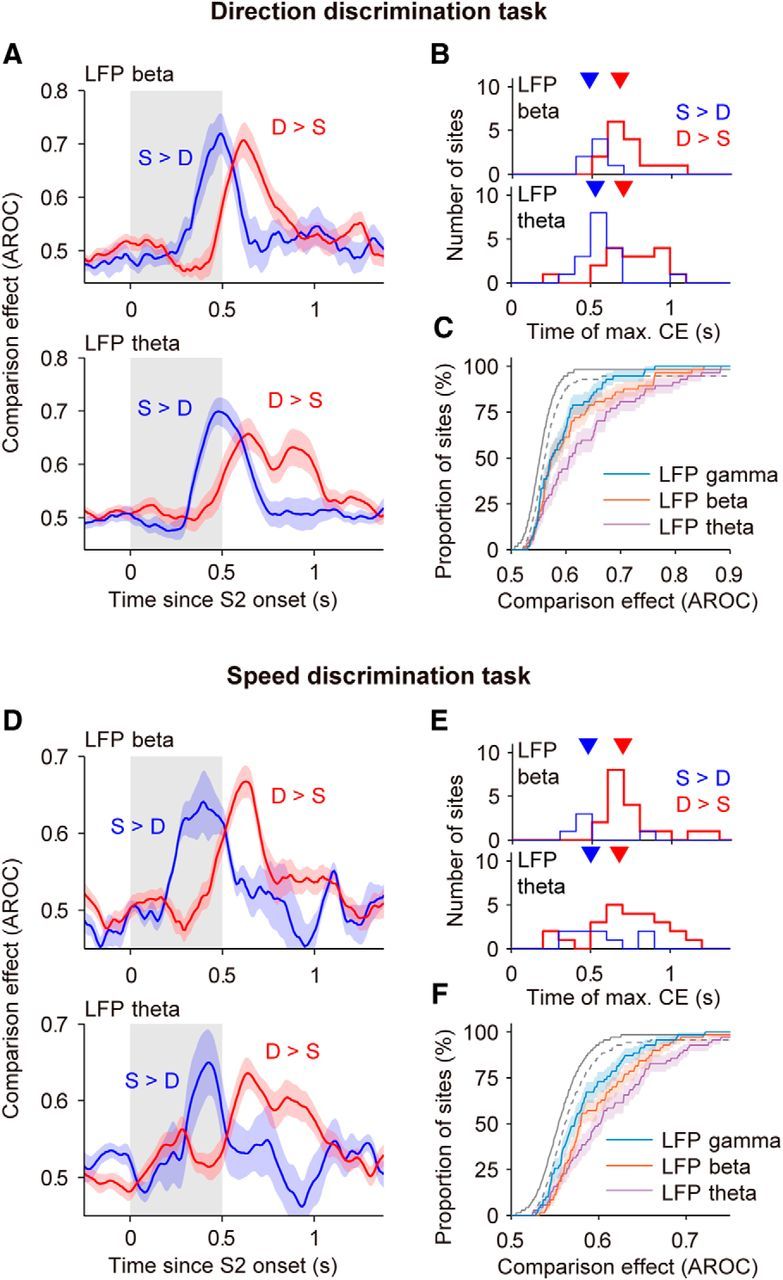
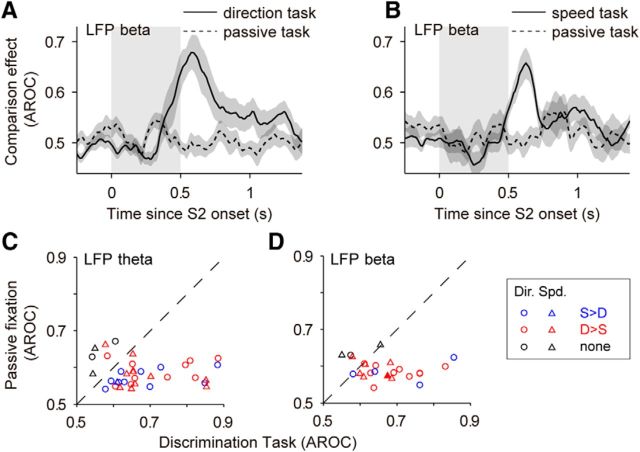
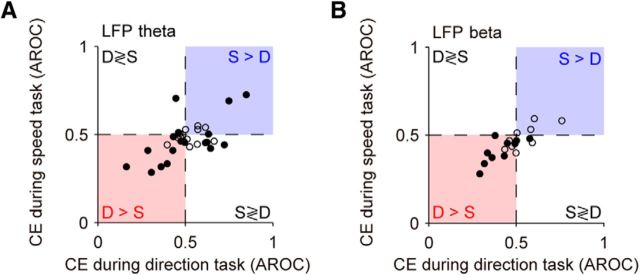
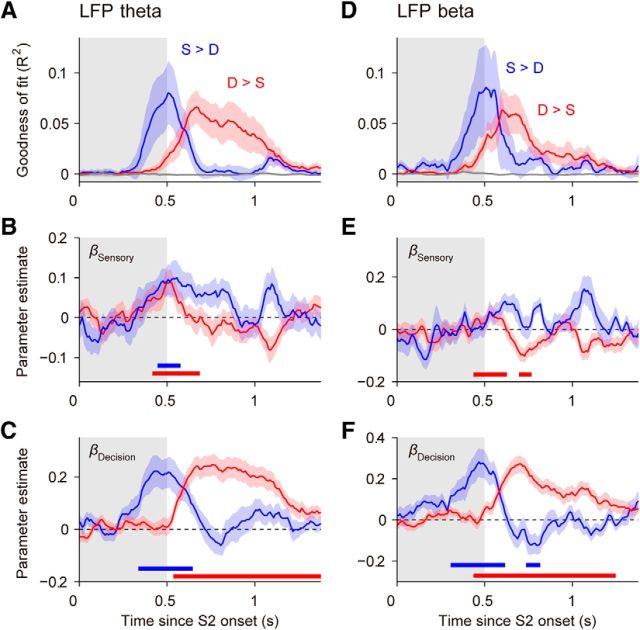
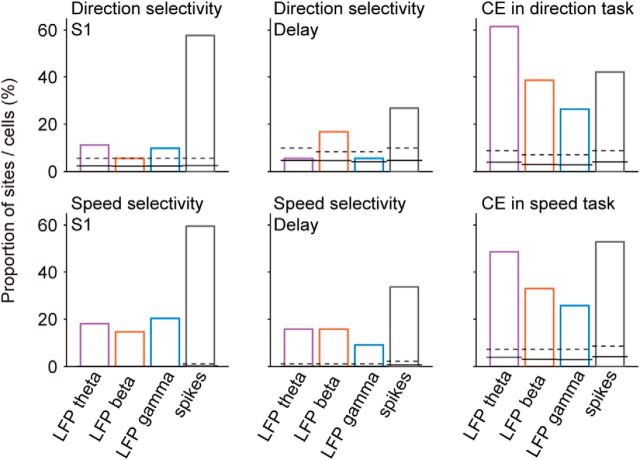
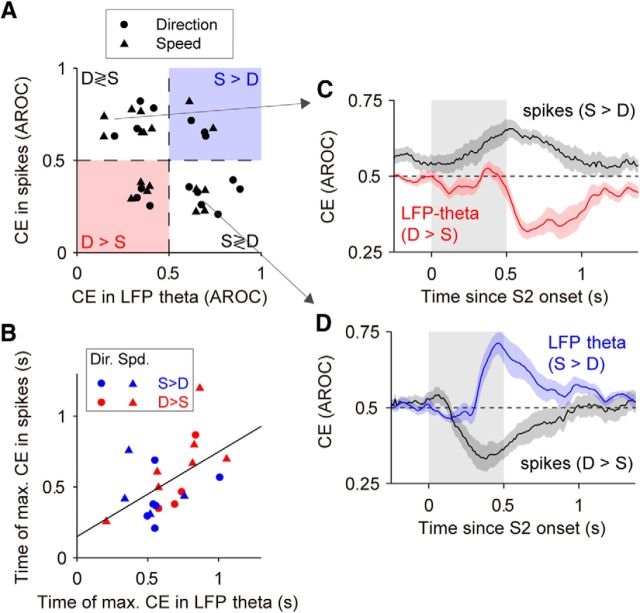
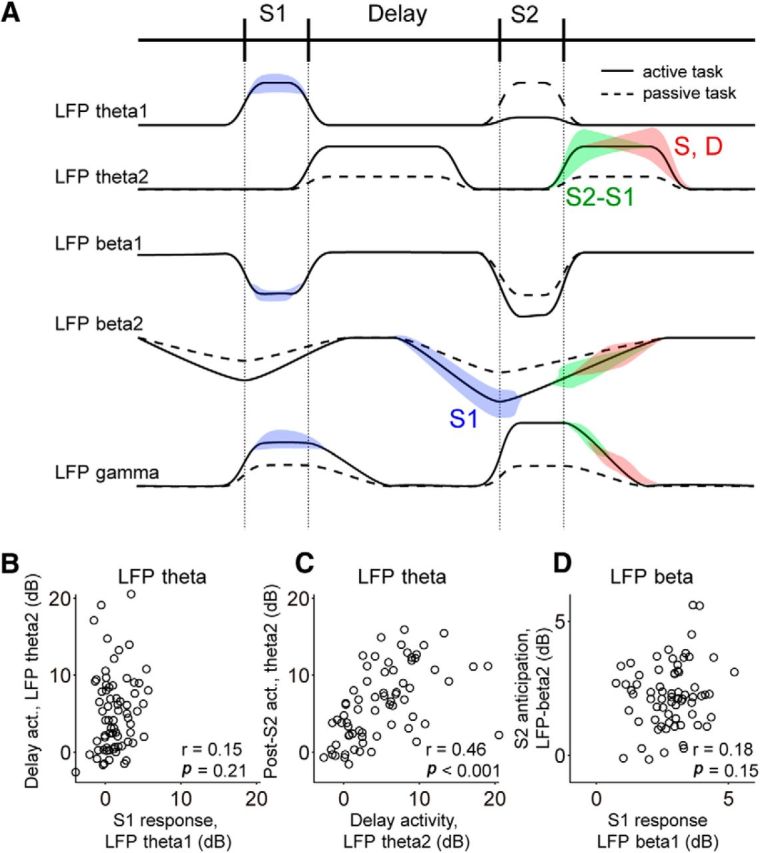
Neuronal activity in the lateral prefrontal cortex (LPFC) reflects the structure and cognitive demands of memory-guided sensory discrimination tasks. However, we still do not know how neuronal activity articulates in network states involved in perceiving, remembering, and comparing sensory information during such tasks. Oscillations in local field potentials (LFPs) provide fingerprints of such network dynamics. Here, we examined LFPs recorded from LPFC of macaques while they compared the directions or the speeds of two moving random-dot patterns, S1 and S2, separated by a delay. LFP activity in the theta, beta, and gamma bands tracked consecutive components of the task. In response to motion stimuli, LFP theta and gamma power increased, and beta power decreased, but showed only weak motion selectivity. In the delay, LFP beta power modulation anticipated the onset of S2 and encoded the task-relevant S1 feature, suggesting network dynamics associated with memory maintenance. After S2 onset the difference between the current stimulus S2 and the remembered S1 was strongly reflected in broadband LFP activity, with an early sensory-related component proportional to stimulus difference and a later choice-related component reflecting the behavioral decision buildup. Our results demonstrate that individual LFP bands reflect both sensory and cognitive processes engaged independently during different stages of the task. This activation pattern suggests that during elementary cognitive tasks, the prefrontal network transitions dynamically between states and that these transitions are characterized by the conjunction of LFP rhythms rather than by single LFP bands.
Significance statement: Neurons in the brain communicate through electrical impulses and coordinate this activity in ensembles that pulsate rhythmically, very much like musical instruments in an orchestra. These rhythms change with "brain state," from sleep to waking, but also signal with different oscillation frequencies rapid changes between sensory and cognitive processing. Here, we studied rhythmic electrical activity in the monkey prefrontal cortex, an area implicated in working memory, decision making, and executive control. Monkeys had to identify and remember a visual motion pattern and compare it to a second pattern. We found orderly transitions between rhythmic activity where the same frequency channels were active in all ongoing prefrontal computations. This supports prefrontal circuit dynamics that transitions rapidly between complex rhythmic patterns during structured cognitive tasks.
Keywords: attention; decision making; motion discrimination; prefrontal; visual perception; working memory.
Copyright © 2016 the authors 0270-6474/16/360489-17$15.00/0.
Figures
Similar articles
-
Memory-guided sensory comparisons in the prefrontal cortex: contribution of putative pyramidal cells and interneurons.J Neurosci. 2012 Feb 22;32(8):2747-61. doi: 10.1523/JNEUROSCI.5135-11.2012. J Neurosci. 2012. PMID: 22357858 Free PMC article.
-
Prefrontal Neurons Represent Motion Signals from Across the Visual Field But for Memory-Guided Comparisons Depend on Neurons Providing These Signals.J Neurosci. 2016 Sep 7;36(36):9351-64. doi: 10.1523/JNEUROSCI.0843-16.2016. J Neurosci. 2016. PMID: 27605611 Free PMC article.
-
Directional signals in the prefrontal cortex and in area MT during a working memory for visual motion task.J Neurosci. 2006 Nov 8;26(45):11726-42. doi: 10.1523/JNEUROSCI.3420-06.2006. J Neurosci. 2006. PMID: 17093094 Free PMC article.
-
Linking Neuronal Direction Selectivity to Perceptual Decisions About Visual Motion.Annu Rev Vis Sci. 2020 Sep 15;6:335-362. doi: 10.1146/annurev-vision-121219-081816. Annu Rev Vis Sci. 2020. PMID: 32936737 Review.
-
Reward-dependent learning in neuronal networks for planning and decision making.Prog Brain Res. 2000;126:217-29. doi: 10.1016/S0079-6123(00)26016-0. Prog Brain Res. 2000. PMID: 11105649 Review.
Cited by
-
Distractor anticipation during working memory is associated with theta and beta oscillations across spatial scales.Front Integr Neurosci. 2025 Mar 24;19:1553521. doi: 10.3389/fnint.2025.1553521. eCollection 2025. Front Integr Neurosci. 2025. PMID: 40196759 Free PMC article.
-
Beta oscillations in vision: a (preconscious) neural mechanism for the dorsal visual stream?Front Psychol. 2023 Dec 13;14:1296483. doi: 10.3389/fpsyg.2023.1296483. eCollection 2023. Front Psychol. 2023. PMID: 38155693 Free PMC article. Review.
-
Controlling Working Memory Operations by Selective Gating: The Roles of Oscillations and Synchrony.Adv Cogn Psychol. 2016 Dec 31;12(4):209-232. doi: 10.5709/acp-0199-x. eCollection 2016. Adv Cogn Psychol. 2016. PMID: 28154616 Free PMC article.
-
Exact neural mass model for synaptic-based working memory.PLoS Comput Biol. 2020 Dec 15;16(12):e1008533. doi: 10.1371/journal.pcbi.1008533. eCollection 2020 Dec. PLoS Comput Biol. 2020. PMID: 33320855 Free PMC article.
-
Dissonant Representations of Visual Space in Prefrontal Cortex during Eye Movements.Cell Rep. 2018 Feb 20;22(8):2039-2052. doi: 10.1016/j.celrep.2018.01.078. Cell Rep. 2018. PMID: 29466732 Free PMC article.
References
Publication types
MeSH terms
Grants and funding
LinkOut - more resources
Full Text Sources
Other Literature Sources
Medical
