


Switch-mediated activation and retargeting of CAR-T cells for B-cell malignancies
- PMID: 26759369
- PMCID: PMC4743815
- DOI: 10.1073/pnas.1524155113
Switch-mediated activation and retargeting of CAR-T cells for B-cell malignancies
Abstract
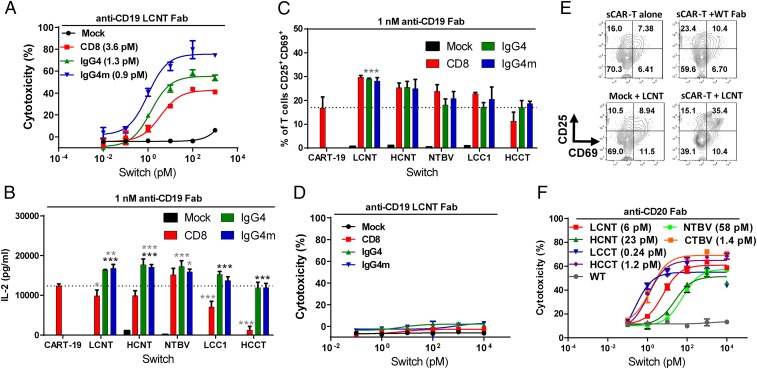
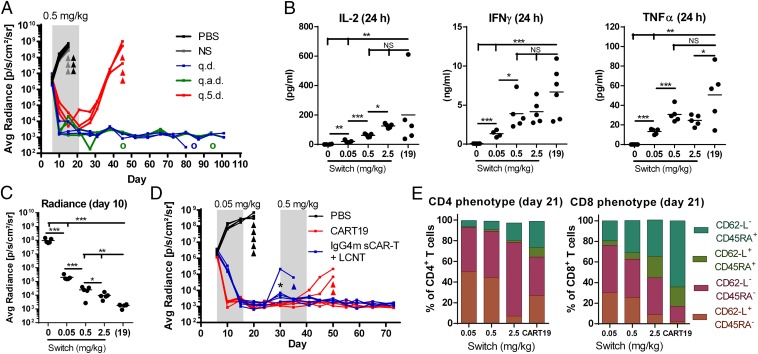
Chimeric antigen receptor T (CAR-T) cell therapy has produced impressive results in clinical trials for B-cell malignancies. However, safety concerns related to the inability to control CAR-T cells once infused into the patient remain a significant challenge. Here we report the engineering of recombinant antibody-based bifunctional switches that consist of a tumor antigen-specific Fab molecule engrafted with a peptide neo-epitope, which is bound exclusively by a peptide-specific switchable CAR-T cell (sCAR-T). The switch redirects the activity of the bio-orthogonal sCAR-T cells through the selective formation of immunological synapses, in which the sCAR-T cell, switch, and target cell interact in a structurally defined and temporally controlled manner. Optimized switches specific for CD19 controlled the activity, tissue-homing, cytokine release, and phenotype of sCAR-T cells in a dose-titratable manner in a Nalm-6 xenograft rodent model of B-cell leukemia. The sCAR-T-cell dosing regimen could be tuned to provide efficacy comparable to the corresponding conventional CART-19, but with lower cytokine levels, thereby offering a method of mitigating cytokine release syndrome in clinical translation. Furthermore, we demonstrate that this methodology is readily adaptable to targeting CD20 on cancer cells using the same sCAR-T cell, suggesting that this approach may be broadly applicable to heterogeneous and resistant tumor populations, as well as other liquid and solid tumor antigens.
Keywords: antibody engineering; autologous cell therapy; cancer; chimeric antigen receptor T cell; leukemia.
Conflict of interest statement
The authors declare no conflict of interest.
Figures



References
-
- Uttenthal BJ, Chua I, Morris EC, Stauss HJ. Challenges in T cell receptor gene therapy. J Gene Med. 2012;14(6):386–399. - PubMed
Publication types
MeSH terms
Substances
Grants and funding
LinkOut - more resources
Full Text Sources
Other Literature Sources
Medical
