


Risk factors for Group B Streptococcus colonisation and disease in Gambian women and their infants
- PMID: 26763186
- PMCID: PMC4769314
- DOI: 10.1016/j.jinf.2015.12.014
Risk factors for Group B Streptococcus colonisation and disease in Gambian women and their infants
Abstract
Objectives: To determine risk factors for GBS colonisation in Gambian mothers and in their infants from birth to day 60-89 of age.
Methods: Swabs and breastmilk from mothers/infant pairs were collected and cultured on selective agar. Negative samples were analysed for GBS DNA via real-time PCR. Positive isolates were serotyped using multiplex PCR and gel-agarose electrophoresis.
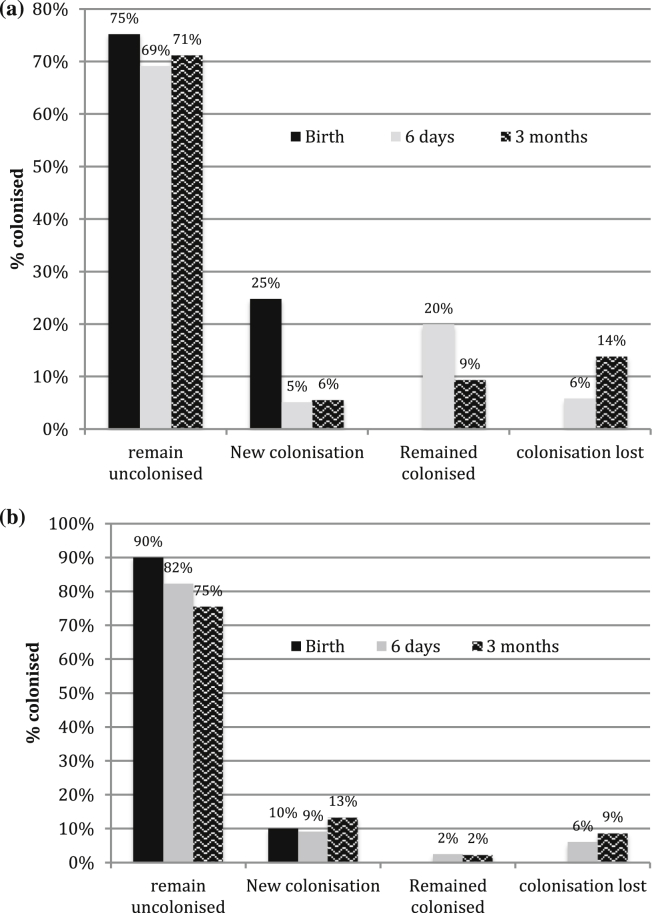
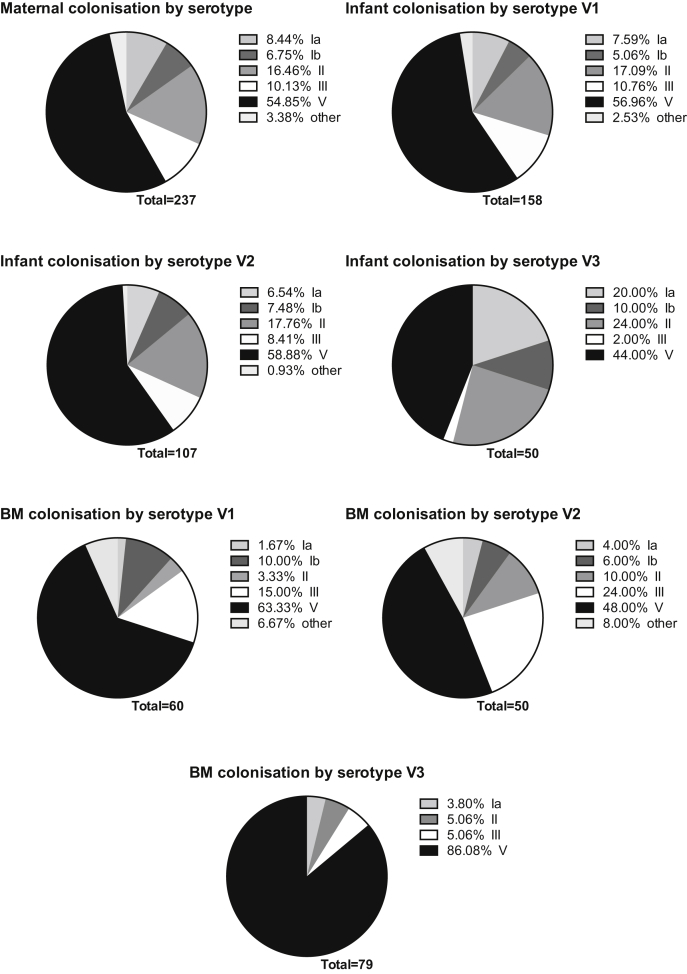
Results: Seven hundred and fifty women/infant pairs were recruited. 253 women (33.7%) were GBS-colonised at delivery. The predominant serotypes were: V (55%), II (16%), III (10%), Ia (8%) and Ib (8%). 186 infants were colonised (24.8%) at birth, 181 (24.1%) at 6 days and 96 at day 60-89 (14%). Infants born before 34 weeks of gestation and to women with rectovaginal and breastmilk colonisation at delivery had increased odds of GBS colonisation at birth. Season of birth was associated with increased odds of persistent infant GBS colonisation (dry season vs. wet season AOR 2.9; 95% CI 1.6-5.2).
Conclusion: GBS colonisation is common in Gambian women at delivery and in their infants to day 60-89 and is dominated by serotype V. In addition to maternal colonisation, breastmilk and season of birth are important risk factors for infant GBS colonisation.
Keywords: Group B Streptococcus; Immunity; Neonatal infection; Vaccines.
Crown Copyright © 2015. Published by Elsevier Ltd. All rights reserved.
Figures
References
-
- Madzivhandila M., Adrian P.V., Cutland C.L., Kuwanda L., Schrag S.J., Madhi S.A. Serotype distribution and invasive potential of group B streptococcus isolates causing disease in infants and colonizing maternal-newborn dyads. PLoS One. 2011;6(3):e17861. PubMed PMID: 21445302. Pubmed Central PMCID: 3061872. - PMC - PubMed
-
- Blumberg H.M., Stephens D.S., Modansky M., Erwin M., Elliot J., Facklam R.R. Invasive group B streptococcal disease: the emergence of serotype V. J Infect Dis. 1996 Feb;173(2):365–373. PubMed PMID: 8568297. - PubMed
Publication types
MeSH terms
Grants and funding
LinkOut - more resources
Full Text Sources
Other Literature Sources
Medical
