


Female in-nest chatter song increases predation
- PMID: 26763214
- PMCID: PMC4785911
- DOI: 10.1098/rsbl.2015.0513
Female in-nest chatter song increases predation
Abstract
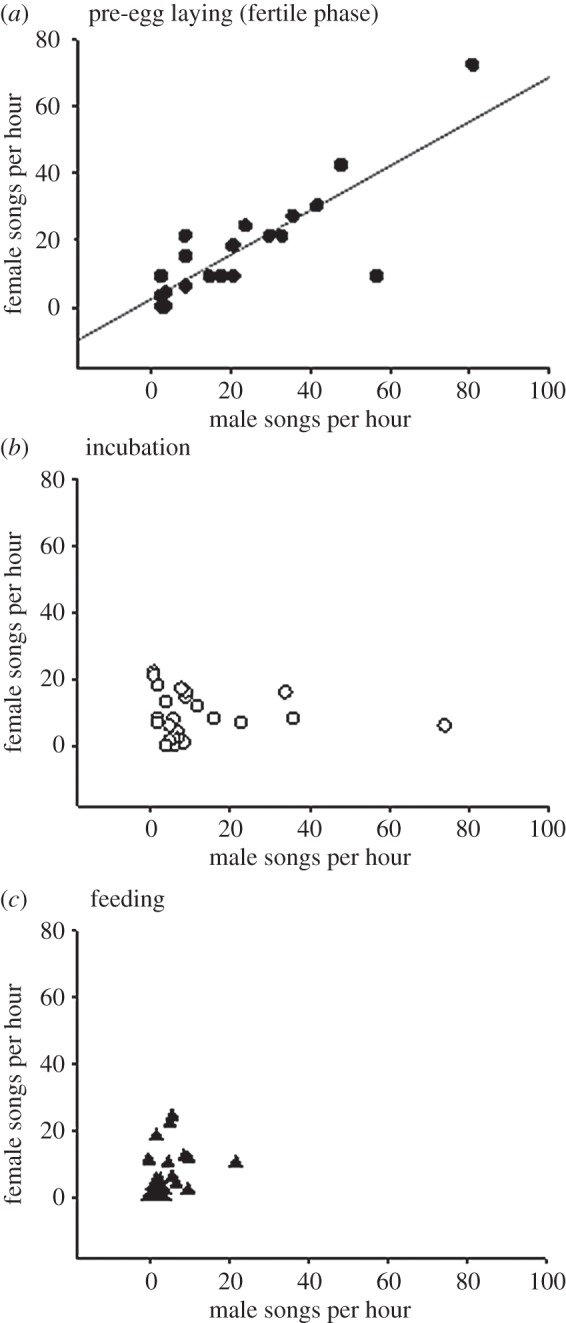
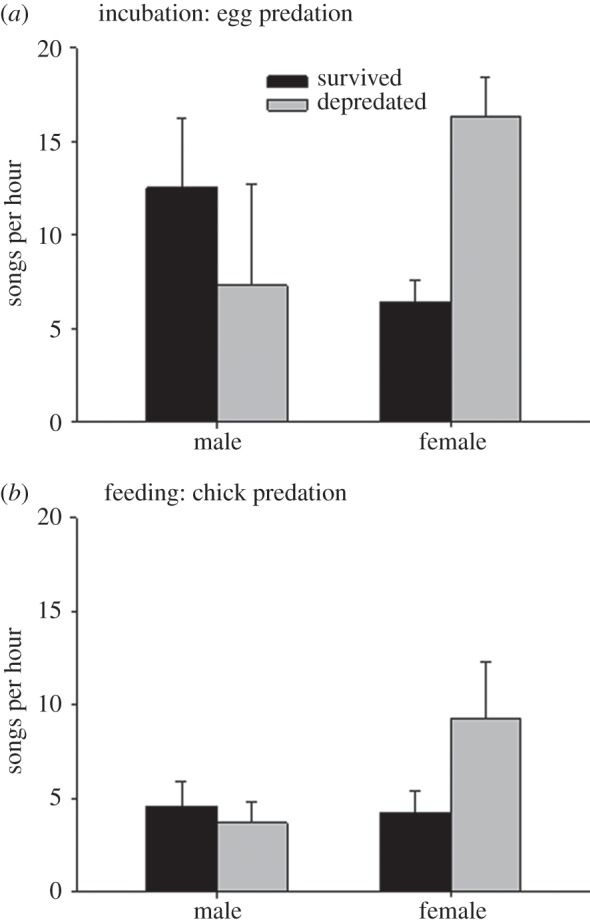
Female song is an ancestral trait in songbirds, yet extant females generally sing less than males. Here, we examine sex differences in the predation cost of singing behaviour. The superb fairy-wren (Malurus cyaneus) is a Southern Hemisphere songbird; males and females provision the brood and produce solo song year-round. Both sexes had higher song rate during the fertile period and lower song rate during incubation and chick feeding. Females were more likely than males to sing close to or inside the nest. For this reason, female but not male song rate predicted egg and nestling predation. This study identifies a high fitness cost of song when a parent bird attends offspring inside a nest and explains gender differences in singing when there are gender differences in parental care.
Keywords: Maluridae; nest attendance; predation risk; reproductive cost; song rate; superb fairy-wren.
© 2016 The Author(s).
Figures
References
-
- Andersson MB. 1994. Sexual selection. Princeton, NJ: Princeton University Press.
-
- Catchpole CK, Slater PJ. 2003. Bird song: biological themes and variations. Cambridge, UK: Cambridge University Press.
-
- Najar N, Benedict L. 2015. Female song in New World wood warblers. Front. Ecol. Evol. 3, 139 ( 10.3389/fevo.2015.00139) - DOI
-
- Cain KE, Cockburn AL, Langmore NE. 2015. Female song rates in response to simulated intruder are positively related to reproductive success. Front. Ecol. Evol. 3, 119 ( 10.3389/fevo.2015.00119) - DOI
Publication types
MeSH terms
LinkOut - more resources
Full Text Sources
Other Literature Sources
