Review
. 2015:80:281-8.
doi: 10.1101/sqb.2015.80.027573. Epub 2016 Jan 13.

Transposable Elements, Polydactyl Proteins, and the Genesis of Human-Specific Transcription Networks

Affiliations
Review

Transposable Elements, Polydactyl Proteins, and the Genesis of Human-Specific Transcription Networks

Didier Trono. Cold Spring Harb Symp Quant Biol. 2015.

Abstract

Transposable elements (TEs) may account for up to two-thirds of the human genome, and as genomic threats they are subjected to epigenetic control mechanisms engaged from the earliest stages of embryonic development. We previously determined that an important component of this process is the sequence-specific recognition of TEs by KRAB (Krüppel-associated box)-containing zinc-finger proteins (KRAB-ZFPs), a large family of tetrapod-restricted transcription factors that act by recruiting inducers of heterochromatin formation and DNA methylation. We further showed that KRAB-ZFPs and their cofactor KAP1 exert a marked influence on the transcription dynamics of embryonic stem cells via their docking of repressor complexes at TE-contained regulatory sequences. It is generally held that, beyond this early embryonic period, TEs become permanently silenced, and that the evolutionary selection of KRAB-ZFPs and other TE controllers is the result of a simple evolutionary arms race between the host and these genetics invaders. Here, I discuss recent evidence that invalidates this dual assumption and instead suggests that KRAB-ZFPs are the instruments of a massive enterprise of TE domestication, whereby transposon-based regulatory sequences and their cellular ligands establish species-specific transcription regulation networks that influence multiple aspects of human development and physiology.


Figures

Fig. 1
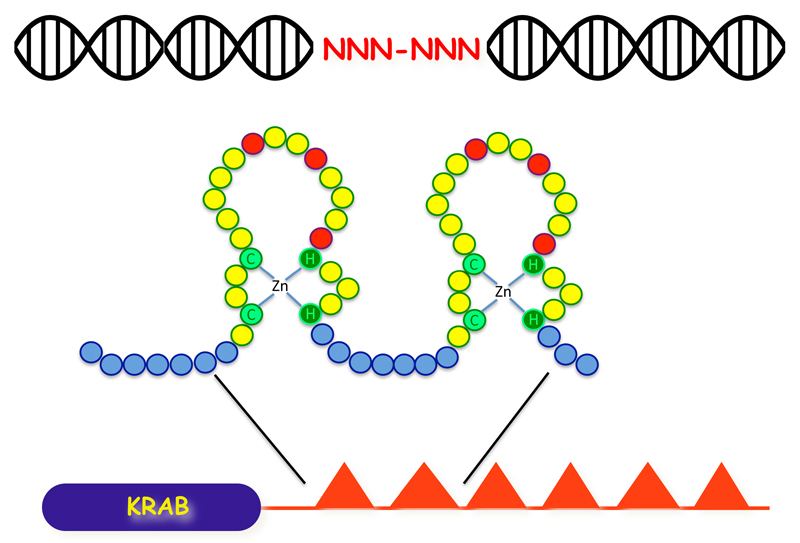
Fig. 1. Sequence-specific DNA recognition by a prototypic KAPB-ZFP.
Top, DNA target, with two targeted triplers of deoxynucleotides hightlighted. Middle, amino-acid representation of two zinc fingers and flanking spacers (blue balls), typically 7 residue-long. Within each ZF, amino acids represented in red (at positions conventionally designated -1, +3 and +6 within the ZF) are major determinant of DNA binding sequence specificity. Bottom, general structure of a prototypic KRAB-ZFP, with N-terminal KAP1-recruiting domain (KRAB) and C-terminal poly-zinc finger array. Some KRAB-ZFPs harbor additional N-terminal functional domains (e.g. SCAN, BTB, DUF),
Fig. 2
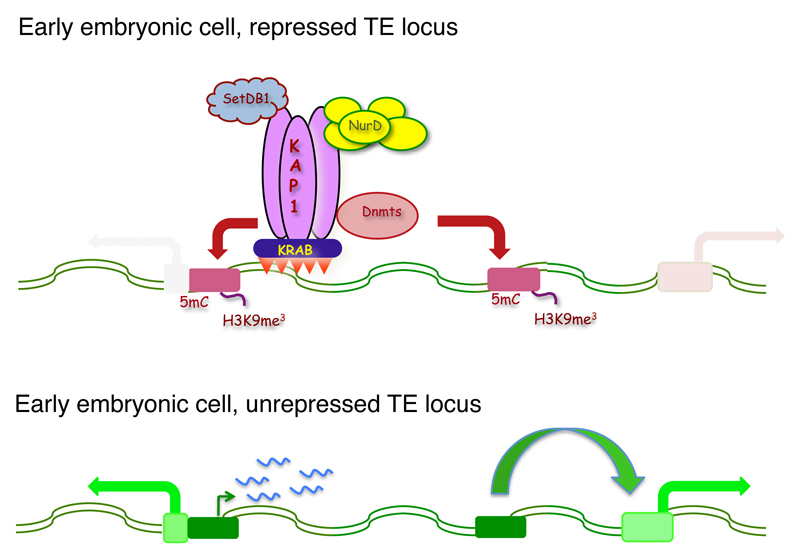
Fig. 2. The KRAB’n’KAP system controls the trancriptional activity of TEs in pluripotent stem cells.
In embryonic stem cells, the sequence-specific recognition of TEs by their cognate KRAB-ZFPs results in docking KAP1 and its associated effectors at these loci, leading to repression by deposition of repressive histone marks (e.g. H3K9me3) and cytosine methylation (5mC), through the respective actions of SETDB1 and other chromatin modifiers (e.g. NurD) and of DNA methyltransferases (DNMTs). When transcriptionally active, TEs not only produce transcripts, some of which can have long-range regulatory functions, but can also stimulate the expression of nearby genes through promoter or enhancer effects.
Fig. 3
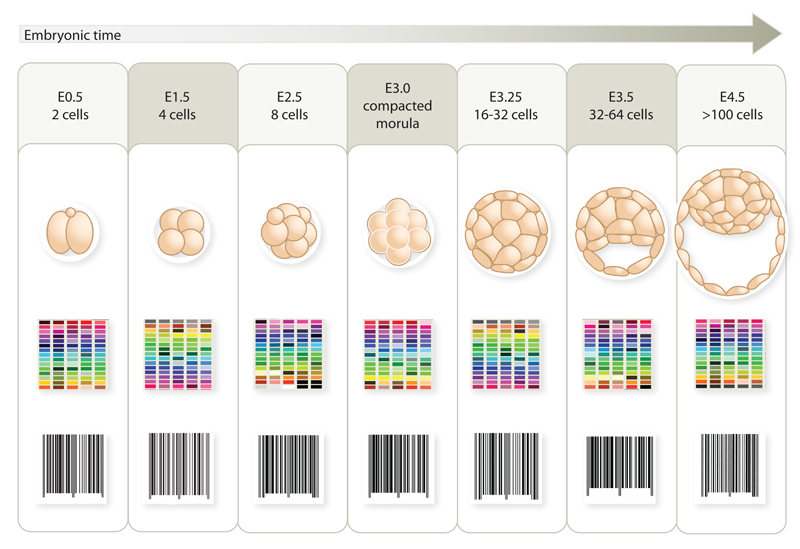
Fig. 3. KRAB-ZFPs and their TE targets display temporally regulated patterns of expression in early embryonic human cells.
Highly stage-differential levels of RNAs derived from both transposable elements and their KRAB-ZFP controllers define a double transcriptional barcode for each step of early embryonic human development, as schematically represented here.
Fig. 4
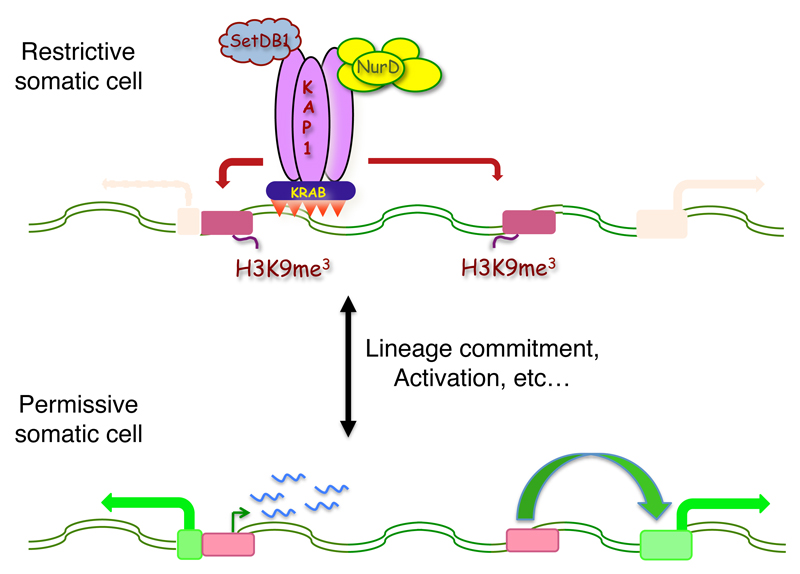
Fig. 4. KRAB-ZFPs and their TE targets modulate gene expression in adult tissues.
In adult cells, KRAB-ZFPs also control TE transcriptional influences, although in this case histone-based modifications rather than changes in DNA methylation seem to prevail.
Fig. 5
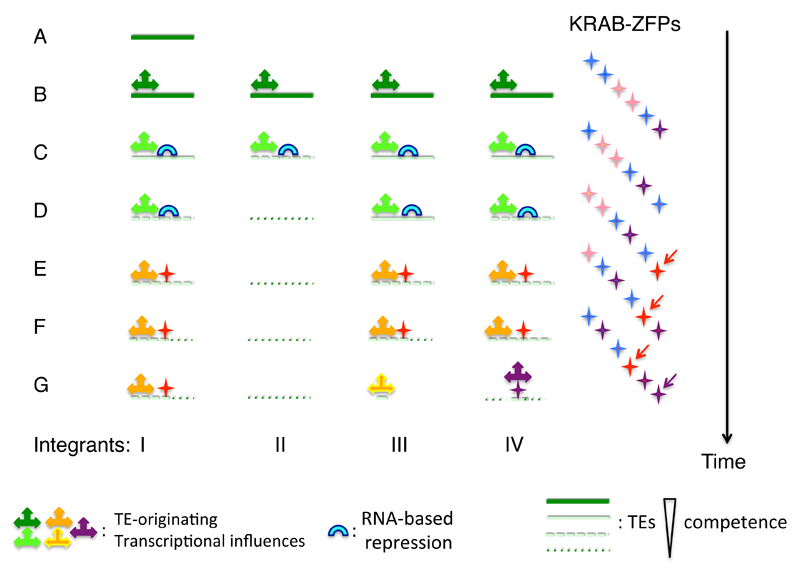
Fig. 5. A brief history of TE time.
When a new TE emerges from either exogenous or endogenous sources (A), it initially can spread (B), before being largely controlled by RNA-based restriction mechanisms such as piRNAs (C). Its individual integrants accumulate mutations that progressively inactivate their transposition potential (D). Meanwhile, the KRAB-ZFP gene family generates new paralogs, one of which can at some point recognize and control this group of TEs (E). Individual integrants continue to undergo genetic drift (F), so that in some cases only their KRAB-ZFP-recruiting transcription regulatory region is left, as part of a cellular gene promoter or enhancer (G, integrant III). The effector complexes brought about by the KRAB-ZFPs can themselves evolve over time, so that all that is ultimately left of the original TE/repressor pair is a DNA target motif and a sequence-specific polypeptidic ligand (G, integrant IV).
Fig. 6
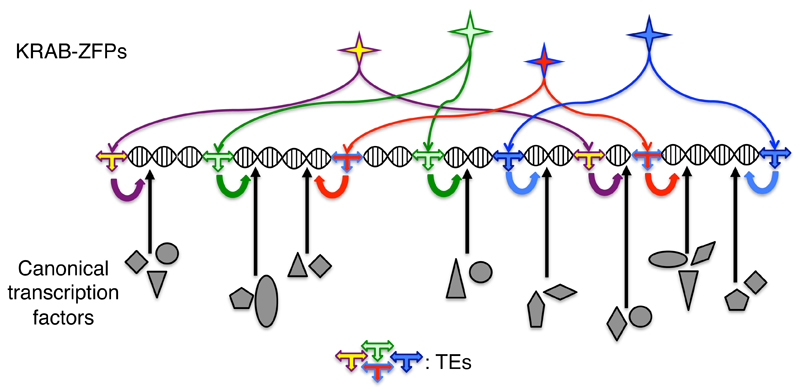
Fig. 6. Of the specific-specific regulation of human biological processes by KRAB-ZFPs and their TE targets.
TEs sprinkle the human genome with sequences largely unique to this species both in sequence and genomic location. These TE sequences are used as landing platforms for KRAB-ZFPs, which themselves display limited levels of orthology with similar proteins from other species. A triply species-restricted regulatory layer is thus laid over canonical, conserved transcription pathways. The impact of this phenomenon on speciation might be particularly pronounced in organs subjected to environmental constraints that are not overly coercive, such as the brain.

References

    1. Baillie JK, Barnett MW, Upton KR, Gerhardt DJ, Richmond TA, De Sapio F, Brennan PM, Rizzu P, Smith S, Fell M, et al. Somatic retrotransposition alters the genetic landscape of the human brain. Nature. 2011;479:534–537. - PMC - PubMed
    1. Barde I, Rauwel B, Marin-Florez RM, Corsinotti A, Laurenti E, Verp S, Offner S, Marquis J, Kapopoulou A, Vanicek J, et al. A KRAB/KAP1-miRNA Cascade Regulates Erythropoiesis Through Stage-Specific Control of Mitophagy. Science. 2013 - PMC - PubMed
    1. Bojkowska K, Aloisio F, Cassano M, Kapopoulou A, Santoni de Sio F, Zangger N, Offner S, Cartoni C, Thomas C, Quenneville S, et al. Liver-specific ablation of Kruppel-associated box-associated protein 1 in mice leads to male-predominant hepatosteatosis and development of liver adenoma. Hepatology. 2012;56:1279–1290. - PMC - PubMed
    1. Bourc’his D, Bestor TH. Meiotic catastrophe and retrotransposon reactivation in male germ cells lacking Dnmt3L. Nature. 2004;431:96–99. - PubMed
    1. Bourque G, Leong B, Vega VB, Chen X, Lee YL, Srinivasan KG, Chew JL, Ruan Y, Wei CL, Ng HH, et al. Evolution of the mammalian transcription factor binding repertoire via transposable elements. Genome research. 2008;18:1752–1762. - PMC - PubMed

Publication types

MeSH terms

Substances