


Incidence and clinical implication of tumor cavitation in patients with advanced non-small cell lung cancer induced by Endostar, an angiogenesis inhibitor
- PMID: 26767036
- PMCID: PMC4704362
- DOI: 10.1111/1759-7714.12115
Incidence and clinical implication of tumor cavitation in patients with advanced non-small cell lung cancer induced by Endostar, an angiogenesis inhibitor
Abstract
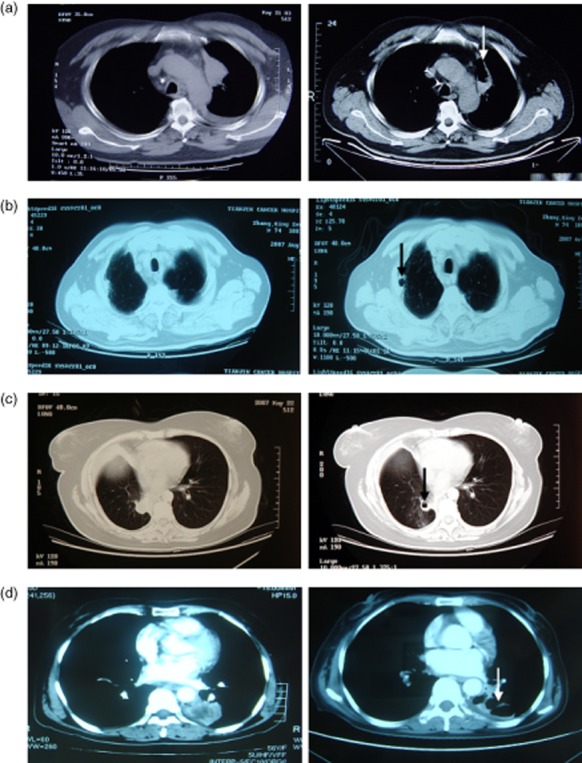
Background: Antiangiogenesis plays a key role in the treatment of non-small lung cancer (NSCLC). We observed the cavitation of lesions in patients with stage IIIB/IV NSCLC treated with Endostar and vinorelbine-cisplatin (NP) chemotherapy, and evaluated the imaging characteristics and clinical outcome of patients who developed tumor cavitation.
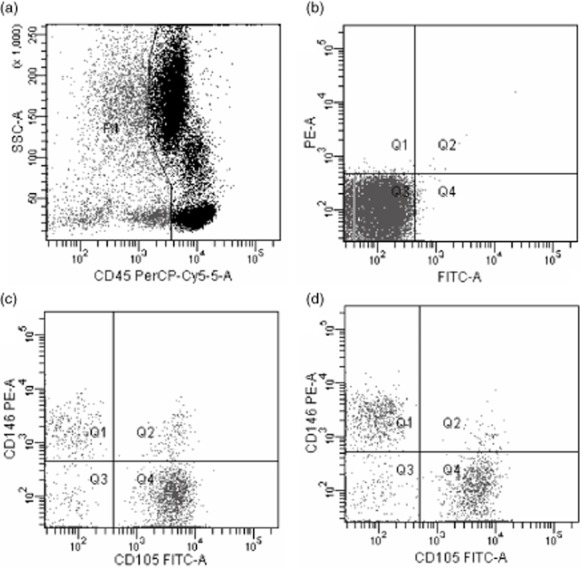
Methods: Our study included 105 untreated NSCLC patients who received Endostar in combination with NP chemotherapy at the Tianjin Lung Cancer Center. Chest computed tomography (CT) was performed to evaluate the efficacy every two cycles. The number of activated circulating endothelial cells (aCECs) was measured by flow cytometry. Rates of tumor cavitation were documented and their clinical CT imaging data were analyzed.
Results: Tumor cavitation occurred in 11 of the 105 (10.5%) patients treated with Endostar and NP. The response rates were 37.2% (35/94) in patients without cavitation, 27.3% (3/11) evaluated by Response Evaluation Criteria in Solid Tumors, and 100.0% (11/11) if evaluated by an alternate method in patients who developed cavitation. Three of the 11 cases with cavitation had a centrally located tumor. No patients had hemoptysis or any other severe side effects. Compared with patients not developing cavitation, cavity formation resulted in a longer median survival time (13.6 vs. 11.8 months, P = 0.011) and an increase in the number of aCECs (244.4/10(5) vs. 23.3/10(5), P = 0.000).
Conclusions: Intratumoral cavitation induced by Endostar is common in NSCLC patients, and is not correlated with squamous histology, tumor location or pulmonary hemorrhage. Cavitation might have a significant effect on the number of aCECs and overall prognosis.
Keywords: Activated circulating endothelial cells; Endostar; angiogenesis; cavitation; non-small cell lung cancer.
Figures
References
-
- Reck M, Heigener DF, Mok T, Soria JC, Rabe KF. Management of non-small-cell lung cancer: recent developments. Lancet. 2013;382:709–719. - PubMed
-
- Schiller JH, Harrington D, Belani CP, et al. Comparison of four chemotherapy regimens for advanced non-small-cell lung cancer. N Engl J Med. 2002;346:92–98. - PubMed
-
- Schmid-Bindert G. Update on antiangiogenic treatment of advanced non-small cell lung cancer (NSCLC) Target Oncol. 2013;8:15–26. - PubMed
-
- Johnson DH, Fehrenbacher L, Novotny WF, et al. Randomized phase II trial comparing bevacizumab plus carboplatin and paclitaxel with carboplatin and paclitaxel alone in previously untreated locally advanced or metastatic non-small-cell lung cancer. J Clin Oncol. 2004;22:2184–2191. - PubMed
-
- Sandler A, Gray R, Perry MC, et al. Paclitaxel-carboplatin alone or with bevacizumab for non-small cell lung cancer. N Engl J Med. 2006;355:2542–2550. - PubMed
LinkOut - more resources
Full Text Sources
Other Literature Sources
Miscellaneous
