


A specific mutation in TBL1XR1 causes Pierpont syndrome
- PMID: 26769062
- PMCID: PMC4853543
- DOI: 10.1136/jmedgenet-2015-103233
A specific mutation in TBL1XR1 causes Pierpont syndrome
Erratum in
-
Erratum: A specific mutation in TBL1XR1 causes Pierpont syndrome.J Med Genet. 2016 Jun;53(6):430. doi: 10.1136/jmedgenet-2015-103233corr1. J Med Genet. 2016. PMID: 27221108 Free PMC article. No abstract available.
Abstract
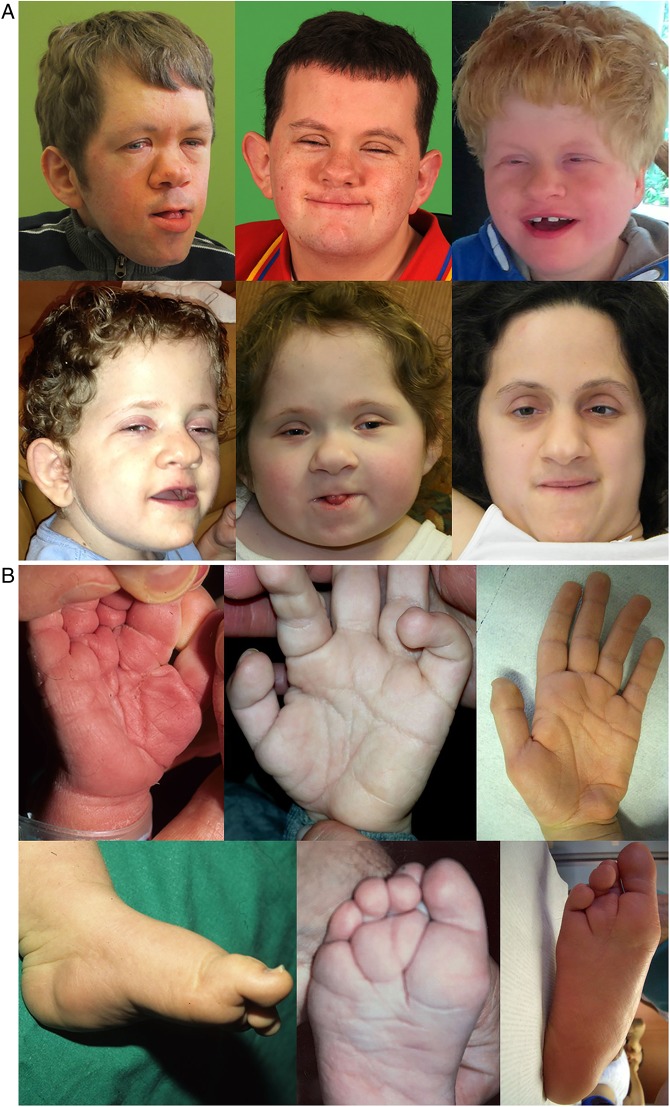
Background: The combination of developmental delay, facial characteristics, hearing loss and abnormal fat distribution in the distal limbs is known as Pierpont syndrome. The aim of the present study was to detect and study the cause of Pierpont syndrome.
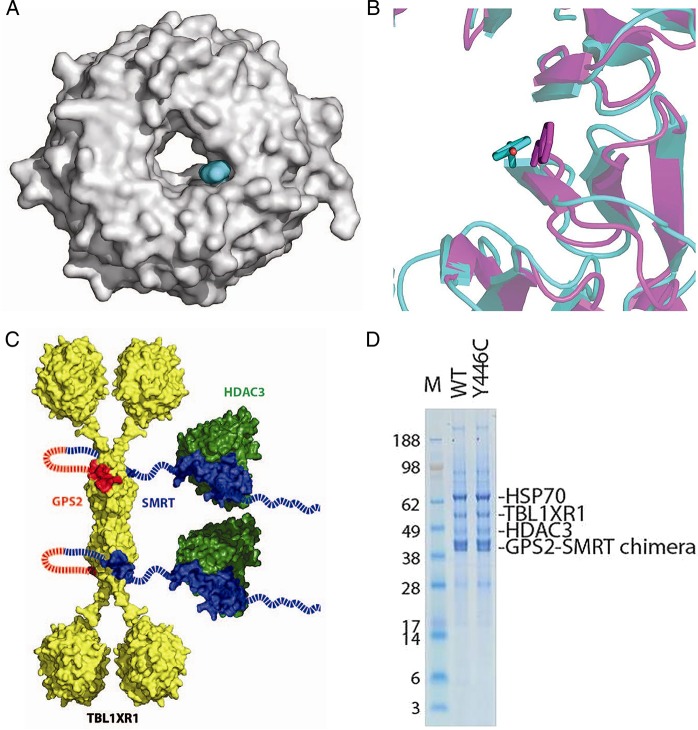
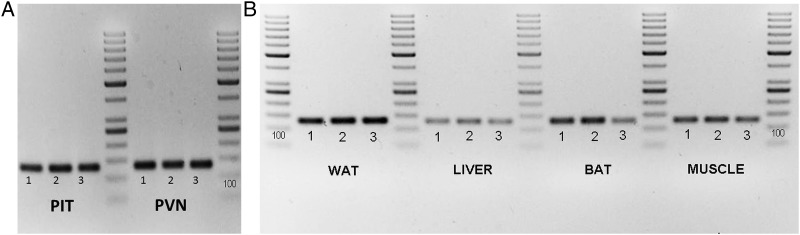
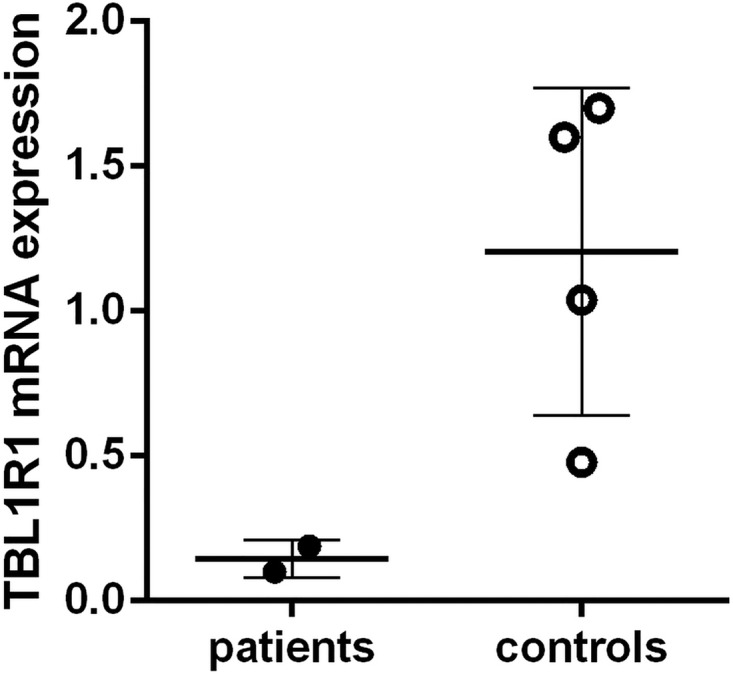
Methods: We used whole-exome sequencing to analyse four unrelated individuals with Pierpont syndrome, and Sanger sequencing in two other unrelated affected individuals. Expression of mRNA of the wild-type candidate gene was analysed in human postmortem brain specimens, adipose tissue, muscle and liver. Expression of RNA in lymphocytes in patients and controls was additionally analysed. The variant protein was expressed in, and purified from, HEK293 cells to assess its effect on protein folding and function.
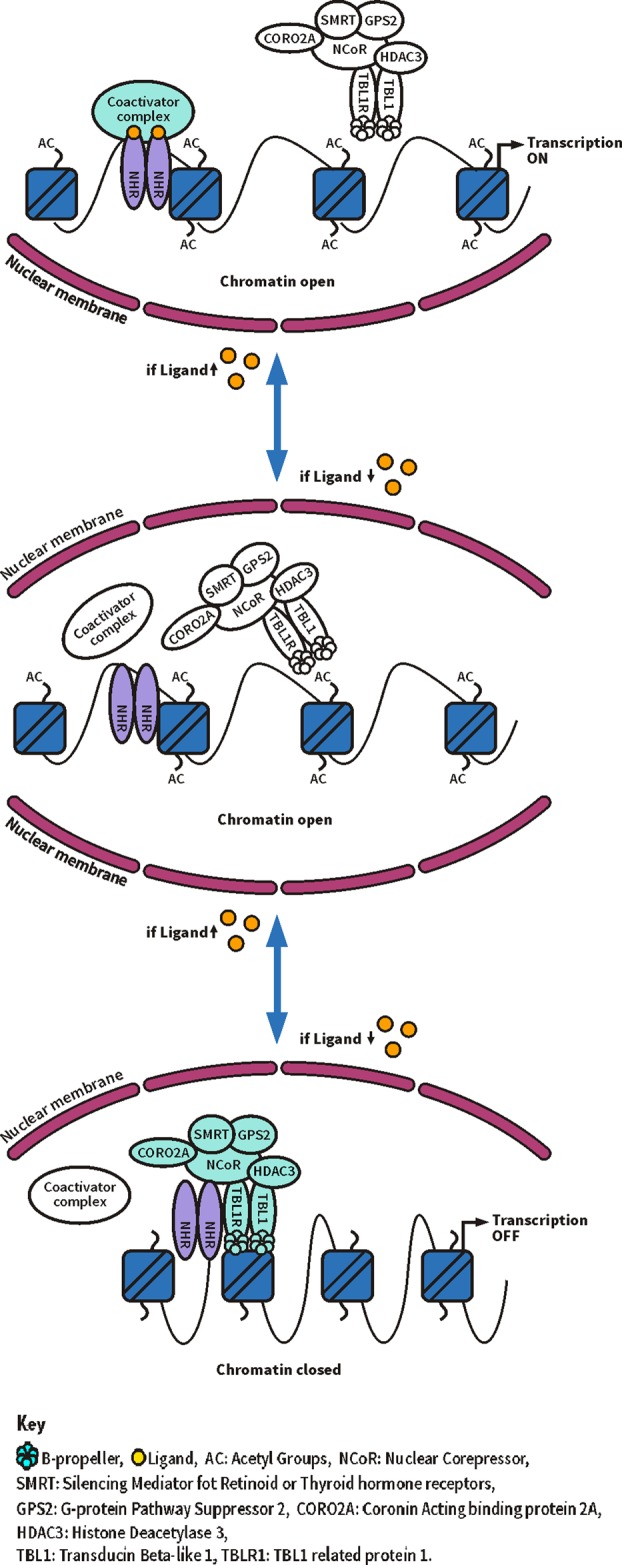
Results: We identified a single heterozygous missense variant, c.1337A>G (p.Tyr446Cys), in transducin β-like 1 X-linked receptor 1 (TBL1XR1) as disease-causing in all patients. TBL1XR1 mRNA expression was demonstrated in pituitary, hypothalamus, white and brown adipose tissue, muscle and liver. mRNA expression is lower in lymphocytes of two patients compared with the four controls. The mutant TBL1XR1 protein assembled correctly into the nuclear receptor corepressor (NCoR)/ silencing mediator for retinoid and thyroid receptors (SMRT) complex, suggesting a dominant-negative mechanism. This contrasts with loss-of-function germline TBL1XR1 deletions and other TBL1XR1 mutations that have been implicated in autism. However, autism is not present in individuals with Pierpont syndrome.
Conclusions: This study identifies a specific TBL1XR1 mutation as the cause of Pierpont syndrome. Deletions and other mutations in TBL1XR1 can cause autism. The marked differences between Pierpont patients with the p.Tyr446Cys mutation and individuals with other mutations and whole gene deletions indicate a specific, but as yet unknown, disease mechanism of the TBL1XR1 p.Tyr446Cys mutation.
Keywords: Genetics; Molecular genetics; Psychiatry.
Published by the BMJ Publishing Group Limited. For permission to use (where not already granted under a licence) please go to http://www.bmj.com/company/products-services/rights-and-licensing/
Figures
References
-
- Sim JC, White SM, Fitzpatrick E, Wilson GR, Gillies G, Pope K, Mountford HS, Torring PM, McKee S, Vulto-van Silfhout AT, Jhangiani SN, Muzny DM, Leventer RJ, Delatycki MB, Amor DJ, Lockhart PJ. Expanding the phenotypic spectrum of ARID1B-mediated disorders and identification of altered cell-cycle dynamics due to ARID1B haploinsufficiency. Orphanet J Rare Dis 2014;9:43 10.1186/1750-1172-9-43 - DOI - PMC - PubMed
Publication types
MeSH terms
Substances
Supplementary concepts
Grants and funding
LinkOut - more resources
Full Text Sources
Other Literature Sources
Molecular Biology Databases
Research Materials
