


Prevalence, predictors and economic consequences of no-shows
- PMID: 26769153
- PMCID: PMC4714455
- DOI: 10.1186/s12913-015-1243-z
Prevalence, predictors and economic consequences of no-shows
Abstract
Background: Patients not attending to clinic appointments (no-show) significantly affects delivery, cost of care and resource planning. We aimed to evaluate the prevalence, predictors and economic consequences of patient no-shows.
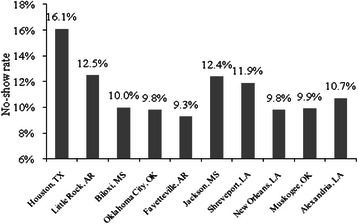
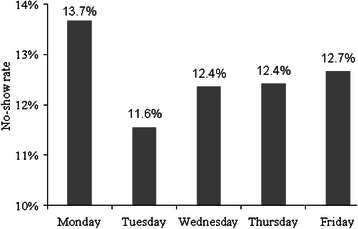
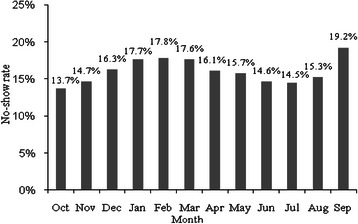
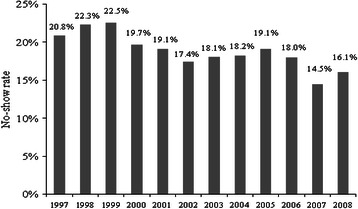
Method: This is a retrospective cohort study using administrative databases for fiscal years 1997-2008. We searched administrative databases for no-show frequency and cost at a large medical center. In addition, we estimated no-show rates and costs in another 10 regional hospitals. We studied no-show rates in primary care and various subspecialty settings over a 12-year period, the monthly and seasonal trends of no-shows, the effects of implementing a reminder system and the economic effects of missed appointments.
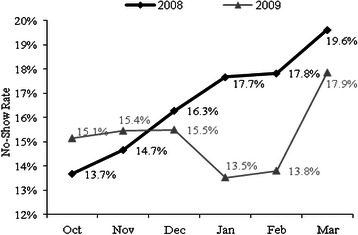
Results: The mean no-show rate was 18.8% (2.4%) in 10 main clinics with highest occurring in subspecialist clinics. No-show rate in the women clinic was higher and the no-show rate in geriatric clinic was lower compared to general primary care clinic (PCP). The no-show rate remained at a high level despite its reduction by a centralized phone reminder (from 16.3% down to 15.8%). The average cost of no-show per patient was $196 in 2008.
Conclusions: Our data indicates that no-show imposed a major burden on this health care system. Further, implementation of a reminder system only modestly reduced the no-show rate.
Figures
References
-
- National Health Expenditure Data: NHE Fact Sheet . Centers for Medicare and Medicaid Services. 2008.
-
- Clark J. Appointment cancellation options-a new system to help decrease no-show appointments. IACH Informer. 2006, 3.
-
- Xakellis GC, Jr, Bennett A. Improving clinic efficiency of a family medicine teaching clinic. Fam. Med. 2001;33:533–538. - PubMed
-
- Moore CG, Wilson-Witherspoon P, Probst JC. Time and money: effects of no-shows at a family practice residency clinic. Fam. Med. 2001;33:522–527. - PubMed
Publication types
MeSH terms
LinkOut - more resources
Full Text Sources
Other Literature Sources
Medical
