


Role of parenting styles in adolescent substance use: results from a Swedish longitudinal cohort study
- PMID: 26769781
- PMCID: PMC4735309
- DOI: 10.1136/bmjopen-2015-008979
Role of parenting styles in adolescent substance use: results from a Swedish longitudinal cohort study
Abstract
Objective: Adolescent substance use is an area of concern because early substance use is associated with a higher risk of adverse outcomes. Parenting style, defined as the general style of parenting, as well as substance-specific parenting practices may influence children's substance use behaviour. The present study aims to probe the impact of parenting style on adolescent substance use.
Method: A cohort of 1268 adolescents (48% girls), aged 12-13 years at baseline, from 21 junior high schools was assessed in the first semester of junior high school, and then again in the last semester of the 9th grade, 32 months later. Parenting style, operationalised as a fourfold classification of parenting styles, including established risk factors for adolescent substance use, were measured at baseline.
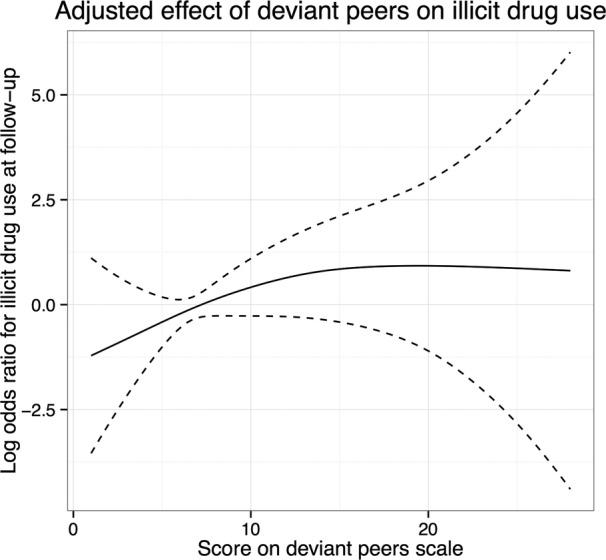
Results: Neglectful parenting style was associated with worse substance use outcomes across all substances. After adjusting for other proximal risk factors in multivariate analyses, parenting style was found to be unrelated to substance use outcomes with one exception: authoritative parenting style was associated with less frequent drinking. Association with deviant peers, delinquent behaviour, provision of alcohol by parents, and previous use of other substances were associated with substance use outcomes at follow-up.
Conclusions: The results of the present study indicate that parenting style may be less important for adolescent substance use outcomes than what has previously been assumed, and that association with deviant peers and delinquent behaviour may be more important for adolescent substance use outcomes than general parenting style.
Keywords: Adolescents; Alcohol; Cannabis; Parenting styles; Substance use; Tobacco.
Published by the BMJ Publishing Group Limited. For permission to use (where not already granted under a licence) please go to http://www.bmj.com/company/products-services/rights-and-licensing/
Figures
References
-
- Hibell B, Guttormsson U, AhlströM S et al. . 2011 ESPAD report: Substance use among students in 36 European countries, E.M.C.f.D.a. Addiction, Editor Stockholm, Sweden: The Swedish Council for Information on Alcohol and Other Drugs, 2012.
Publication types
MeSH terms
LinkOut - more resources
Full Text Sources
Other Literature Sources
Medical
