


The effect of inflammatory cytokines and the level of vitamin D on prognosis in Crimean-Congo hemorrhagic fever
- PMID: 26770432
- PMCID: PMC4694332
The effect of inflammatory cytokines and the level of vitamin D on prognosis in Crimean-Congo hemorrhagic fever
Abstract
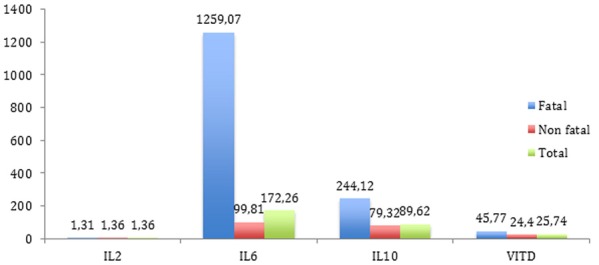
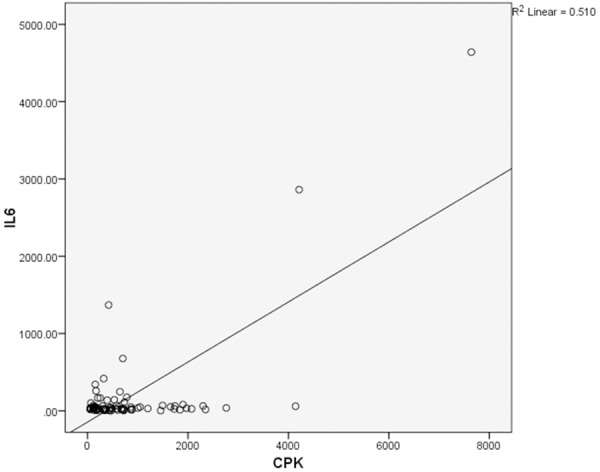
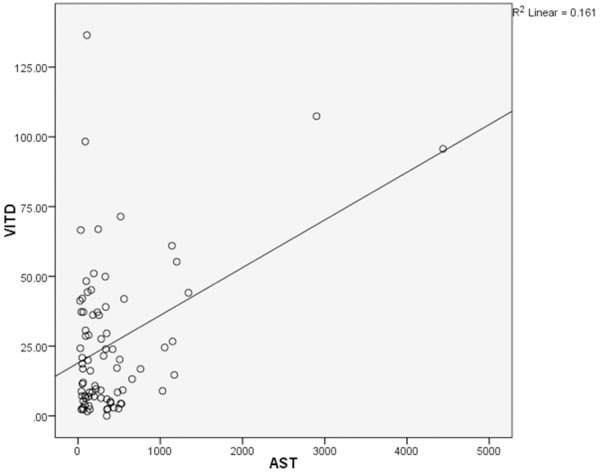
Crimean-Congo haemorrhagic fever (CCHF) is a tick-borne viral disease. Its pathogenesis basically involves endothelial damage. The aim of this study was to determine serum IL2, IL6, IL 10 and 25 OH Vitamin D levels in patients with CCHF and also to reveal their role in the clinical course and prognosis of the disease. Diagnosis of CCHF was confirmed using the positive polymerase chain reaction (PCR) test and/or positive IgM antibody by enzyme-linked immunosorbent assay (ELISA). Serum IL-2, IL-6, IL-10 and total 25 OH Vitamin D levels were also measured using ELISA. Eighty CCHF patients and 110 healthy controls were enrolled. IL2, IL6 and IL10 levels were significantly higher in the patient group. IL 6 and IL 10 levels were significantly higher in the fatal group. There was a positive correlation between Vitamin D and AST (r=0.402; P<0.001), and another positive correlation between IL-6 and CK (r=0.714; P<0.001). High IL6 and L10 levels are a significant indicator of fatality. Cytokines are only one of the factors responsible for mortality. We conclude that the pathogenesis of the disease can be better understood by elucidating the complicated cytokine network.
Keywords: Crimean-Congo hemorrhagic fever; cytokine; fatality; vitamin D Introduction.
Figures
References
-
- Morikawa S, Saijo M, Kurane I. Recent progress in molecular biology of Crimean-Congo hemorrhagic fever. Comp Immunol Microbiol Infect Dis. 2007;30:375–89. - PubMed
-
- Dilber E, Cakir M, Acar EA, Orhan F, Yaris N, Bahat E, Okten A, Erduran E. Crimean-Congo haemorrhagic fever among children in north-eastern Turkey. Ann Trop Paediatr. 2009;29:23–28. - PubMed
-
- Bodur H, Akinci E, Ongürü P, Uyar Y, Baştürk B, Gözel MG, Kayaaslan BU. Evidence of vascular endothelial damage in Crimean-Congo hemorrhagic fever. Int J Infect Dis. 2010;14:e704–707. - PubMed
LinkOut - more resources
Full Text Sources
Research Materials