


Age plays an important role in the relationship between smoking status and obesity risk: a large scale cross-sectional study of Chinese adults
- PMID: 26770514
- PMCID: PMC4694414
Age plays an important role in the relationship between smoking status and obesity risk: a large scale cross-sectional study of Chinese adults
Abstract
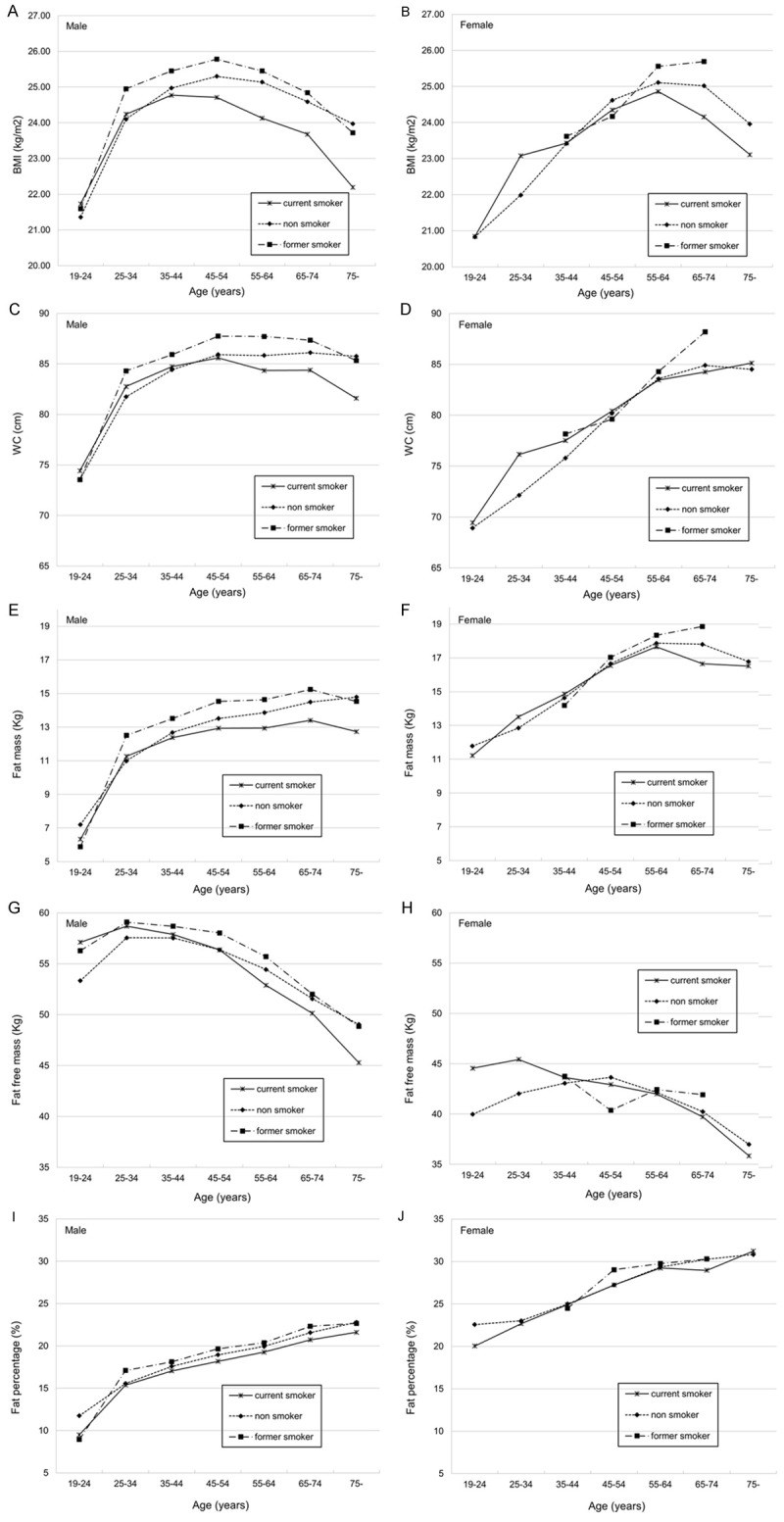
Objective: To study the role of age plays in the relationship between smoking status and obesity in both Chinese men and women.
Methods: From Chinese Physical and Psychological Database, participants were divided into non-smokers, current smokers, and former smokers. Body mass index (BMI), waist circumference (WC), fat percentage, fat mass, and fat free mass were measured. The mean, standard deviation and frequency of these indicators were calculated for each age bracket. One-way ANOVA and post-hoc test analyses were used to detect the difference among these three groups.
Results: In men, from 19 to 24 years old, BMI, WC and fat free mass of current smokers were higher than that of non-smokers (P<0.01). However, fat mass and fat percentage of current smokers were lower than that of non-smokers but higher than that of former smokers (P<0.01). From 25 to 34 years old, BMI and fat mass of former smokers were higher than non-smokers and current smokers (P<0.01). In addition, WC and fat free mass of non-smokers were lower than that of current smokers and former smokers (P<0.01). From 45 to older, BMI, WC, fat mass, fat free mass and fat percentage of former smokers were higher than that of current smokers (P<0.01). From 55 to older, BMI, WC, fat mass, fat free mass and fat percentage of current smokers were lower than that of non-smokers (P<0.01). In women, smoking status might not be significantly related to obesity (P>0.05).
Conclusion: For young men, smoking might have an effect on increasing fat free mass, BMI and WC, and decreasing fat mass and fat percentage. For middle and older men, smoking might have an effect on decreasing fat free mass, fat mass, BMI, WC, and fat percentage. Obesity risk should be paid more attention in smoking cessation programs for those former smokers.
Keywords: Smoking; fat percentage; obesity.
Figures
References
-
- WHO. Obesity and overweight. WHO Media centre; 2015.
-
- Mejia-Benitez MA, Bonnefond A, Yengo L, Huyvaert M, Dechaume A, Peralta-Romero J, Klunder-Klunder M, Garcia Mena J, El-Sayed Moustafa JS, Falchi M, Cruz M, Froguel P. Beneficial effect of a high number of copies of salivary amylase AMY1 gene on obesity risk in Mexican children. Diabetologia. 2015;58:290–294. - PubMed
-
- St-Pierre J, Poirier P. What nature used to allow to die, don’t let modern habits damage after repair: preventable obesity risk in congenital heart disease. Can J Cardiol. 2015;31:109–111. - PubMed
-
- Ochner CN, Tsai AG, Kushner RF, Wadden TA. Treating obesity seriously: when recommendations for lifestyle change confront biological adaptations. Lancet Diabetes Endocrinol. 2015;3:232–4. - PubMed
LinkOut - more resources
Full Text Sources