


The Responses of Tissues from the Brain, Heart, Kidney, and Liver to Resuscitation following Prolonged Cardiac Arrest by Examining Mitochondrial Respiration in Rats
- PMID: 26770657
- PMCID: PMC4685127
- DOI: 10.1155/2016/7463407
The Responses of Tissues from the Brain, Heart, Kidney, and Liver to Resuscitation following Prolonged Cardiac Arrest by Examining Mitochondrial Respiration in Rats
Abstract
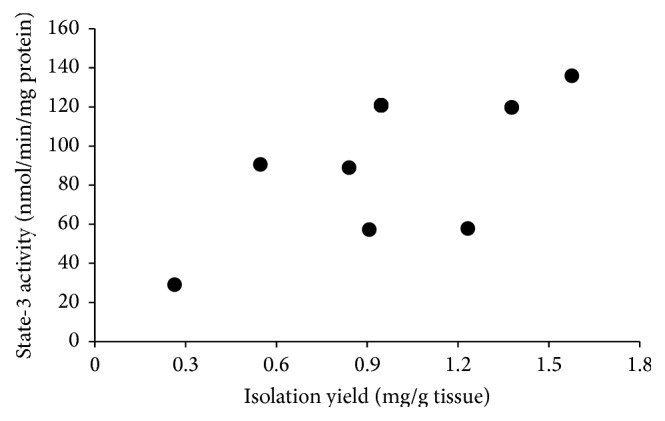
Cardiac arrest induces whole-body ischemia, which causes damage to multiple organs. Understanding how each organ responds to ischemia/reperfusion is important to develop better resuscitation strategies. Because direct measurement of organ function is not practicable in most animal models, we attempt to use mitochondrial respiration to test efficacy of resuscitation on the brain, heart, kidney, and liver following prolonged cardiac arrest. Male Sprague-Dawley rats are subjected to asphyxia-induced cardiac arrest for 30 min or 45 min, or 30 min cardiac arrest followed by 60 min cardiopulmonary bypass resuscitation. Mitochondria are isolated from brain, heart, kidney, and liver tissues and examined for respiration activity. Following cardiac arrest, a time-dependent decrease in state-3 respiration is observed in mitochondria from all four tissues. Following 60 min resuscitation, the respiration activity of brain mitochondria varies greatly in different animals. The activity after resuscitation remains the same in heart mitochondria and significantly increases in kidney and liver mitochondria. The result shows that inhibition of state-3 respiration is a good marker to evaluate the efficacy of resuscitation for each organ. The resulting state-3 respiration of brain and heart mitochondria following resuscitation reenforces the need for developing better strategies to resuscitate these critical organs following prolonged cardiac arrest.
Figures
References
-
- Chen Q., Moghaddas S., Hoppel C. L., Lesnefsky E. J. Ischemic defects in the electron transport chain increase the production of reactive oxygen species from isolated rat heart mitochondria. American Journal of Physiology—Cell Physiology. 2008;294(2):C460–C466. doi: 10.1152/ajpcell.00211.2007. - DOI - PubMed
Publication types
MeSH terms
Grants and funding
LinkOut - more resources
Full Text Sources
Other Literature Sources
Medical
