


A 'test and treat' strategy for elevated wound protease activity for healing in venous leg ulcers
- PMID: 26771894
- PMCID: PMC8627254
- DOI: 10.1002/14651858.CD011753.pub2
A 'test and treat' strategy for elevated wound protease activity for healing in venous leg ulcers
Abstract
Background: Venous leg ulcers are a common and recurring type of complex wound. They can be painful, malodorous, prone to infection and slow to heal. Standard treatment includes compression therapy and a dressing. The use of protease-modulating treatments for venous leg ulcers is increasing. These treatments are based on some evidence that a proportion of slow to heal ulcers have elevated protease activity in the wound. Point-of-care tests which aim to detect elevated protease activity are now available. A 'test and treat' strategy involves testing for elevated proteases and then using protease-modulating treatments in ulcers which show elevated protease levels.
Objectives: To determine the effects on venous leg ulcer healing of a 'test and treat' strategy involving detection of high levels of wound protease activity and treatment with protease-modulating therapies, compared with alternative treatment strategies such as using the same treatment for all participants or using a different method of treatment selection.
Search methods: We searched the following electronic databases to identify reports of relevant randomised clinical trials: The Cochrane Wounds Group Specialised Register (January 2016), the Cochrane Central Register of Controlled Trials (CENTRAL, The Cochrane Library) Issue 12, 2015); Ovid MEDLINE (1946 to January 2016); Ovid MEDLINE (In-Process & Other Non-Indexed Citations January 2016); Ovid EMBASE (1974 to January 2016); EBSCO CINAHL (1937 to January 2016). We also searched three clinical trials registers, reference lists and the websites of regulatory agencies. There were no restrictions with respect to language, date of publication or study setting.
Selection criteria: Published or unpublished RCTs which assessed a test and treat strategy for elevated protease activity in venous leg ulcers in adults compared with an alternative treatment strategy. The test and treat strategy needed to be the only systematic difference between the groups.
Data collection and analysis: Two review authors independently performed study selection; we planned that two authors would also assess risk of bias and extract data.
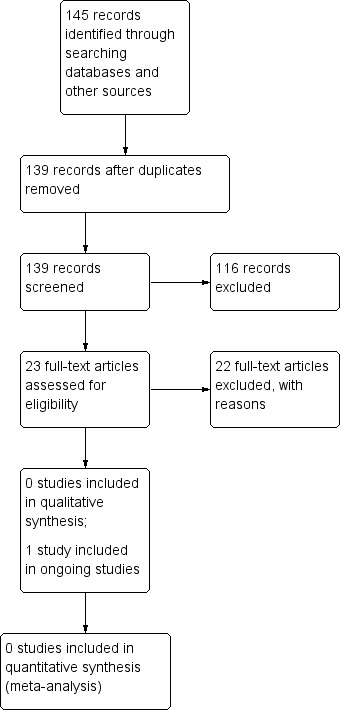
Main results: We did not identify any studies which met the inclusion criteria for this review. We identified one ongoing study; it was unclear whether this would be eligible for inclusion.
Authors' conclusions: Currently there is no randomised evidence on the impact of a test and treat policy for protease levels on outcomes in people with venous leg ulcers.
Conflict of interest statement
Update of
References
References to studies excluded from this review
Cullen 2012 {published data only}
-
- Cullen B, Gibson M, Nisbet L. Targeted use of collagen/ORC improves clinical outcomes. Wound Repair and Regeneration. Conference Publication. 22nd Annual Meeting of the European Tissue Repair Society. Athens, Greece, 2012:var.pagings A93.
Dompmartin 2007 {published data only}
-
- Dompmartin A, Schmutz JL, Collier M, Smith J, Bohbot S. Management of venous leg ulcers with two active wound dressings. Protocol of a randomized clinical trial. 17th Conference of the European Wound Management Association; 2007 2‐4 May. Glasgow, Scotland, 2007:Oral presentation no 80, 55.
Falabella 1998 {published data only}
-
- Falabella AF, Carson P, Eaglstein WH, Falanga V. The safety and efficacy of a proteolytic ointment in the treatment of chronic ulcers of the lower extremity. Journal of the American Academy of Dermatology 1998;39(5):737‐40. - PubMed
Gardner 2013 {published data only}
-
- Gardner S. Using treatment pathways to improve healing of venous leg ulceration. Wounds UK 2013;9(1):67‐75.
Gravante 2013 {published data only}
-
- Gravante G, Sorge R, Giordan N, Georgescu SR, Morariu SH, Stoicescu I, et al. Multicenter clinical trial on the performance and tolerability of the hyaluronic acid‐collagenase ointment for the treatment of chronic venous ulcers: a preliminary pilot study. European Review for Medical and Pharmacological Sciences 2013;17(20):2721‐7. - PubMed
Hodde 2006 {published data only}
-
- Hodde JP, Hiles MC, Sillings N, Metzger DW. Characterization of the local wound environment following treatment of chronic leg ulcers with SIS wound matrix. 19th Annual Symposium on Advanced Wound Care and 16th Medical Research Forum on Wounds; 2006 April 30‐May 3. San Antonio, Texas, 2006:Oral abstract 34.2 S187.
Humbert 2013 {published data only}
-
- Humbert P, Faivre B, Veran Y, Debure C, Truchetet F, Becherel PA, et al. Protease‐modulating polyacrylate‐based hydrogel stimulates wound bed preparation in venous leg ulcers ‐ A randomized controlled trial. Journal of the European Academy of Dermatology and Venereology 2013;28(12):1742‐50. - PMC - PubMed
Karim 2006 {published data only}
-
- Karim RB, Brito BL, Dutrieux RP, Lassance FP, Hage JJ. MMP‐2 assessment as an indicator of wound healing: a feasibility study. Advances in Skin and Wound Care 2006;19(6):324‐7. - PubMed
Klemp 1986 {published data only}
-
- Klemp P, Staberg B, Ravnborg L. Local proteolytic treatment of infected varicose ulceration of the legs [Lokal proteolytisk behandling af inficeret åreknuder sårdannelse i benene]. Ugeskrift for Laeger 1986;148(13):760‐2. - PubMed
Manizate 2012 {published data only}
-
- Manizate F, Fuller A, Gendics C, Lantis JC. A prospective, single‐center, nonblinded, comparative, postmarket clinical evaluation of a bovine‐derived collagen with ionic silver dressing versus a carboxymethylcellulose and ionic silver dressing for the reduction of bioburden in variable‐etiology, bilateral lower‐extremity wounds. Advances in Skin and Wound Care 2012;25(5):220‐5. - PubMed
Metzner 1997 {published data only}
-
- Metzner B, Vanscheidt W, Norgauer J. Influence of platelet‐derived products on mRNA expression of growth factors, inducible growth related genes, metalloproteinases and their inhibitors in ulcers of patients with chronic venous insufficiency. Australasian Journal of Dermatology 1997;38 Suppl 2:175.
Moffatt 2014 {published data only}
-
- Moffatt CJ, Stanton J, Murray S, Doody V, Davis PJ, Franks PJ. A randomised trial to compare the performance of Oxyzyme and Iodozyme with standard care in the treatment of patients with venous and mixed venous/arterial ulceration. Wound Medicine 2014;6(1):1‐10.
O'Meara 2013a {published data only}
Schmutz 2008 {published data only}
Serra 2013 {published data only}
-
- Serra R, Buffone G, Falcone D, Molinari V, Scaramuzzino M, Gallelli L, et al. Chronic venous leg ulcers are associated with high levels of metalloproteinases‐9 and neutrophil gelatinase‐associated lipocalin. Wound Repair and Regeneration 2013;21(3):395‐401. - PubMed
Serra 2014 {published data only}
Smeets 2008 {published data only}
Smith 1994 {published data only}
-
- Smith BA. The dressing makes the difference. Trial of two modern dressings on venous ulcers. Professional Nurse 1994;5(348):350‐2. - PubMed
Stojadinovic 2014 {published data only}
-
- Stojadinovic O, Ramirez H, Patel S, Yin N, Bollenbach T, Golden P, et al. Genomic insight into molecular mechanisms of action of bilayered living cellular construct nonhealing venous leg ulcers. Wound Repair and Regeneration. Conference Publication; 24th Annual Meeting of the Wound Healing Society; SAWC‐Spring/WHS Joint Meeting. Orlando, FL United States, 2014:var.pagings A60.
Tang 2012 {published data only}
-
- Tang JC, Marston WA, Kirsner RS. Wound Healing Society (WHS) venous ulcer treatment guidelines: what's new in five years?. Wound Repair and Regeneration 2012;20(5):619‐37. - PubMed
Varelias 2002 {published data only}
-
- Varelias A, Hughes H, Cowin A, Cowled P, Cooter R, Harries R, et al. Detection and modulation of matrix metalloproteinases in patients with chronic leg ulcers treated with whey‐derived growth factors. Fourth Australian Wound Management Association Conference; 2002; 7‐10 March. 2002.
Varelias 2006 {published data only}
-
- Varelias A, Cowin AJ, Adams D, Harries RHC, Cooter RD, Belford DA, et al. Mitogenic bovine whey extract modulates matrix metalloproteinase‐2, ‐9, and tissue inhibitor of matrix metalloproteinase‐2 levels in chronic leg ulcers. Wound Repair and Regeneration 2006;14(1):28‐37. - PubMed
References to ongoing studies
NCT 01537003 {published data only (unpublished sought but not used)}
-
- NCT 01537003. WOUNDCHEK™ protease status point of care (POC) diagnostic test. https://clinicaltrials.gov/ct2/show/NCT01537003 2012; (Verified May 2013; Accessed May 2015).
Additional references
AHRQ 2012
-
- Agency for Healthcare Research and Quality (AHRQ), Chang SM, Matchar DB (Eds). Methods Guide for Medical Test Reviews. Vol. AHRQ Publication No. 12‐EHC017, Rockville, MD: Agency for Healthcare Research and Quality (AHRQ), 2012.
Andriessen 2009
-
- Andriessen A, Polignano R, Abel M. Monitoring the microcirculation to evaluate dressing performance in patients with venous leg ulcers. Journal of Wound Care 2009;18(4):148‐50. - PubMed
Anichini 2013
-
- Anichini R, Tedeschi A, Bernini A, Barbanera L, Bellis A. Detecting and treating Elevated Protease Activity (EPA) in chronic diabetic wounds. EWMA Journal 2013;13(1 Suppl 1):275, abstract no 479.
Ashby 2014
-
- Ashby RL, Gabe R, Ali S, Adderly U. Clinical and cost‐effectiveness of compression hosiery versus compression bandages in treatment of venous leg ulcers (Venous leg Ulcer Study IV, VenUS IV): a randomised controlled trial. Lancet 2014;383:871‐9. - PubMed
Augustin 2012
Barrett 2011
-
- Barrett S, Davis L, Edwards J, Fletcher J, Harding K, Jack L, et al. Protease diagnostic in wound care: round‐table meeting. Wounds UK 2011;4(4 Suppl 1).
BNF 2015
-
- British National Formulary, British Medical Association, British Royal Pharmaceutical Society of Great Britain. British National Formulary. London: British Medical Association, 2015.
Bossuyt 2009
-
- Bossuyt PMM, McCaffery K. Additional patient outcomes and pathways in evaluations of testing. Medical Decision Making 2009;29(5):E30‐8. - PubMed
Bouza 2005
-
- Bouza C, Munoz A, Amate JM. Efficacy of modern dressings in the treatment of leg ulcers: a systematic review. Wound Repair and Regeneration 2005;13(3):218‐29. - PubMed
Callam 1987
Chin 2003
-
- Chin GA, Thigpin TG, Perrin KJ, Moldawer LL, Schulz GS. Treatment of chronic ulcers in diabetic patients with a topical metalloproteinase inhibitor, doxycycline. Wounds 2003;15:315‐23.
Coleridge Smith 1988
Cullen 2002
-
- Cullen B, Smith R, McCulloch E, Silcock D, Morrisson L. Mechanism of action of PROMOGRAN, a protease modulating matrix, for the treatment of diabetic foot ulcers. Wound Repair and Regeneration 2002;10(1):16‐25. - PubMed
Cullen 2011
-
- Cullen B, Gibson M, Nesbit L. Targeted use of protease modulating dressings improves clinical outcomes. Wounds UK, Harrogate. 2011:Poster.
Deeks 2011
-
- Deeks JJ, Higgins JPT, Altman DG (editors). Chapter 9: Analysing data and undertaking meta‐analyses. In: Higgins JPT, Green S (editors). Cochrane Handbook for Systematic Reviews of Interventions. Version 5.1.0 [updated March 2011]. The Cochrane Collaboration, 2011. Available from www.cochrane‐handbook.org. The Cochrane Collaboration.
Dumville 2009
-
- Dumville JC, Worthy G, Soares MO, Bland JM. VenUS II: a randomised controlled trial of larval therapy in the management of leg ulcers. Health Technology Assessment 2009;13(55):1‐206. - PubMed
Ferrante di Ruffano 2012
-
- Ferrante di Ruffano L, Hyde CJ, McCaffery KJ, Bossuyt PMM, Deeks JJ. Assessing the value of diagnostic tests: a framework for designing and evaluating trials. BMJ 2012;344:e686. [DOI: ] - PubMed
Fryback 1991
-
- Fryback DG, Thornbury JR. The efficacy of diagnostic imaging. Medical Decision Making 1991;11(2):88‐94. - PubMed
Ghauri 2010
-
- Ghauri ASK, Nyamekye IK. Leg ulceration: the importance of treating the underlying pathophysiology. Phlebology / Venous Forum of the Royal Society of Medicine 2010;25(S1):42‐51. - PubMed
Gohel 2005
-
- Gohel MS, Taylor M, Earnshaw JJ, Heather BP, Poskitt KR, Whyman MR. Risk factors for delayed healing and recurrence of chronic venous leg ulcers ‐ an analysis of 1324 legs. European Journal of Vascular and Endovascular Surgery 2005;29(1):74‐7. - PubMed
Gohel 2007
Graham 2003
-
- Graham ID, Harrison MB, Nelson EA, Lorimer K, Fisher A. Prevalence of lower‐limb ulceration: a systematic review of prevalence studies. Advances in Skin and Wound Care 2003;16(6):305‐16. - PubMed
Greer 2013
-
- Greer N, Foman NA, MacDonald R, Dorrian J, Fitzgerald P, Rutks I, et al. Advanced wound care therapies for nonhealing diabetic, venous, and arterial ulcers: a systematic review. Annals of Internal Medicine 2013;159(8):532‐42. - PubMed
Guyatt 1986
Hahn 2005
Hall 2014
-
- Hall J, Buckley HL, Lamb KA, Stubbs N, Saramago P, Dumville JC, et al. Point prevalence of complex wounds in a defined United Kingdom population. Wound Repair and Regeneration 2014;22(6):694‐700. - PubMed
Herber 2007
Higgins 2003
Higgins 2011a
-
- Higgins JPT, Altman DG, Sterne JAC (editors). Chapter 8: Assessing risk of bias in included studies. In: Higgins JPT, Green S (editors). Cochrane Handbook for Systematic Reviews of Interventions. Version 5.1.0 [updated March 2011]. The Cochrane Collaboration, 2011. Available from: www.cochrane‐handbook.org. The Cochrane Collaboration.
Higgins 2011b
-
- Higgins JPT, Deeks JJ, Altman DG (editors). Chapter 16: Special topics in statistics. In: Higgins JPT, Green S (editors). Cochrane Handbook for Systematic Reviews of Interventions. Version 5.1.0 [updated March 2011]. The Cochrane Collaboration, 2011. Available from www.cochrane‐handbook.org. The Cochrane Collaboration.
International Consensus 2011
-
- Harding KG (ed), International Consensus Expert Working Group. International consensus. The role of proteases in wound diagnostics. An expert working group review. London: Wounds International, 2011.
Johnson 1995
-
- Johnson M. The prevalence of leg ulcers in older people: implications for community nursing. Public Health Nursing 1995;12(4):269‐75. - PubMed
Jull 2012
Kakagia 2007
-
- Kakagia DD, Kazakos KJ, Xarchas KC, Karanikas M, Georgiadis GS, Tripsiannis G, et al. Synergistic action of protease‐modulating matrix and autologous growth factors in healing of diabetic foot ulcers. A prospective randomized trial. Journal of Diabetes and its Complications 2007;21(6):387‐91. - PubMed
Kantor 2000
-
- Kantor J, Margolis DJ. A multicentre study of percentage change in venous leg ulcer area as a prognostic index of healing at 24 weeks. British Journal of Dermatology 2000;142(5):960‐4. - PubMed
Kontopantelis 2012
-
- Kontopantelis E, Reeves D. Performance of statistical methods for meta‐analysis when true study effects are non‐normally distributed: a simulation study. Statistical Methods in Medical Research 2012;21(4):409‐26. - PubMed
Kontopantelis 2013
Ladwig 2002
-
- Ladwig GP, Robson MC, Liu R, Kuhn MA, Muir DF, Schultz GS. Ratios of activated matrix metalloproteinase‐9 to tissue inhibitor of matrix metalloproteinase‐1 in wound fluids are inversely correlated with healing of pressure ulcers. Wound Repair and Regeneration 2002;10(1):26‐37. - PubMed
Lefebvre 2011
-
- Lefebvre C, Manheimer E, Glanville J. Chapter 6: Searching for studies. In: Higgins JPT, Green S (editors). Cochrane Handbook for Systematic Reviews of Interventions. Version 5.1.0 [updated March 2011]. The Cochrane Collaboration, 2011. Available from www.cochrane‐handbook.org. The Cochrane Collaboration.
Liberati 2009
Liu 2009
Lobmann 2006
-
- Lobmann R, Zemlin C, Motzkau M, Rescke K, Lehnert H. Expression of matrix metalloproteinases and growth factors in diabetic foot wounds treated with a protease absorbent dressing. Journal of Diabetes and its Complications 2006;20(5):329‐35. - PubMed
Lord 2006
-
- Lord SJ, Irwig L, Simes RJ. When is measuring sensitivity and specificity sufficient to evaluate a diagnostic test, and when do we need randomized trials?. Annals of Internal Medicine 2006;144:850‐5. - PubMed
Lord 2009
-
- Lord SJ, Irwig L, Bossuyt PMM. Using the principles of randomized controlled trial design to guide test evaluation. Medical Decision Making 2009;29(5):E1‐12. - PubMed
Madden 2014
-
- Madden M. Is research in chronic wound care focusing on the outcomes that matter most to patients?. BSA Annual Conference. 2014; Vol. Changing Society.
Margolis 2004
-
- Margolis DJ, Allen‐Taylor L, Hoffstad O, Berlin JA. The accuracy of venous leg ulcer prognostic models in a wound care system. Wound Repair and Regeneration 2004;12(2):163‐8. - PubMed
McCarty 2013
Moffatt 2004
-
- Moffatt CJ, Franks PJ, Doherty DC, Martin R, Blewett R, Ross F. Prevalence of leg ulceration in a London population. QJM: Monthly Journal of the Association of Physicians 2004;97(7):431‐7. - PubMed
Mwaura 2006
-
- Mwaura B, Mahendran B, Hynes N, Defreitas D, Avalos G, Adegbola T, et al. The impact of differential expression of extracellular matrix metalloproteinase inducer, matrix metalloproteinase‐2, tissue inhibitor of matrix metalloproteinase‐2 and PDGF‐AA on the chronicity of venous leg ulcers. European Journal of Vascular and Endovascular Surgery 2006;31(3):306‐10. - PubMed
Nelson 2014
Nelzen 1994
-
- Nelzen O, Berqvist D, Lindhagen A. Venous and non‐venous leg ulcers: clinical history and appearance in a population study. British Journal of Surgery 1994;81:182‐7. - PubMed
Nelzen 1997
-
- Nelzen O, Bergqvist D, Lindhagen A. Long‐term prognosis for patients with chronic leg ulcers: a prospective cohort study. European Journal of Vascular and Endovascular Surgery 1997;15:500‐8. - PubMed
Nelzen 2008
-
- Nelzen O. Prevalence of venous leg ulcer: the importance of the data collection method. Phlebolymphology 2008;15(4):143‐50.
NICE 2012
-
- National Institute for Health and Clinical Excellence (NICE). The Guidelines Manual. Available from www.nice.org.uk. Accessed June 2015. London: National Institute for Health and Clinical Excellence, 2012.
NICE 2015
-
- National Institute for Health and Care Excellence. Clinical knowledge summaries. Leg ulcer ‐ venous. http://cks.nice.org.uk/leg‐ulcer‐venous#!topic summary. Last revised April 2015. Accessed June 2015.
Nisi 2005
-
- Nisi G, Brandi C, Grimaldi L, Calabro M, D'Aniello C. Use of a protease‐modulating matrix in the treatment of pressure sores. Chirugia Italiana 2005;57(4):465‐8. - PubMed
Nwomeh 1998
-
- Nwomeh BC, Liang HX, Diegelmann RF, Cohen IK, Yager DR. Dynamics of the matrix metalloproteinases MMP‐1 and MMP‐8 in acute open human dermal wounds. Wound Repair and Regeneration 1998;6(2):127‐34. - PubMed
Nwomeh 1999
-
- Nwomeh BC, Liang HX, Cohen IK, Yager DR. MMP‐8 is the predominant collagenase in healing wounds and nonhealing ulcers. Journal of Surgical Research 1999;81(2):189‐95. - PubMed
O'Donnell 2006
-
- O'Donnell JR, Lau J. A systematic review of randomized controlled trials of wound dressings for chronic venous ulcer. Journal of Vascular Surgery 2006;44(5):1118‐25. - PubMed
O'Meara 2012
O'Meara 2013b
O'Meara 2014
Parmar 1998
-
- Parmar MKB, Torri V, Stewart L. Extracting summary statistics to perform meta‐analyses of the published literature for survival endpoints. Statistics in Medicine 1998;17:2815‐34. - PubMed
Persoon 2004
-
- Persoon A, Heinen MM, Vleuten CJM, Rooji MJ, Kerkhof PCM, Achterberg T. Leg ulcers: a review of their impact on daily life. Journal of Clinical Nursing 2004;13(3):341‐54. - PubMed
Ragnarson Tennvall 2005
-
- Ragnarson Tennvall G, Hjelmgren J. Annual costs of treatment for venous leg ulcers in Sweden and the United Kingdom. Wound Repair and Regeneration 2005;13(1):13‐18. - PubMed
RCN 2006
-
- Royal College of Nursing. The nursing management of patients with venous leg ulcers: recommendations. http://www.rcn.org.uk/__data/assets/pdf_file/0003/107940/003020.pdf 2006. Accessed November 2014.
Rector 2012
-
- Rector TS, Taylor BC, Wilt TJ. Chapter 12: Systematic review of prognostic tests. Methods Guide for Medical Test Reviews (AHRQ Publication No. 12‐EHC017). Rockville, MD. Available at www.effectivehealthcare.ahrq.gov/reports/final.cfm: Agency for Healthcare Research and Quality (AHRQ), 2012.
RevMan 2014 [Computer program]
-
- The Nordic Cochrane Centre, The Cochrane Collaboration. Review Manager (RevMan). Version 5.3. Copenhagen: The Nordic Cochrane Centre, The Cochrane Collaboration, 2014.
Robson 2006
-
- Robson MC, Cooper DM, Aslam R, Gould LJ, Harding KG, Margolis DJ, et al. Guidelines for the treatment of venous ulcers. Wound Repair and Regeneration 2006;14(6):649‐62. - PubMed
Schünemann 2011a
-
- Schünemann HJ, Oxman AD, Higgins JPT, Deeks JJ, Glasziou P, Guyatt GH. Chapter 12: Interpreting results and drawing conclusions. In: Higgins JPT, Green S (editors). Cochrane Handbook for Systematic Reviews of Interventions. Version 5.1.0 [updated March 2011]. The Cochrane Collaboration, 2011. Available from www.cochrane‐handbook.org. Version 5.1.0 [updated March 2011]. The Cochrane Collaboration.
Schünemann 2011b
-
- Schünemann HJ, Oxman AD, Higgins JPT, Vist GE, Glasziou P, Guyatt GH. Chapter 11: Presenting results and 'Summary of findings' tables. In: Higgins JPT, Green S (editors). Cochrane Handbook for Systematic Reviews of Interventions. Version 5.1.0 [updated March 2011]. The Cochrane Collaboration, 2011. Available from www.cochrane‐handbook.org. Version 5.1.0 [updated March 2011]. The Cochrane Collaboration.
Serena 2011
-
- Serena T, Cullen B, Bayliff S, Gibson M, DeMarco D, Galbraith J, et al. Protease activity levels associated with healing status of chronic wounds. Wounds UK (Harrogate). 2011:Poster.
Sibbald 2012
-
- Sibbald RG, Snyder RJ, Botros M, Burrows C, Coutts P, D'Souza L, et al. Role of a point‐of‐care protease activity diagnostic test in Canadian clinical practice: a Canadian expert consensus. Advances in Skin and Wound Care 2012;25(6):267‐75. - PubMed
SIGN 2010
-
- Scottish Intercollegiate Guidelines Network (SIGN). Management of chronic venous leg ulcers. Edinburgh: Scottish Intercollegiate Guidelines Network, Healthcare Improvement Scotland, 2010; Vol. 120.
SIGN 2011
-
- Scottish Intercollegiate Guidelines Network (SIGN). Search filters. http://www.sign.ac.uk/methodology/filters.html#random (accessed December 2011).
Snyder 2011
-
- Snyder RJ, Driver V, Fife CE, Lantis J, Peirce B, Serena T, et al. Using a diagnostic tool to identify elevated protease activity levels in chronic and stalled wounds: a consensus panel discussion. Ostomy Wound Management 2011;57(12):36‐46. - PubMed
Snyder 2012
Srinivasaiah 2007
-
- Srinivasaiah N, Dugdall H, Barrett S, Drew PJ. A point prevalence survey of wounds in north‐east England. Journal of Wound Care 2007;16(10):413‐9. - PubMed
Sterne 2011
-
- Sterne JAC, Egger M, Moher D. Chapter 10: Addressing reporting biases. In: Higgins JPT, Green S (editors). Cochrane Handbook for Systematic Reviews of Interventions. Version 5.1.0 [updated March 2011]. The Cochrane Collaboration, 2011. Available from www.cochrane‐handbook.org. Version 5.1.0 [updated March 2011]. The Cochrane Collaboration.
Systagenix 2013
-
- Systagenix. WOUNDCHEK™ Protease Status. http://www.systagenix.co.uk/our‐products/lets‐test/woundchekandtrade‐pro.... 2013 (accessed November 2014).
Thompson 1999
-
- Thompson SG, Sharp SJ. Explaining heterogeneity in meta‐analysis: a comparison of methods. Statistics in Medicine 1999;18:2693‐708. - PubMed
Thompson 2002
-
- Thompson SG, Higgins JPT. How should meta‐regression analyses be undertaken and interpreted?. Statistics in Medicine 2002;21:1559‐74. - PubMed
Tierney 2007
Trengove 1999
-
- Trengove NJ, Stacey MC, MacAuley S, Bennett N, Gibson J, Burslem F, et al. Analysis of the acute and chronic wound environments: the role of proteases and their inhibitors. Wound Repair and Regeneration 1999;7(6):442‐52. - PubMed
Valencia 2001
-
- Valencia IC, Falabella A, Kirsner RS, Eaglestein WH. Chronic venous insufficiency and venous leg ulceration. Journal of the American Academy of Dermatology 2001;44:401‐21. - PubMed
Veves 2002
-
- Veves A, Sheehan P, Hau T, Pham DPM. Promogram Diabetic Foot Ulcer Study. A randomized controlled trial of Promogram (a collagen/oxidised regenerated cellulose dressing) vs standard treatment in the management of diabetic foot ulcers. Archives of Surgery 2002;137(7):822‐7. - PubMed
Vowden 2009a
-
- Vowden KR, Vowden P. The prevalence, management and outcome for patients with lower limb ulceration identified in a wound care survey within one English health care district. Journal of Tissue Viability 2009;18(1):13‐19. - PubMed
Vowden 2009b
-
- Vowden K, Vowden P. The resource costs of wound care in Bradford and Airedale primary care trust in the UK. Journal of Wound Care 2009;18(3):93‐102. - PubMed
Walker 2002
-
- Walker N, Rodgers A, Birchall N, Norton R, MacMahon S. The occurrence of leg ulcers in Auckland: results of a population‐based survey. New Zealand Medical Journal 2002;115(1151):159‐62. - PubMed
Westby 2015
Woo 2013
-
- Woo KY, Alavi A, Evans R, Despatis M, Allen J. New advances in compression therapy for venous leg ulcers. Surgical Technology International 2013;23:61‐8. - PubMed
Wound Care Handbook
-
- Journal of Wound Care. Wound Care Handbook. http://www.woundcarehandbook.com/ Accessed February 2015.
Yaffe 2012
Yager 2002
-
- Yager DR, Nwomeh BC. The proteolytic environment of chronic wounds. Wound Repair and Regeneration 2002;7(6):433‐41. - PubMed
References to other published versions of this review
Publication types
MeSH terms
Substances
Grants and funding
LinkOut - more resources
Full Text Sources
Other Literature Sources
Miscellaneous
