


Removing Potatoes from Children's Diets May Compromise Potassium Intake
- PMID: 26773033
- PMCID: PMC4717877
- DOI: 10.3945/an.115.008680
Removing Potatoes from Children's Diets May Compromise Potassium Intake
Abstract
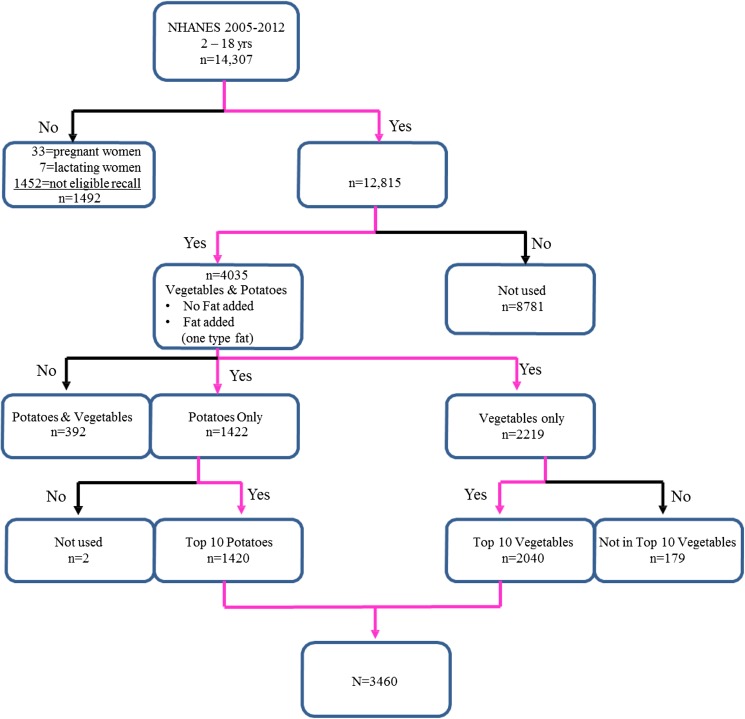
White potatoes are a forgotten source of nutrients. The goal of this study was to identify the nutritional implications of replacing a composite of white potatoes with a composite of vegetables commonly consumed by children aged 2-18 y (n = 3460) in a nationally representative sample. The NHANES 2005-2012 24-h dietary recall data were used to determine nutrient intake. Two replacement models were developed: one for potato consumers and another for those consuming vegetables other than potatoes. Analyses focused on 1) mean nutrient contributions per 1 cup equivalent vegetable composite (VC)/potato composite (PC) consumed by participants, and 2) mean daily nutrient intake when the nutrients per 1 cup equivalent PC replaced the nutrients per 1 cup equivalent VC. Covariate adjusted analysis was tested for statistical significance (P < 0.002). When 1 cup equivalent VC replaced 1 cup equivalent PC, significantly lower mean intakes were found for 20 of the 23 nutrients studied and higher mean intakes of total sugars, folate, and calcium. Differences were found including higher total intakes of monounsaturated fatty acids and potassium and lower total intakes of vitamins A and K. The percentage contribution of the PC to total daily nutrient intake was 6% for total energy, 8% for total fat, 5% for saturated fatty acids, 13% for dietary fiber, 4% for sodium, and 11% for potassium. Both composites contributed a variety of nutrients to the total diet; the consumption of white potatoes may be an important strategy to help meet the potassium recommendation.
Keywords: NHANES; fiber; nutrients; potassium; potatoes; statistical modeling; vegetables.
© 2016 American Society for Nutrition.
Conflict of interest statement
Author disclosure: TA Nicklas received travel funding and honorarium from the Alliance for Potato Research and Education (APRE) for participation in the meeting and manuscript preparation. Y Liu, N Islam, and CE O’Neil have no author disclosures.
Figures
References
-
- Bazzano LA, He J, Ogden LG, Loria CM, Vupputuri S, Myers L, Whelton PK. Fruit and vegetable intake and risk of cardiovascular disease in US adults: the first National Health and Nutrition Examination Survey Epidemiologic Follow-up Study. Am J Clin Nutr 2002;76:93–9. - PubMed
-
- Mirmiran P, Noori N, Zavareh MB, Azizi F. Fruit and vegetable consumption and risk factors for cardiovascular disease. Metabolism 2009;58:460–8. - PubMed
-
- Joshipura KJ, Hu FB, Manson JE, Stanpfer MJ, Rimm EB, Speizer FE, Colditz G, Ascherio A, Rosner B, Spiegelman D, et al. The effect of fruit and vegetable intake on risk for coronary heart disease. Ann Intern Med 2001;134:1106–14. - PubMed
-
- Harding AH, Wareham NJ, Bingham SA, Khaw K, Luben R, Welch A, Forouhi NG. Plasma vitamin C level, fruit and vegetable consumption, and the risk of new-onset type 2 diabetes mellitus: the European prospective investigation of cancer–Norfolk prospective study. Arch Intern Med 2008;168:1493–9. - PubMed
Publication types
MeSH terms
Substances
LinkOut - more resources
Full Text Sources
Other Literature Sources
Medical
