


Recognizing and identifying people: A neuropsychological review
- PMID: 26773237
- PMCID: PMC4754142
- DOI: 10.1016/j.cortex.2015.11.023
Recognizing and identifying people: A neuropsychological review
Abstract
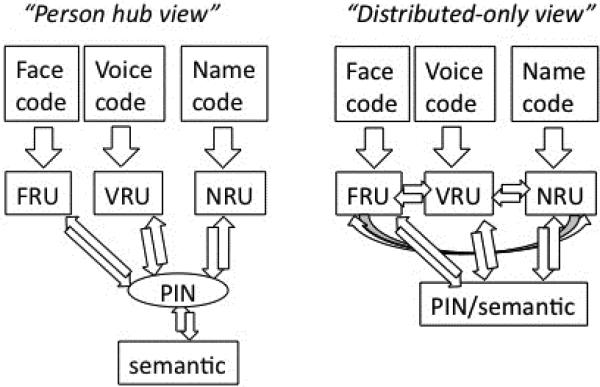
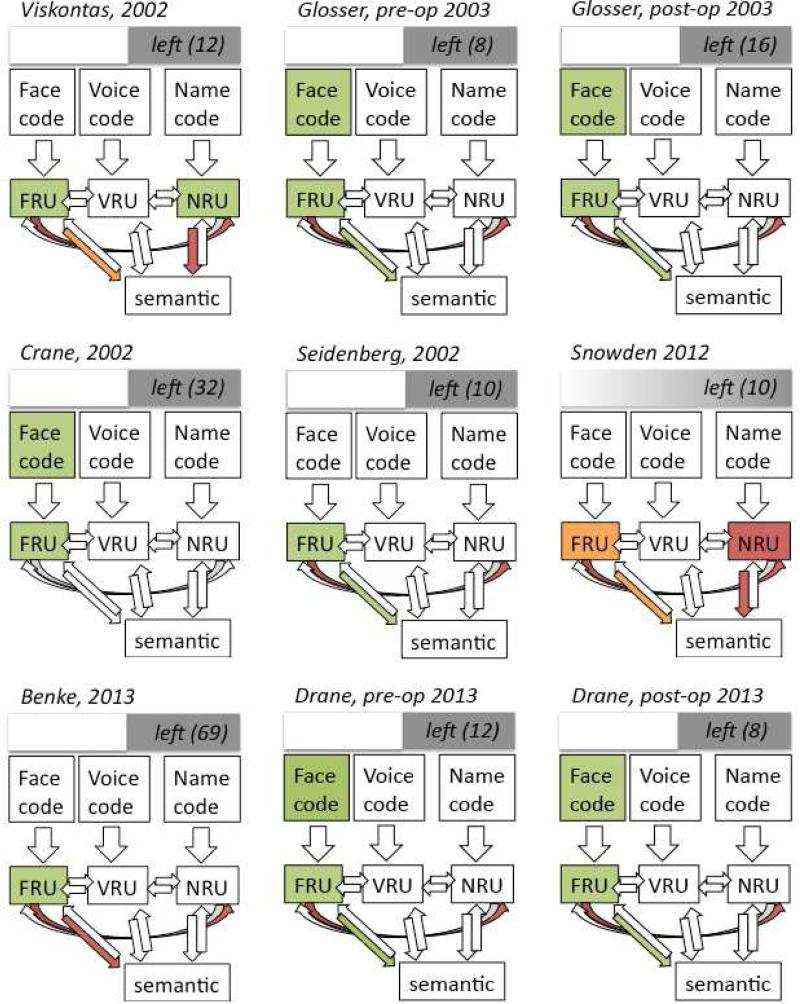
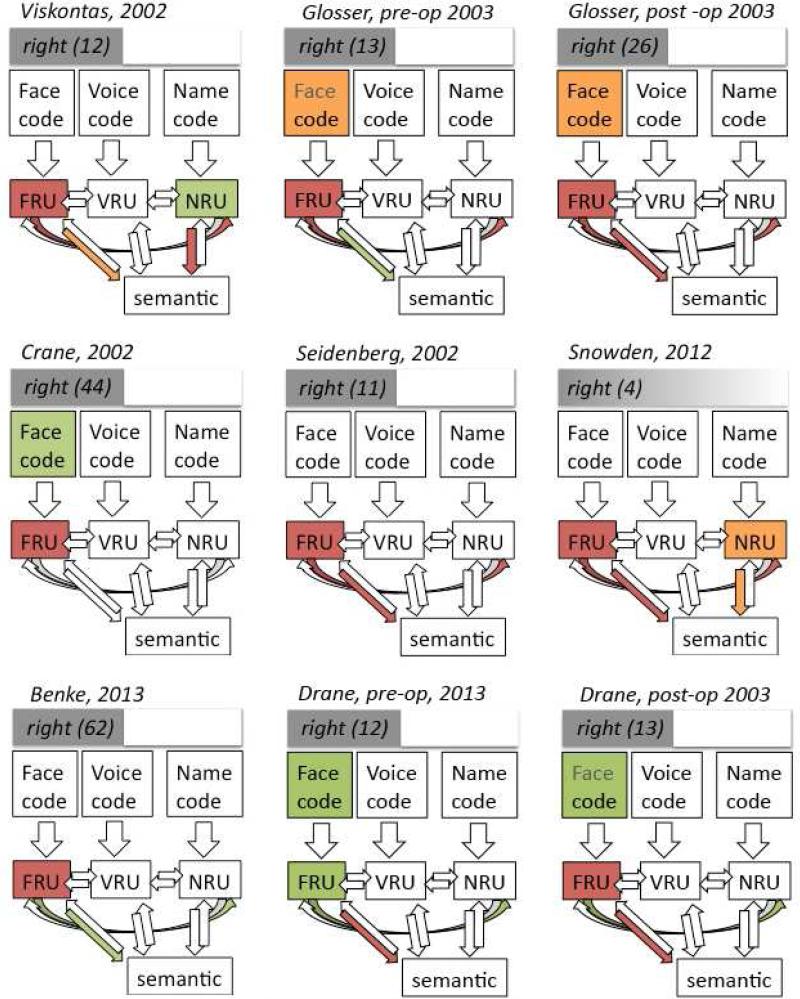
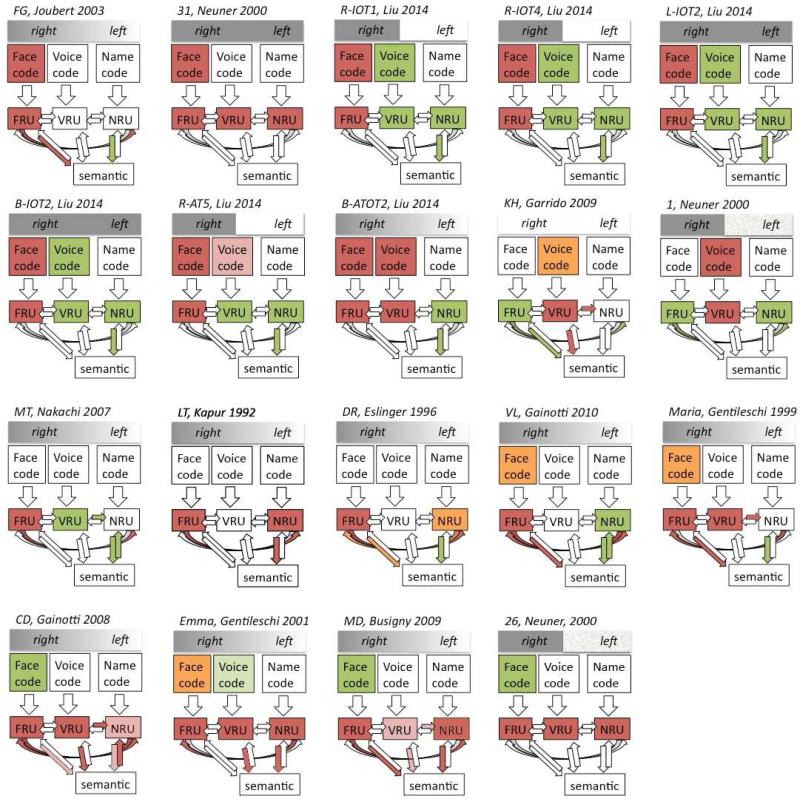
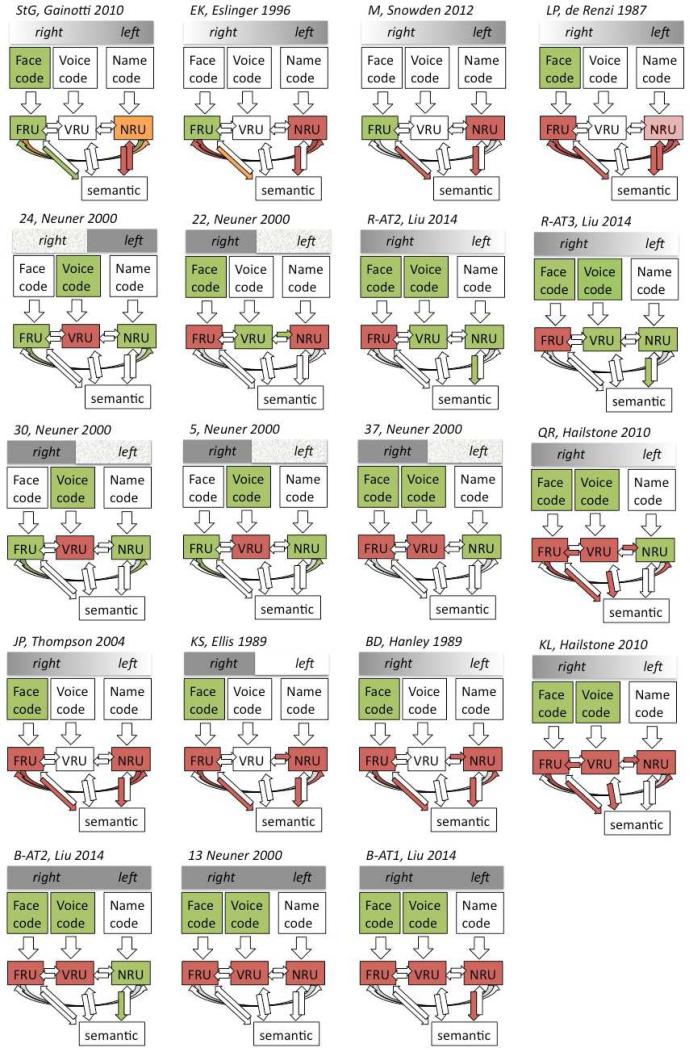
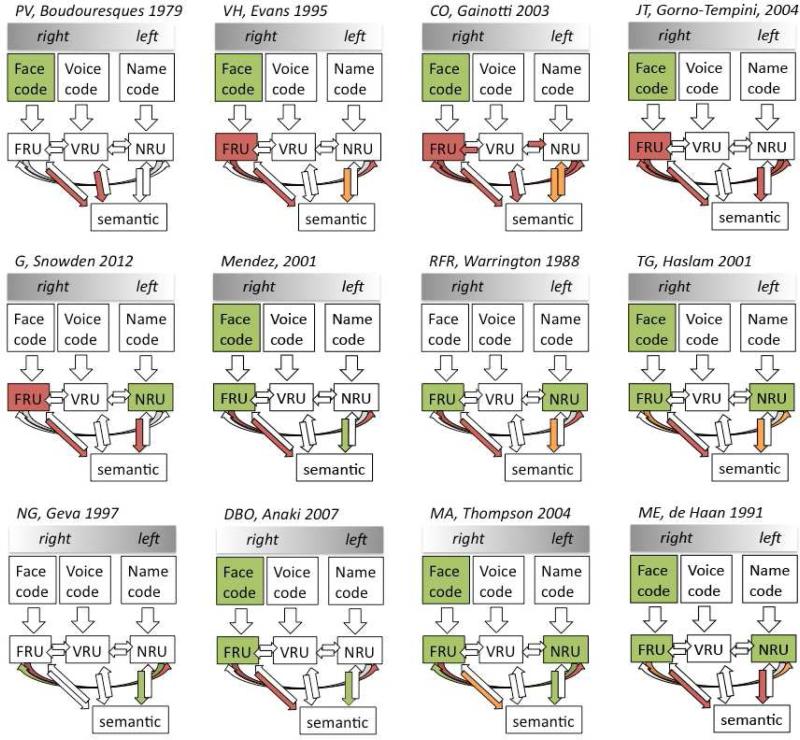
Recognizing people is a classic example of a cognitive function that involves multiple processing stages and parallel routes of information. Neuropsychological data have provided important evidence for models of this process, particularly from case reports; however, the quality and extent of the data varies widely between studies. In this review we first discuss the requirements and logical basis of the types of neuropsychological evidence to support conclusions about the modules in this process. We then survey the adequacy of the current body of reports to address two key issues. First is the question of which cognitive operation generates a sense of familiarity: the current debate revolves around whether familiarity arises in modality-specific recognition units or later amodal processes. Key evidence on this point comes from the search for dissociations between familiarity for faces, voices and names. The second question is whether lesions can differentially affect the abilities to link diverse sources of person information (e.g., face, voice, name, biographic data). Dissociations of these linkages may favor a 'distributed-only' model of the organization of semantic knowledge, whereas a 'person-hub' model would predict uniform impairments of all linkages. While we conclude that there is reasonable evidence for dissociations in name, voice and face familiarity in regards to the first question, the evidence for or against dissociated linkages between information stores in regards to the second question is tenuous at best. We identify deficiencies in the current literature that should motivate and inform the design of future studies.
Keywords: Face; Familiarity; Hub; Name; Semantic; Voice.
Copyright © 2015 Elsevier Ltd. All rights reserved.
Figures
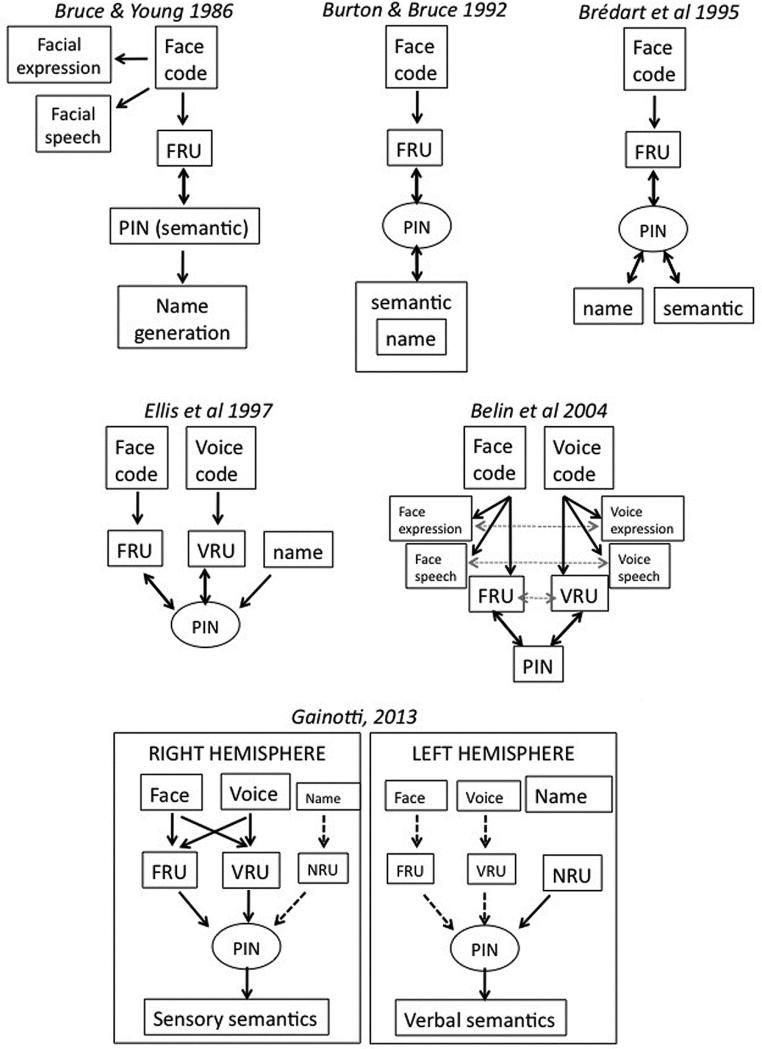
References
-
- Anaki D, Kaufman Y, Freedman M, Moscovitch M. Associative (prosop)agnosia without (apparent) perceptual deficits: a case-study. Neuropsychologia. 2007;45(8):1658–1671. doi: S0028-3932(07)00026-7 [pii] 10.1016/j.neuropsychologia.2007.01.003. - PubMed
-
- Ardila A. People recognition: a historical/anthropological perspective. Behav Neurol. 1993;6(2):99–105. doi: 10.3233/BEN-1993-6205 N897100562310854 [pii] - PubMed
-
- Barton J, Cherkasova M. Face imagery and its relation to perception and covert recognition in prosopagnosia. Neurology. 2003;61:220–225. - PubMed
-
- Barton J, Press D, Keenan J, O'Connor M. Lesions of the fusiform face area impair perception of facial configuration in prosopagnosia. Neurology. 2002;58:71–78. - PubMed
-
- Barton J, Zhao J, Keenan J. Perception of global facial geometry in the inversion effect and prosopagnosia. Neuropsychologia. 2003;41:1703–1711. - PubMed
Publication types
MeSH terms
Grants and funding
LinkOut - more resources
Full Text Sources
Other Literature Sources
