


Responses to the Human Intruder Test are related to hair cortisol phenotype and sex in rhesus macaques (Macaca mulatta)
- PMID: 26773969
- PMCID: PMC5108684
- DOI: 10.1002/ajp.22526
Responses to the Human Intruder Test are related to hair cortisol phenotype and sex in rhesus macaques (Macaca mulatta)
Abstract
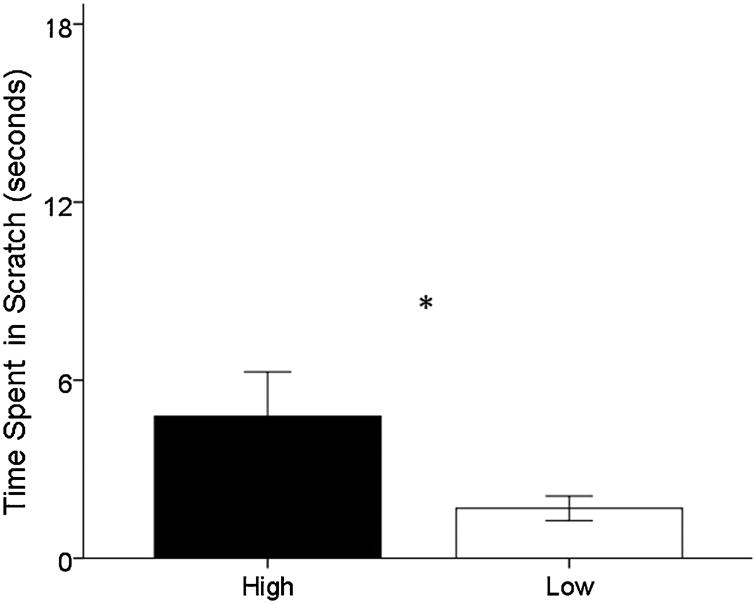
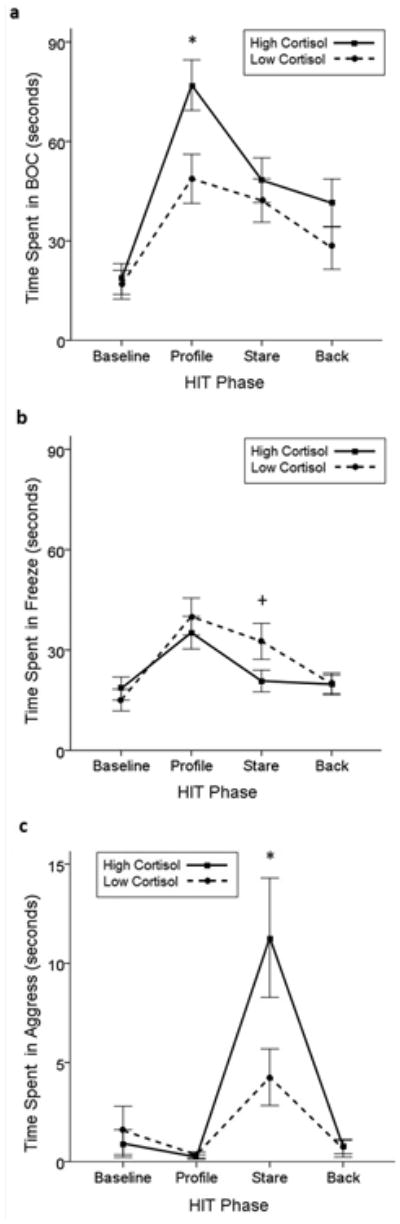
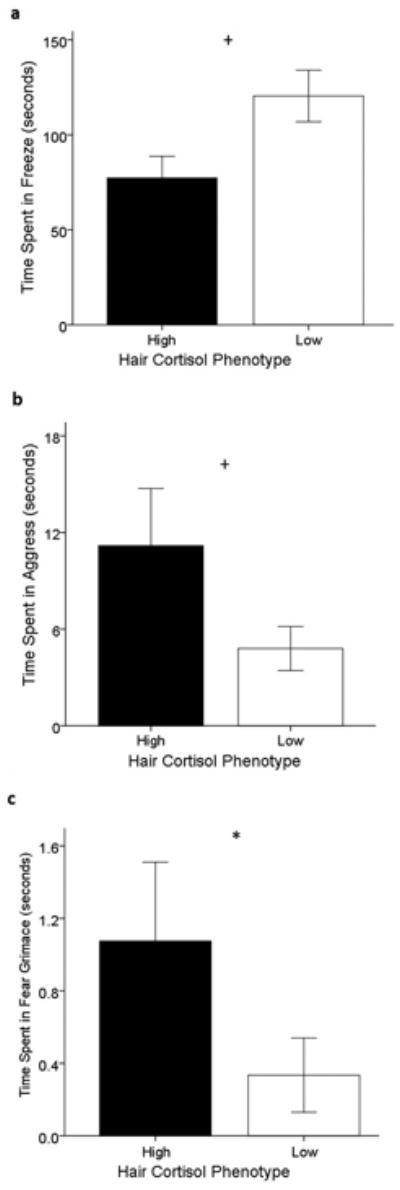
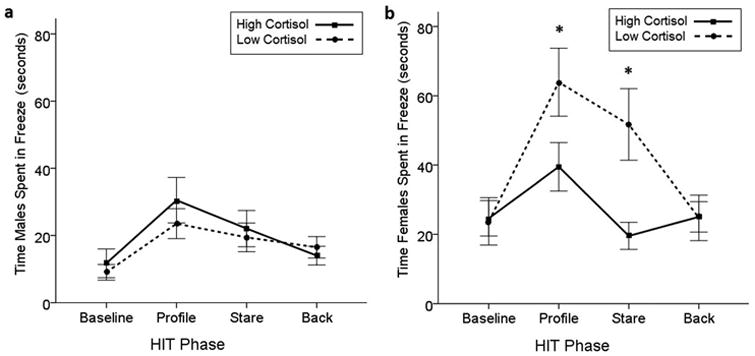
Measurement of cortisol in hair provides a chronic index of hypothalamic-pituitary-adrenal (HPA) axis activity and has been applied to assessments of temperament (stable behavioral differences between individuals). However, the extent to which chronically high HPA axis activity relates to a correspondingly high degree of behavioral reactivity is as yet unknown. Therefore, the goal of the present experiment was to assess the relationship between hair cortisol and a reactive temperament. We administered the Human Intruder Test (HIT) twice to 145 (80 male) rhesus macaques (Macaca mulatta) in order to assess behavioral reactivity. The HIT presents monkeys with an unfamiliar experimenter and is composed of a Baseline phase (no intruder) followed by three experimental phases in which the orientation of the intruder changes (Profile, Stare, Back). Behavioral responses to the test were videotaped and behaviors thought to reflect a reactive response to the intruder were scored for duration. Hair samples collected within ±1 month of the first HIT session were analyzed for cortisol by enzyme immunoassay. Subjects were assigned to three groups based on hair cortisol concentration: high, intermediate, and low cortisol phenotypes. Monkeys with the high cortisol phenotype were more reactive to the presence of the intruder than those with the low cortisol phenotype: they were more aggressive, scratched more, and spent more time in the back half of the cage. Males yawned significantly more while females spent more time immobile and in the back of the cage. Overall, monkeys with higher hair cortisol demonstrated an exaggerated response to the presence of the human intruder, supporting a relationship between high levels of chronic HPA axis activity and a reactive temperament. These results indicate that high levels of HPA axis activity, which may result from either genetic variation or environmental stress, correspond with heightened behavioral responses to a stressful experience. Am. J. Primatol. 79:e22526, 2017. © 2016 Wiley Periodicals, Inc.
Keywords: hair cortisol; human intruder test; hypothalamic-pituitary-adrenal axis; temperament.
© 2016 Wiley Periodicals, Inc.
Figures
References
-
- Aikey JL, Nyby JG, Anmuth DM, James PJ. Testosterone rapidly reduces anxiety in male house mice (Mus musculus) Hormones and Behavior. 2002;42:448–460. - PubMed
-
- Capitanio JP, Blozis SA, Snarr J, Steward A, McCowan BJ. Do “birds of a feather flock together” or do “opposites attract”? Behavioral responses and temperament predict success in pairings of rhesus monkeys in a laboratory setting. American Journal of Primatology, on-line before print. 2015 doi: 10.1002/ajp.22464. - DOI - PMC - PubMed
-
- Carlitz EH, Kirschbaum C, Stalder T, van Schaik CP. Hair a long-term retrospective cortisol calendar in orang-utans (Pongo spp.): New perspectives for stress monitoring in captive management and conservation. General and Comparative Endocrinology. 2014;195:151–156. - PubMed
-
- Charmandari E, Tsigos C, Chrousos G. Endocrinology of the stress response. Annual Review of Physiology. 2005;67:259–284. - PubMed
MeSH terms
Substances
Grants and funding
LinkOut - more resources
Full Text Sources
Other Literature Sources
