


Interplay Between Intracellular Ca(2+) Oscillations and Ca(2+)-stimulated Mitochondrial Metabolism
- PMID: 26776859
- PMCID: PMC4725975
- DOI: 10.1038/srep19316
Interplay Between Intracellular Ca(2+) Oscillations and Ca(2+)-stimulated Mitochondrial Metabolism
Abstract
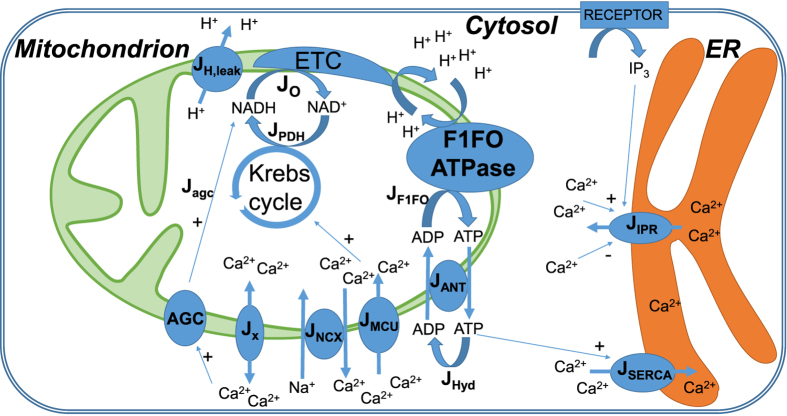
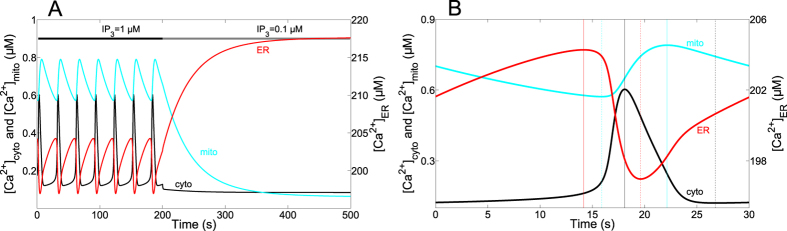
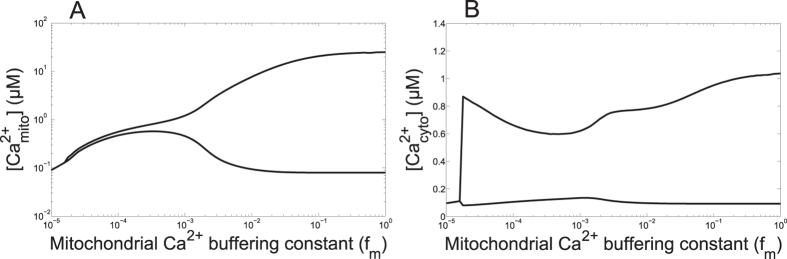
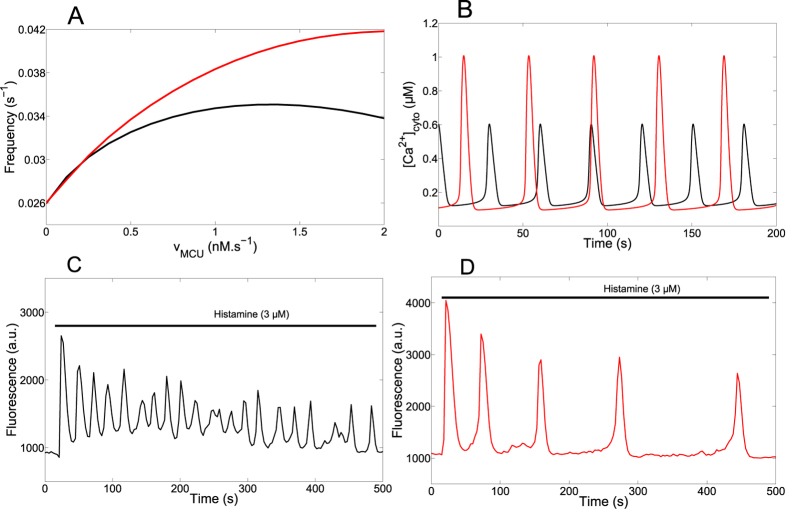
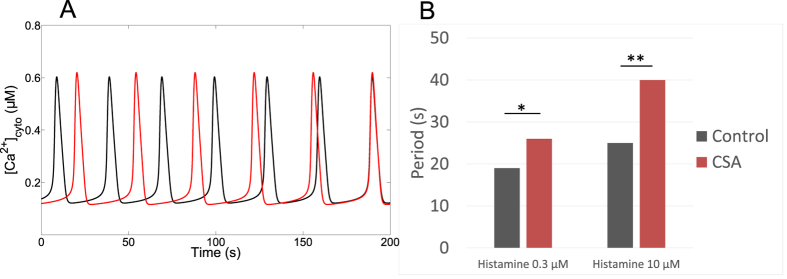
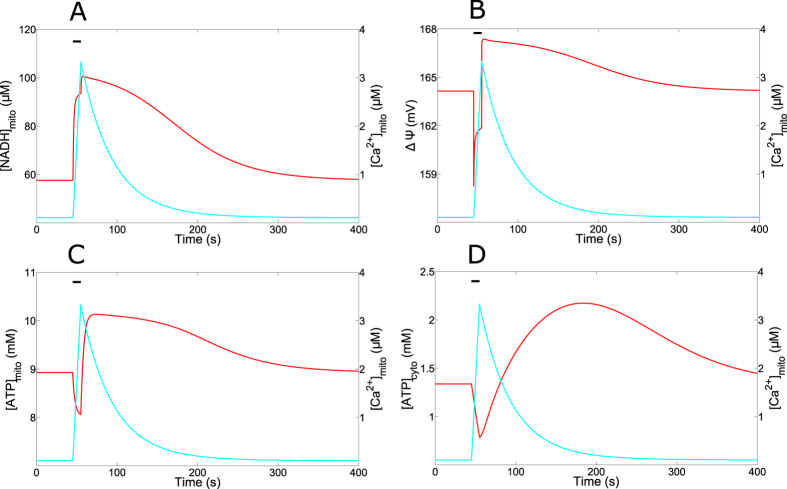
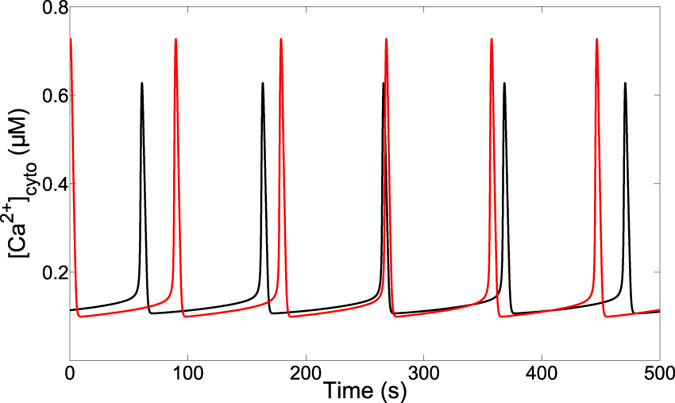
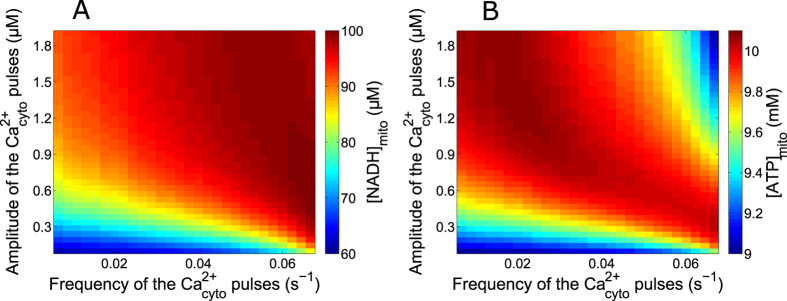
Oscillations of cytosolic Ca(2+) concentration are a widespread mode of signalling. Oscillatory spikes rely on repetitive exchanges of Ca(2+) between the endoplasmic reticulum (ER) and the cytosol, due to the regulation of inositol 1,4,5-trisphosphate receptors. Mitochondria also sequester and release Ca(2+), thus affecting Ca(2+) signalling. Mitochondrial Ca(2+) activates key enzymes involved in ATP synthesis. We propose a new integrative model for Ca(2+) signalling and mitochondrial metabolism in electrically non-excitable cells. The model accounts for (1) the phase relationship of the Ca(2+) changes in the cytosol, the ER and mitochondria, (2) the dynamics of mitochondrial metabolites in response to cytosolic Ca(2+) changes, and (3) the impacts of cytosol/mitochondria Ca(2+) exchanges and of mitochondrial metabolism on Ca(2+) oscillations. Simulations predict that as expected, oscillations are slowed down by decreasing the rate of Ca(2+) efflux from mitochondria, but also by decreasing the rate of Ca(2+) influx through the mitochondrial Ca(2+) uniporter (MCU). These predictions were experimentally validated by inhibiting MCU expression. Despite the highly non-linear character of Ca(2+) dynamics and mitochondrial metabolism, bioenergetics were found to be robust with respect to changes in frequency and amplitude of Ca(2+) oscillations.
Figures
References
Publication types
MeSH terms
Substances
LinkOut - more resources
Full Text Sources
Other Literature Sources
Miscellaneous
