


Guidance for the prevention and treatment of cancer-associated venous thromboembolism
- PMID: 26780740
- PMCID: PMC4715852
- DOI: 10.1007/s11239-015-1313-4
Guidance for the prevention and treatment of cancer-associated venous thromboembolism
Abstract
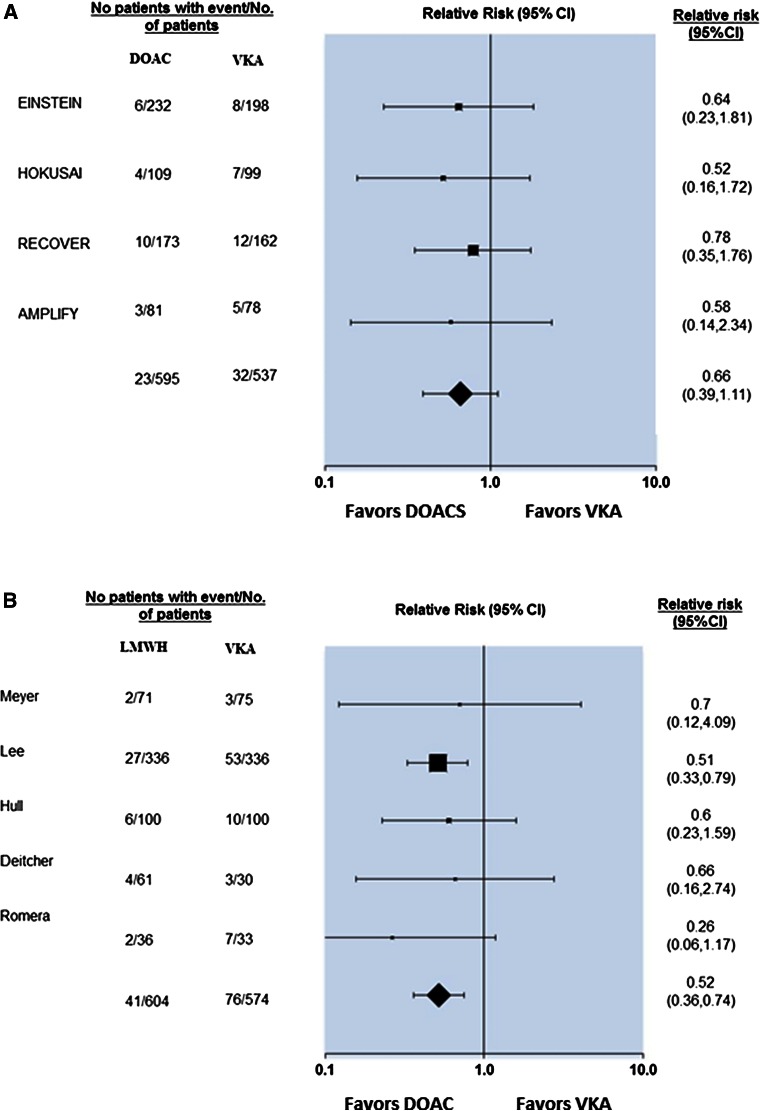
Venous thromboembolism (VTE) is a highly prevalent complication of malignancy with emerging changes in incidence, diagnosis and treatment paradigms. This manuscript, initiated by the Anticoagulation Forum, provides clinical guidance based on existing guidelines and consensus expert opinion where guidelines are lacking. We address a) the appropriate workup to search for occult malignancy in patients with idiopathic VTE, b) identification of high-risk cancer patients for primary thromboprophylaxis, c) the appropriate immediate and long-term treatment for people with cancer diagnosed with acute thromboembolism, d) the appropriate duration of anticoagulation and e) the appropriate treatment strategy in patients with recurrent VTE on anticoagulation. Areas of controversy and future directions in this field are highlighted.
Keywords: Cancer; Direct oral anticoagulants (DOAC); New oral anticoagulants (NOAC); Prevention; Risk factors; Venous thromboembolism.
Figures
Comment in
-
Outpatient thromboprophylaxis with low-molecular-weight heparin in solid tumors: Where do we stand today?J Thromb Thrombolysis. 2016 Apr;41(3):539-40. doi: 10.1007/s11239-016-1346-3. J Thromb Thrombolysis. 2016. PMID: 26931102 No abstract available.
References
Publication types
MeSH terms
Substances
LinkOut - more resources
Full Text Sources
Other Literature Sources
Medical
