


Oxytocin receptor gene variation predicts subjective responses to MDMA
- PMID: 26787430
- PMCID: PMC4988944
- DOI: 10.1080/17470919.2016.1143026
Oxytocin receptor gene variation predicts subjective responses to MDMA
Abstract
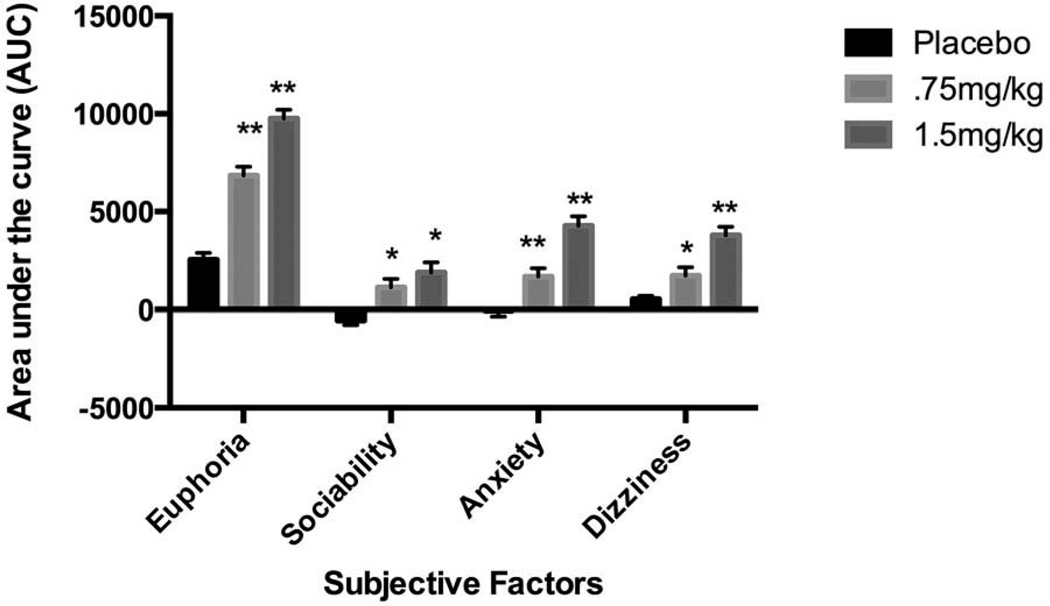
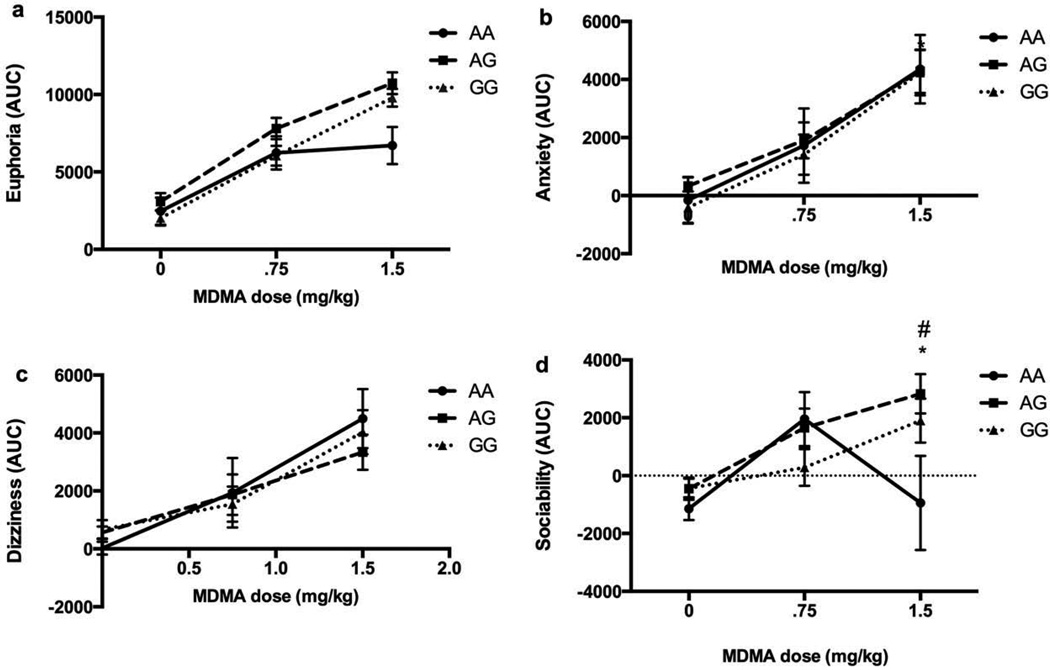
3,4-Methylenedioxymethamphetamine (MDMA, "ecstasy") enhances desire to socialize and feelings of empathy, which are thought to be related to increased oxytocin levels. Thus, variation in the oxytocin receptor gene (OXTR) may influence responses to the drug. Here, we examined the influence of a single OXTR nucleotide polymorphism (SNP) on responses to MDMA in humans. Based on findings that carriers of the A allele at rs53576 exhibit reduced sensitivity to oxytocin-induced social behavior, we hypothesized that these individuals would show reduced subjective responses to MDMA, including sociability. In this three-session, double blind, within-subjects study, healthy volunteers with past MDMA experience (N = 68) received a MDMA (0, 0.75 mg/kg, and 1.5 mg/kg) and provided self-report ratings of sociability, anxiety, and drug effects. These responses were examined in relation to rs53576. MDMA (1.5 mg/kg) did not increase sociability in individuals with the A/A genotype as it did in G allele carriers. The genotypic groups did not differ in responses at the lower MDMA dose, or in cardiovascular or other subjective responses. These findings are consistent with the idea that MDMA-induced sociability is mediated by oxytocin, and that variation in the oxytocin receptor gene may influence responses to the drug.
Keywords: MDMA; OXTR; oxytocin; social behavior.
Conflict of interest statement
statement No potential conflict of interest was reported by the authors.
Figures
References
-
- Bravo GL. What does MDMA feel like? In: Holland J, editor. Ecstasy: The complete guide: A comprehensive look at the risks and benefits of MDMA. Rochester, VT: Park Street Press; 2001.
MeSH terms
Substances
Grants and funding
LinkOut - more resources
Full Text Sources
Other Literature Sources
Medical
Miscellaneous
