


Modulation of Hypercholesterolemia-Induced Oxidative/Nitrative Stress in the Heart
- PMID: 26788247
- PMCID: PMC4691632
- DOI: 10.1155/2016/3863726
Modulation of Hypercholesterolemia-Induced Oxidative/Nitrative Stress in the Heart
Abstract
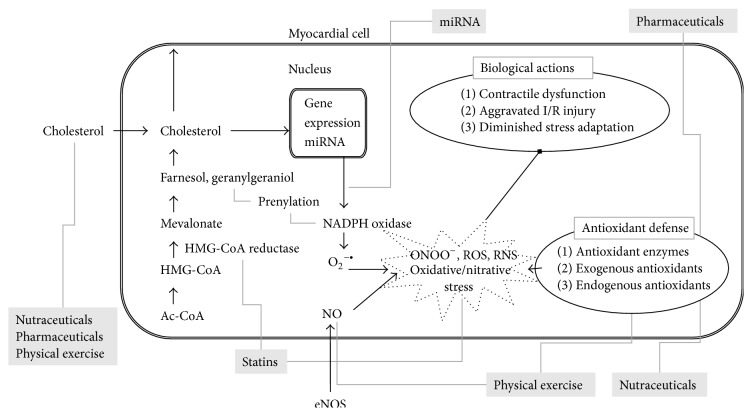
Hypercholesterolemia is a frequent metabolic disorder associated with increased risk for cardiovascular morbidity and mortality. In addition to its well-known proatherogenic effect, hypercholesterolemia may exert direct effects on the myocardium resulting in contractile dysfunction, aggravated ischemia/reperfusion injury, and diminished stress adaptation. Both preclinical and clinical studies suggested that elevated oxidative and/or nitrative stress plays a key role in cardiac complications induced by hypercholesterolemia. Therefore, modulation of hypercholesterolemia-induced myocardial oxidative/nitrative stress is a feasible approach to prevent or treat deleterious cardiac consequences. In this review, we discuss the effects of various pharmaceuticals, nutraceuticals, some novel potential pharmacological approaches, and physical exercise on hypercholesterolemia-induced oxidative/nitrative stress and subsequent cardiac dysfunction as well as impaired ischemic stress adaptation of the heart in hypercholesterolemia.
Figures
References
-
- Roger V. L., Go A. S., Lloyd-Jones D. M., et al. Executive summary: heart disease and stroke statistics—2012 update: a report from the American Heart Association. Circulation. 2012;125(1):188–197. - PubMed
-
- Rogers W. J., Frederick P. D., Stoehr E., et al. Trends in presenting characteristics and hospital mortality among patients with ST elevation and non-ST elevation myocardial infarction in the National Registry of Myocardial Infarction from 1990 to 2006. American Heart Journal. 2008;156(6):1026–1034. doi: 10.1016/j.ahj.2008.07.030. - DOI - PubMed
Publication types
MeSH terms
Substances
LinkOut - more resources
Full Text Sources
Other Literature Sources
Medical
