Congenital Hypogonadotropic Hypogonadism and Kallmann Syndrome: Past, Present, and Future
- PMID: 26790381
- PMCID: PMC4722398
- DOI: 10.3803/EnM.2015.30.4.456
Congenital Hypogonadotropic Hypogonadism and Kallmann Syndrome: Past, Present, and Future
Abstract
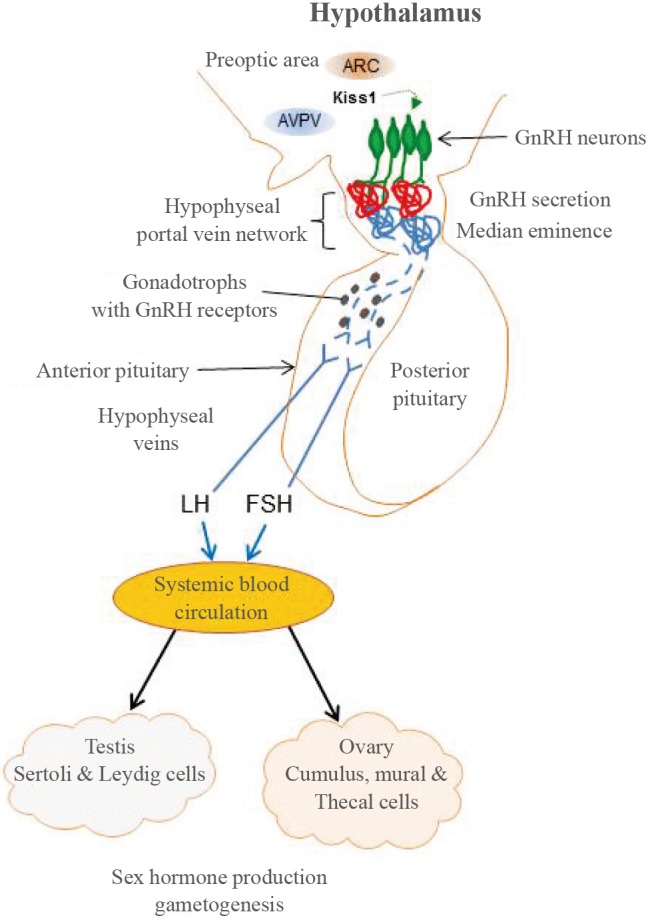
The proper development and coordination of the hypothalamic-pituitary-gonadal (HPG) axis are essential for normal reproductive competence. The key factor that regulates the function of the HPG axis is gonadotrophin-releasing hormone (GnRH). Timely release of GnRH is critical for the onset of puberty and subsequent sexual maturation. Misregulation in this system can result in delayed or absent puberty and infertility. Congenital hypogonadotropic hypogonadism (CHH) and Kallmann syndrome (KS) are genetic disorders that are rooted in a GnRH deficiency but often accompanied by a variety of non-reproductive phenotypes such as the loss of the sense of smell and defects of the skeleton, eye, ear, kidney, and heart. Recent progress in DNA sequencing technology has produced a wealth of information regarding the genetic makeup of CHH and KS patients and revealed the resilient yet complex nature of the human reproductive neuroendocrine system. Further research on the molecular basis of the disease and the diverse signal pathways involved will aid in improving the diagnosis, treatment, and management of CHH and KS patients as well as in developing more precise genetic screening and counseling regime.
Keywords: Gonadotropins; Hypogonadism; Infertility; Kallmann syndrome; Olfaction disorders; Puberty.
Conflict of interest statement
Figures
References
-
- Maestre de San Juan A. Falta total de los nerviosolfactorios con anosmia en un individuo en quien existia una atrofia congenita de los testiculos y miembro viril. Siglo Med. 1856;131:211.
-
- Kallmann FJ, Schoenfeld WA, Barrera SE. The genetic aspects of primary eunuchoidism. Am J Ment Defic. 1944;158:203–236.
-
- De Morsier G, Gauthier G. Olfacto-genital dysplasia. Pathol Biol (Paris) 1963;11:1267–1272. - PubMed
Publication types
Grants and funding
LinkOut - more resources
Full Text Sources
Medical
Miscellaneous