


Dysphagia in the high-risk infant: potential factors and mechanisms
- PMID: 26791178
- PMCID: PMC4733255
- DOI: 10.3945/ajcn.115.110106
Dysphagia in the high-risk infant: potential factors and mechanisms
Abstract
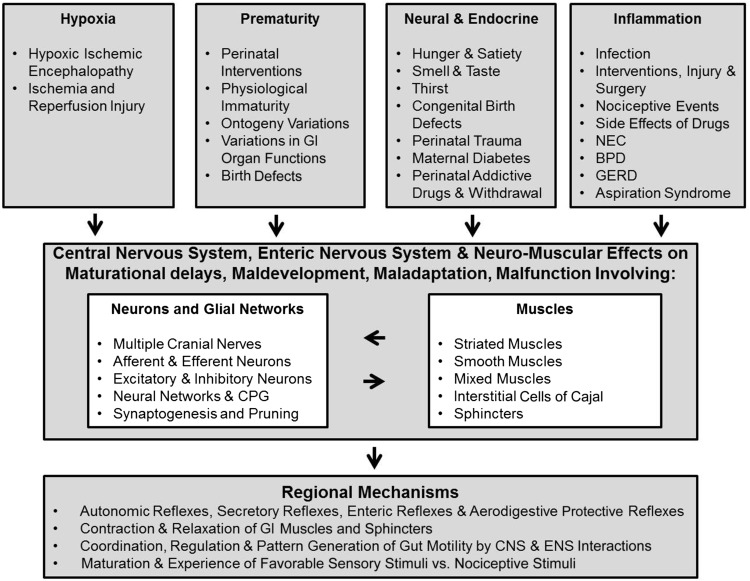
Neonatal dysphagia, or abnormalities of swallowing, represent a major global problem, and consequences of dysfunctional feeding patterns carry over into infancy and toddler age groups. Growth, development, and independent feeding skills are all delayed among high-risk infants. Such a group comprises premature birth, low-birth-weight, congenital anomalies, perinatal asphyxia, postsurgical, and sepsis categories. The conflict between pathophysiologic and pragmatic feeding strategies remains a major conundrum and is largely due to a lack of validated diagnostic approaches amid heterogeneity of the patient phenotype. Thus, well-tested feeding management strategies that can be generalizable are lacking. Furthermore, the aerodigestive symptoms and signs, potential risk factors, and contributory etiologies remain nonspecific. This article presents mechanistic evidence related to the pathophysiologic basis of neonatal dysphagia as well as potential opportunities to improve feeding abilities and long-term development.
Keywords: aerodigestive reflexes; dysphagia; feeding disorders; gastroesophageal reflux; neonate.
© 2016 American Society for Nutrition.
Figures
References
-
- Motion S, Northstone K, Emond A. Persistent early feeding difficulties and subsequent growth and developmental outcomes. Ambulatory Child Health 2001;7(3/4):231–7.
-
- Field D, Garland M, Williams K. Correlates of specific childhood feeding problems. J Paediatr Child Health 2003;39:299–304. - PubMed
-
- Rommel N, De Meyer AM, Feenstra L, Veereman-Wauters G. The complexity of feeding problems in 700 infants and young children presenting to a tertiary care institution. J Pediatr Gastroenterol Nutr 2003;37:75–84. - PubMed
-
- Mercado-Deane MG, Burton EM, Harlow SA, Glover AS, Deane DA, Guill MF, Hudson V. Swallowing dysfunction in infants less than 1 year of age. Pediatr Radiol 2001;31:423–8. - PubMed
Publication types
MeSH terms
Grants and funding
LinkOut - more resources
Full Text Sources
Other Literature Sources
Medical
