


Patients' ratings of genetic conditions validate a taxonomy to simplify decisions about preconception carrier screening via genome sequencing
- PMID: 26792268
- PMCID: PMC4824299
- DOI: 10.1002/ajmg.a.37477
Patients' ratings of genetic conditions validate a taxonomy to simplify decisions about preconception carrier screening via genome sequencing
Abstract
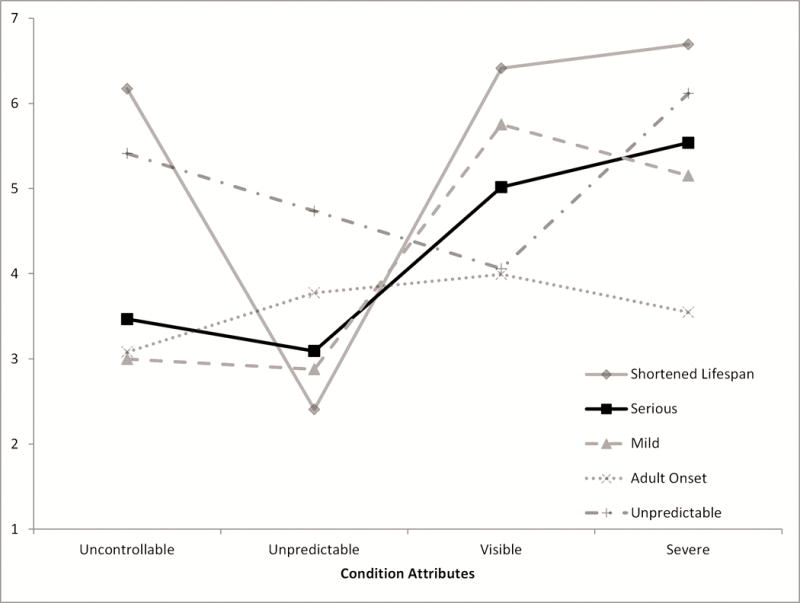
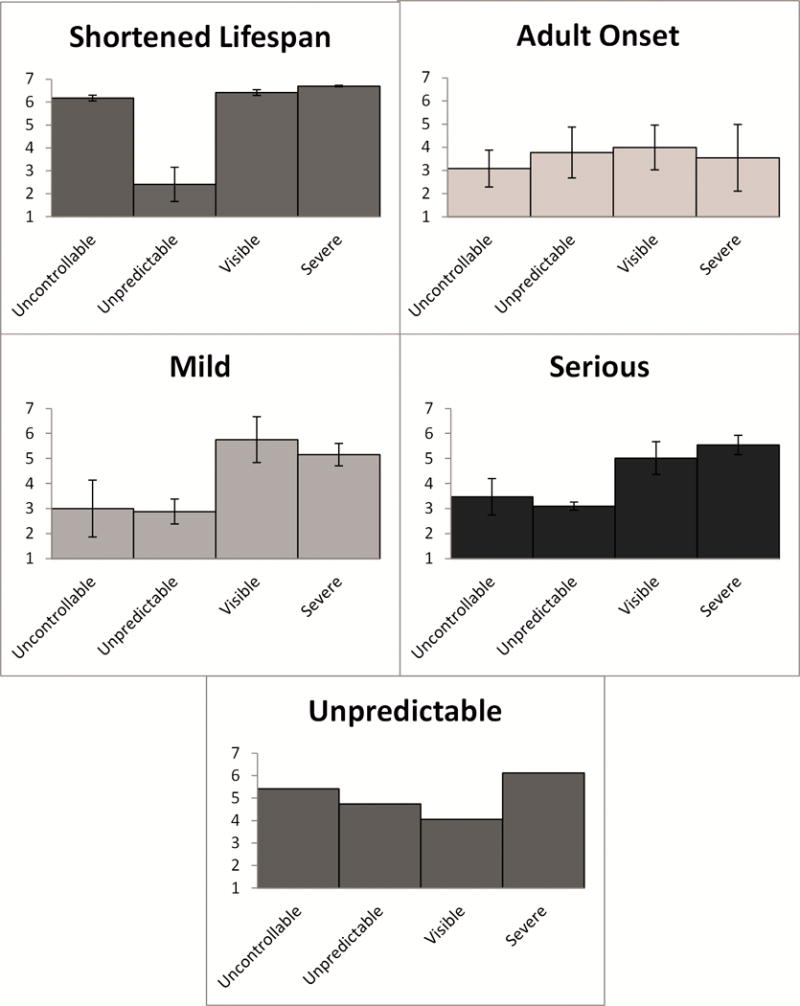
Advances in genome sequencing and gene discovery have created opportunities to efficiently assess more genetic conditions than ever before. Given the large number of conditions that can be screened, the implementation of expanded carrier screening using genome sequencing will require practical methods of simplifying decisions about the conditions for which patients want to be screened. One method to simplify decision making is to generate a taxonomy based on expert judgment. However, expert perceptions of condition attributes used to classify these conditions may differ from those used by patients. To understand whether expert and patient perceptions differ, we asked women who had received preconception genetic carrier screening in the last 3 years to fill out a survey to rate the attributes (predictability, controllability, visibility, and severity) of several autosomal recessive or X-linked genetic conditions. These conditions were classified into one of five taxonomy categories developed by subject experts (significantly shortened lifespan, serious medical problems, mild medical problems, unpredictable medical outcomes, and adult-onset conditions). A total of 193 women provided 739 usable ratings across 20 conditions. The mean ratings and correlations demonstrated that participants made distinctions across both attributes and categories. Aggregated mean attribute ratings across categories demonstrated logical consistency between the key features of each attribute and category, although participants perceived little difference between the mild and serious categories. This study provides empirical evidence for the validity of our proposed taxonomy, which will simplify patient decisions for results they would like to receive from preconception carrier screening via genome sequencing.
Keywords: gene carrier testing; genetic condition taxonomy; genetics; genome sequencing; patient perceptions.
© 2016 Wiley Periodicals, Inc.
Conflict of interest statement
None of the authors has a conflict of interest to declare.
Figures
References
-
- American College Board of Directors. ACMG statement on direct-to-consumer genetic testing. Genet Med. 2004;6(1):60. - PubMed
-
- Cao A, Rosatelli MC, Monni G, Galanello R. Screening for thalassemia: a model of success. Obstet Gynecol Clin North Am. 2002;29(2):305–328. vi–vii. - PubMed
-
- Cox DW. Prenatal diagnosis for alpha1-antitrypsin deficiency. Prenat Diagn. 2004;24(6):468–470. - PubMed
-
- Grody WW, Thompson BH, Gregg AR, Bean LH, Monaghan KG, Schneider A, Lebo RV. ACMG position statement on prenatal/preconception expanded carrier screening. Genet Med. 2013;15(6):482–483. - PubMed
Publication types
MeSH terms
Grants and funding
LinkOut - more resources
Full Text Sources
Other Literature Sources
Medical
