


Antibiotics and the Human Gut Microbiome: Dysbioses and Accumulation of Resistances
- PMID: 26793178
- PMCID: PMC4709861
- DOI: 10.3389/fmicb.2015.01543
Antibiotics and the Human Gut Microbiome: Dysbioses and Accumulation of Resistances
Abstract
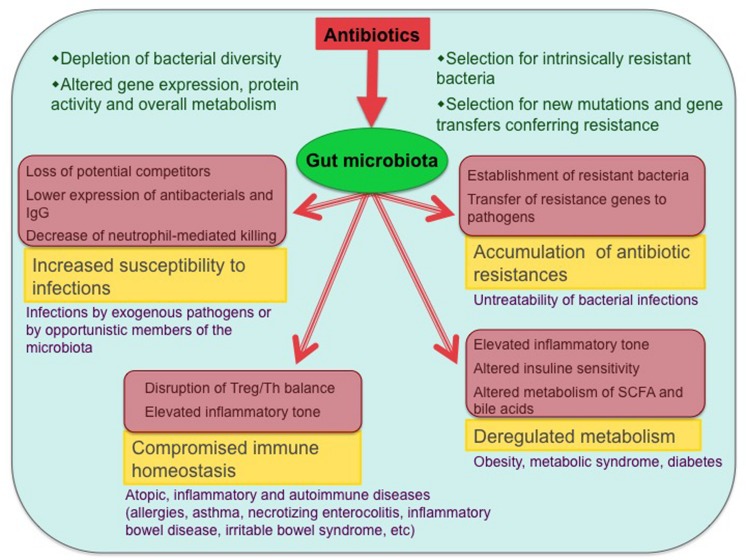
The human microbiome is overly exposed to antibiotics, due, not only to their medical use, but also to their utilization in farm animals and crops. Microbiome composition can be rapidly altered by exposure to antibiotics, with potential immediate effects on health, for instance through the selection of resistant opportunistic pathogens that can cause acute disease. Microbiome alterations induced by antibiotics can also indirectly affect health in the long-term. The mutualistic microbes in the human body interact with many physiological processes, and participate in the regulation of immune and metabolic homeostasis. Therefore, antibiotic exposure can alter many basic physiological equilibria, promoting long-term disease. In addition, excessive antibiotic use fosters bacterial resistance, and the overly exposed human microbiome has become a significant reservoir of resistance genes, contributing to the increasing difficulty in controlling bacterial infections. Here, the complex relationships between antibiotics and the human microbiome are reviewed, with focus on the intestinal microbiota, addressing (1) the effects of antibiotic use on the composition and function of the gut microbiota, (2) the impact of antibiotic-induced microbiota alterations on immunity, metabolism, and health, and (3) the role of the gut microbiota as a reservoir of antibiotic resistances.
Keywords: antibiotics; atopy; autoimmunity; dysbiosis; human gut microbiota; immunotolerance; inflammation; resistance reservoir.
Figures
References
Publication types
LinkOut - more resources
Full Text Sources
Other Literature Sources
Medical
