


Cognitive changes associated with switching to frequent nocturnal hemodialysis or renal transplantation
- PMID: 26801094
- PMCID: PMC4722762
- DOI: 10.1186/s12882-016-0223-9
Cognitive changes associated with switching to frequent nocturnal hemodialysis or renal transplantation
Abstract
Background: It is uncertain whether switching to frequent nocturnal hemodialysis improves cognitive function in well-dialyzed patients and how this compares to patients who receive a kidney transplant.
Methods: We conducted a multicenter observational study with longitudinal follow-up of the effect on cognitive performance of switching dialysis treatment modality from conventional thrice-weekly hemodialysis to frequent nocturnal hemodialysis, a functioning renal transplant or remaining on thrice-weekly conventional hemodialysis. Neuropsychological tests of memory, attention, psychomotor processing speed, executive function and fluency as well as measures of solute clearance were performed at baseline and again after switching modality. The change in cognitive performance measured by neuropsychological tests assessing multiple cognitive domains at baseline, 4 and 12 months after switching dialysis modality were analyzed using a linear mixed model.
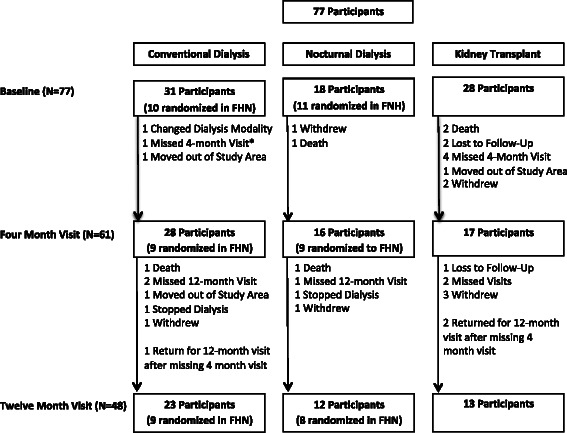
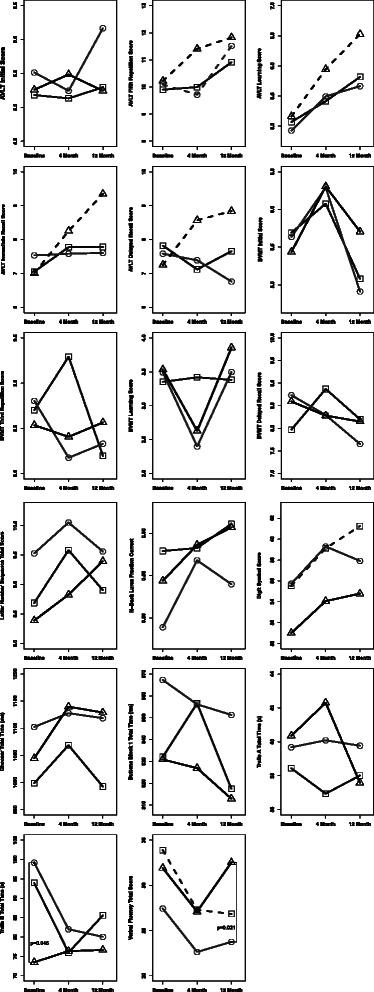
Results: Seventy-seven patients were enrolled; 21 of these 77 patients were recruited from the randomized Frequent Hemodialysis Network (FHN) Nocturnal Trial. Of these, 18 patients started frequent nocturnal hemodialysis, 28 patients received a kidney transplant and 31 patients remained on conventional thrice-weekly hemodialysis. Forty-eight patients (62 %) returned for the 12-month follow-up. Despite a significant improvement in solute clearance, 12 months treatment with frequent nocturnal hemodialysis was not associated with substantial improvement in cognitive performance. By contrast, renal transplantation, which led to near normalization of solute clearance was associated with clinically relevant and significant improvements in verbal learning and memory with a trend towards improvements in psychomotor processing speed. Cognitive performance in patients on conventional hemodialysis remained stable with the exception of an improvement in psychomotor processing speed and a decline in verbal fluency.
Conclusions: In patients on conventional thrice-weekly hemodialysis, receiving a functioning renal transplant was associated with improvement in auditory-verbal memory and psychomotor processing speed, which was not observed after 12 months of frequent nocturnal hemodialysis.
Figures
References
Publication types
MeSH terms
Substances
Grants and funding
LinkOut - more resources
Full Text Sources
Other Literature Sources
Medical
